Karnataka BJP Fact-Finding Panel Submits Report On MLC Cross Voting
A three-member fact-finding committee established by the Karnataka BJP to investigate internal cross-voting during the recent Legislative Council elections formally delivered its comprehensive findings to state unit president B Y Vijayendra on Saturday.
Key Highlights
- The internal inquiry panel completed its investigation and submitted the final report within four days.
- Investigators identified 12 total instances of cross-voting among NDA legislators during the MLC polls.
- The BJP suffered a loss of four anticipated votes, which included one invalid ballot.
- The opposition JD(S) experienced an eight-vote shortfall from its expected tally of 22 votes.
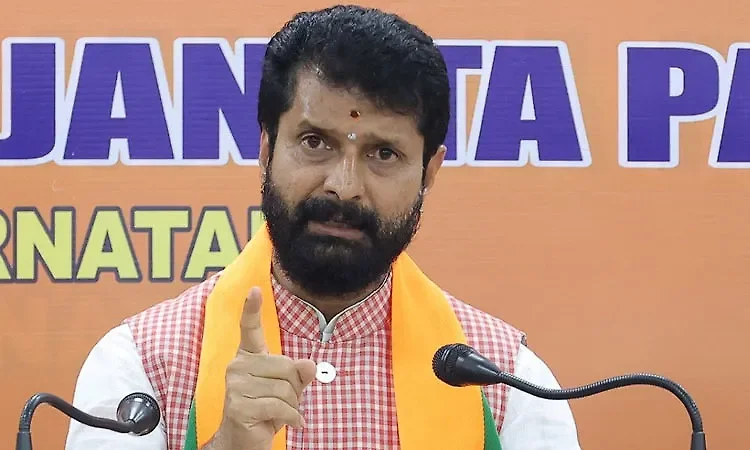
Senior MLC C T Ravi, who chaired the investigative panel, confirmed that the documentation compiles critical data acquired throughout the inquiry. He noted that the report highlights specific operational areas where the BJP required enhanced internal vigilance.
The state party president had formed the specialized three-member internal fact-finding team. The committee featured Ravi alongside state vice-president N Mahesh and MLA Mahesh Tenginakayi, with explicit directives to execute a swift internal probe.
The panel finalized the entire investigative process within a four-day window. Following detailed deliberations among the three panel members, they formulated a consensual report containing verified internal findings.
Ravi disclosed to journalists that the panel initiated its operations by conducting an initial virtual conference. This session served to establish the precise parameters and boundaries of the cross-voting probe.
The committee subsequently drafted a preliminary roster of suspected individuals. This list was compiled by analyzing widespread regional media coverage alongside other streams of intelligence available to the party.
The investigators executed direct consultations with the contested candidates to record their perspectives. They further collaborated with JD(S) leaders, scrutinized media intelligence, and interviewed both the Leader of the Opposition and the chief whip.
The final dossier was assembled using localized intelligence data and circumstantial evidence. Ravi emphasized that because the text functions as an internal document for the state president, disclosing granular details remains inappropriate.
The panel chief explicitly declined to verify whether the text names specific legislators responsible for the cross-voting. He instead focused on the broader numerical discrepancy that transpired during the balloting process.
The data verified 12 distinct occurrences of cross-voting within the wider NDA coalition framework. The BJP lost four votes from its baseline, consisting of three missing votes and one invalid vote.
The party had originally designated 30 secure votes for its two official candidates. Ultimately, one candidate secured 29 votes with one declared invalid, while the second candidate obtained 27 votes, marking a three-vote deficit.
The alliance partner, JD(S), was mathematically positioned to secure 22 votes during the election. However, the party only managed to register 14 votes, representing a significant eight-vote deficit.
Ravi warned the Congress party against interpreting these voting shifts as genuine political alignment or admiration. He asserted that the ruling administration explicitly orchestrated the cross-voting outcomes through highly unethical political maneuvers.
He criticized the Congress for historic hypocrisy regarding democratic norms. He stated that the party previously condemned cross-voting in other states but has now actively compromised democratic systems within Karnataka.
The investigative text explicitly charts structural vulnerabilities where the BJP must exercise greater caution moving forward. The state party president will dictate subsequent disciplinary actions following an upcoming core committee review.
The political development follows the June 18 election results, where the ruling Congress secured five out of seven vacant Legislative Council seats. The opposition BJP managed to secure only two seats.
The JD(S) completely failed to secure the single seat it contested during the polls. The finalized tallies confirmed that Congress amassed 151 total votes, outperforming its expected baseline of 140 by 11 additional votes.
History of MLC Cross-Voting in Karnataka
The phenomenon of cross-voting in Karnataka’s Legislative Council and Rajya Sabha elections has periodically disrupted alliance arithmetic. Internal dissent and covert political alignments have frequently led to cross-voting during secret or preferential ballot contests. This ongoing vulnerability highlights the persistent challenge both national and regional parties face in maintaining strict legislative voting discipline against aggressive counter-strategies by rival ruling administrations.
FAQs
What was the purpose of the Karnataka BJP fact-finding committee?
The committee was established by state president B Y Vijayendra to investigate internal cross-voting by alliance legislators during the recent Legislative Council elections.
How many votes did the BJP and JD(S) lose in the MLC polls?
The BJP lost a total of four votes, including one invalid ballot, while the JD(S) faced an eight-vote deficit from its expected total of 22 votes.
Who were the members of the BJP internal inquiry panel?
The three-member fact-finding committee was led by senior MLC C T Ravi, alongside state vice-president N Mahesh and MLA Mahesh Tenginakayi.