Jaisalmer Border Shrine Dispute Sparks Debate Over Historic Land Records
JAISALMER — A regional administrative mandate demanding land ownership verification for a 250-year-old border shrine has triggered intense localized protests. The dispute highlights an escalating conflict balancing national security and modern governance frameworks against historical heritage and community faith within Rajasthan’s strategic frontier zone.
Key Highlights
- Authorities demand land titles for the ancient Mehmood Shah Peer Jilani mazar under a border cleanup drive.
- Local populations contest the directive, citing the complete absence of formal registration systems 2.5 centuries ago.
- Political leaders warn the current regulatory expansion up to 50 kilometers threatens regional social stability.
- The historical site serves as a shared cultural hub, drawing both Hindu and Muslim devotees annually.
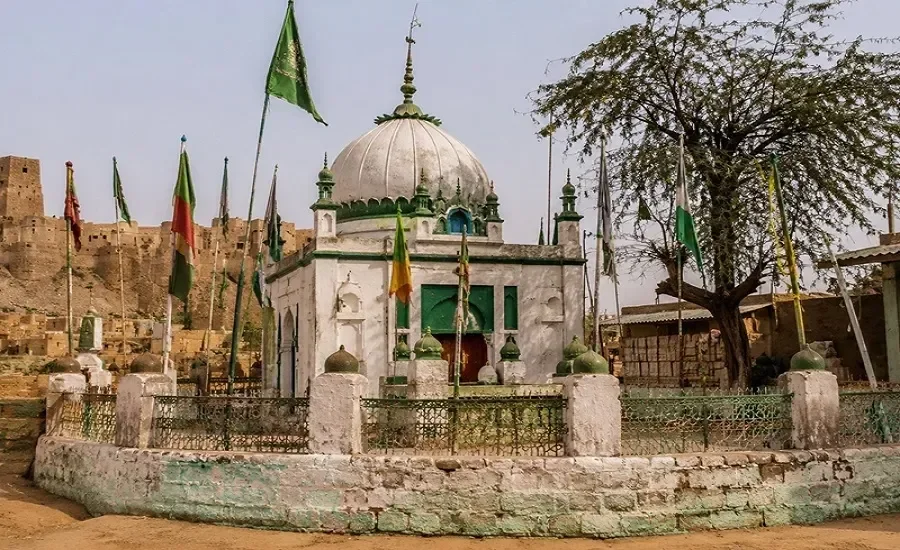
How can a community generate formal title deeds for an ancient sanctuary established nearly 250 years ago? This central inquiry drives an intensifying public conflict in Rajasthan’s sensitive border territory of Jaisalmer. Public demonstrations erupted following an administrative order demanding property validation documents for the historic Mehmood Shah Peer Jilani mazar, prompting a deeper ideological clash over ancestral legacy, spiritual faith, and state supervision.
The official directive emerged from the local government’s active “Operation Clean” campaign, a targeted initiative addressing unapproved construction projects situated within a 50-kilometer perimeter of the international India-Pakistan border. The order mandates that the administrative board managing the shrine produce formal land titles by June 22, 2026. Non-compliance risks triggering state enforcement actions after June 23, 2026, under stipulations outlined in the Rajasthan Colonisation Act.
For regional bureaucratic authorities, the legal intervention represents a standardized regulatory auditing measure executed inside a highly sensitive defense corridor.
Conversely, for native populations, the administrative mandate underscores a fundamental existential dilemma: should centuries-old spiritual sanctuaries be assessed exclusively through the lens of contemporary bureaucratic paperwork?
Local village communities maintain that demanding documentary evidence for infrastructure built multiple centuries prior completely overlooks the socio-political development of western Rajasthan. Historically, numerous shrines, temples, and shared communal grounds were established long before the introduction of formalized state land registries.
Congress District President Amardin Fakir emphasized that this escalating property dispute carries implications far beyond a singular religious structure.
Fakir observed that regulatory boundaries formerly governed a narrow 10-kilometer strip running parallel to the border. This restricted zone subsequently expanded to 15 kilometers, and current enforcements effectively target locations spanning almost 50 kilometers deep, encompassing a substantial segment of Jaisalmer’s resident population.
The political leader added that local families harbor deep anxieties that prospective administrative crackdowns could soon target civilian properties alongside ancient spiritual sites.
He noted that countless religious landmarks throughout the desert topography possess legacies spanning several centuries. During their initial foundation, compiling structured bureaucratic ledgers was non-existent, making it highly unjust to disrupt matters of deep-seated faith simply due to missing modern documentation.
Former Ramgarh Sarpanch Govind Bhargava recounted an incident from approximately 1980, noting that when national military forces were developing defense infrastructure across the frontier, local inhabitants formally briefed engineering officers regarding the shrine’s cultural value.
Bhargava asserted that after conducting a physical survey of the location, engineers redirected the planned defense infrastructure elsewhere, demonstrating historical precedent where the spiritual importance of the sanctuary was actively honored.
According to statements from Jumma Khan, who serves as the President of the Shrine Committee, the holy site remains deeply revered by both Hindu and Muslim communities, collectively anchoring two prominent annual cultural festivals.
Khan explained that thousands of pilgrims migrate to the site every year, as generations of public devotion and communal backing have sustained the sacred structure. He remarked that retrieving modern land ownership certificates for a monument dating back 250 years remains an impractical task.
State administrators continue to affirm that the notifications were served in strict alignment with existing statutory mechanisms, ensuring that all impacted stakeholders receive lawful opportunities to present their formal arguments.
Nevertheless, as the regulatory deadline looms closer, the localized real estate impasse has transitioned into a grander societal debate focusing on how historical heritage, religious practices, and rigid bureaucratic frameworks can harmoniously survive across India’s sensitive peripheral borderlands.
In a public intervention, former Chief Minister Ashok Gehlot recommended that given the territory’s rich legacy of peaceful coexistence and communal harmony, both federal and state authorities must implement supreme caution, ensuring administrative mandates do not provoke needless societal friction or degrade the delicate social fabric characterizing these critical frontier outposts.
History of Frontier Coexistence
The frontier districts of western Rajasthan, particularly Jaisalmer, possess a distinct historical trajectory where spiritual spaces functioned as vital social infrastructure prior to formal state demarcation. The Mehmood Shah Peer Jilani mazar reflects a syncretic cultural tradition unique to the Thar Desert, where border communities developed shared sacred spaces independent of centralized legal cartography. This regional framework often combined indigenous oral agreements with informal pastoral boundaries, long predating the statutory structures enacted under the Rajasthan Colonisation Act.
FAQs
What is the primary cause of the Jaisalmer shrine controversy?
The dispute stems from a government notice issued under “Operation Clean” requiring management at the 250-year-old Mehmood Shah Peer Jilani mazar to supply official land ownership documents or face potential regulatory action.
What are the geographic boundaries of the current border cleanup drive?
The administrative campaign targets properties and alleged unapproved structures built within a 50-kilometer radius of the international India-Pakistan border inside the Jaisalmer district.
Which specific laws are authorities using to enforce the land document verification?
State administrators are utilizing regulatory provisions detailed under the Rajasthan Colonisation Act to audit properties and establish legal land ownership within the sensitive border zone.
Why are local residents protesting the government notice?
Villagers and community leaders argue that demanding contemporary paperwork for structures built 2.5 centuries ago is highly impractical, as these sacred spaces were established long before modern land registration systems existed.