Hakeem Jeffries Demands Classified Iran Briefing For Congress
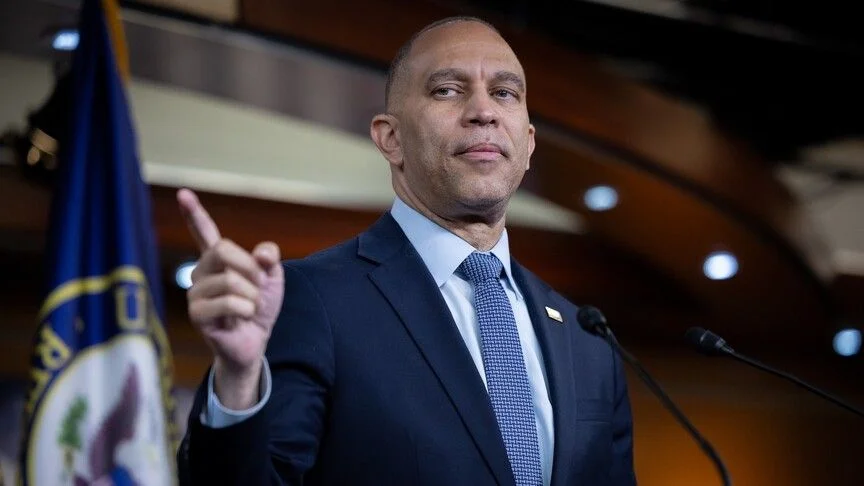
US House Minority Leader Hakeem Jeffries stated Monday that the Trump administration must deliver a classified briefing to every member of Congress regarding the current situation in Iran.
Key Takeaways
- House Minority Leader Hakeem Jeffries demanded an all-hands classified briefing on Iran for the entire Congress.
- An unclassified session featuring Secretary of State Marco Rubio was deemed insufficient given the gravity of the situation.
- Jeffries criticized President Donald Trump’s broader regional strategy, claiming it weakened domestic national security.
- The tension follows a June 18, 2026 diplomatic memorandum aimed at restoring maritime access to the strategic Strait of Hormuz.
The Democratic leader remarked during a press conference that while the administration’s scheduled unclassified briefing later Monday—set to feature Secretary of State Marco Rubio—was a positive step, it remained inadequate considering the severity of the crisis.
Jeffries emphasized the necessity for an all-hands-on-deck classified briefing that includes the full membership of both the House of Representatives and the Senate.
He characterized the rapidly evolving foreign policy developments as a deeply critical matter directly concerning questions of war and peace.
While acknowledging that the executive branch is moving in the right direction by organizing the initial unclassified discussions today, Jeffries reiterated that the underlying security details demand a comprehensive, closed-door session for lawmakers.
The top House Democrat also directed criticism at President Donald Trump’s executive management of the conflict, contending that the White House’s policy choices have ultimately compromised American national security interests.
Jeffries expressed urgency for congressional leadership to obtain a thorough classified status update from intelligence and defense officials sooner rather than later, as legislators continue assessing administration strategies and the wider geopolitical ramifications for the Middle East.
These political demands emerge shortly after June 18, 2026, when Iran and the United States signed a memorandum of understanding designed to halt active hostilities, dissolve the American naval blockade of Iranian ports, and reopen the critical Strait of Hormuz to secure global energy corridors.
Future Outlook
The legislative push for high-level intelligence access indicates growing friction between Capitol Hill and the White House over Middle East policy. As lawmakers evaluate compliance with the June 18 agreement, upcoming congressional sessions will likely focus on verification mechanisms for the reopening of global energy shipping lanes.
FAQs
What did Hakeem Jeffries demand from the Trump administration?
House Minority Leader Hakeem Jeffries requested that the White House coordinate an all-hands-on-deck classified briefing regarding Iran for every member of the House of Representatives and the Senate.
Who is expected to lead the unclassified briefing?
Secretary of State Marco Rubio is anticipated to be a primary official featuring in the unclassified information session presented to lawmakers.
What recent agreement did the US and Iran reach?
On June 18, 2026, the two nations established a memorandum of understanding focused on ending active hostilities, terminating a US naval blockade, and reopening the strategic Strait of Hormuz.