Irish Electoral Commission Finds Posters Outperform Social Media
Ireland’s Electoral Commission determined that traditional physical posters surpass digital platforms in generating election awareness, particularly among detached voters. While citizens express dissatisfaction with the visual clutter, political candidates maintain that physical postering remains indispensable for democratic visibility and campaign engagement.
Key Highlights
- Political posters outperform social media platforms in alerting the public to active election campaigns.
- Campaigners erected over 280,000 posters during the 2024 general election, comprising one-third of total campaign expenditures.
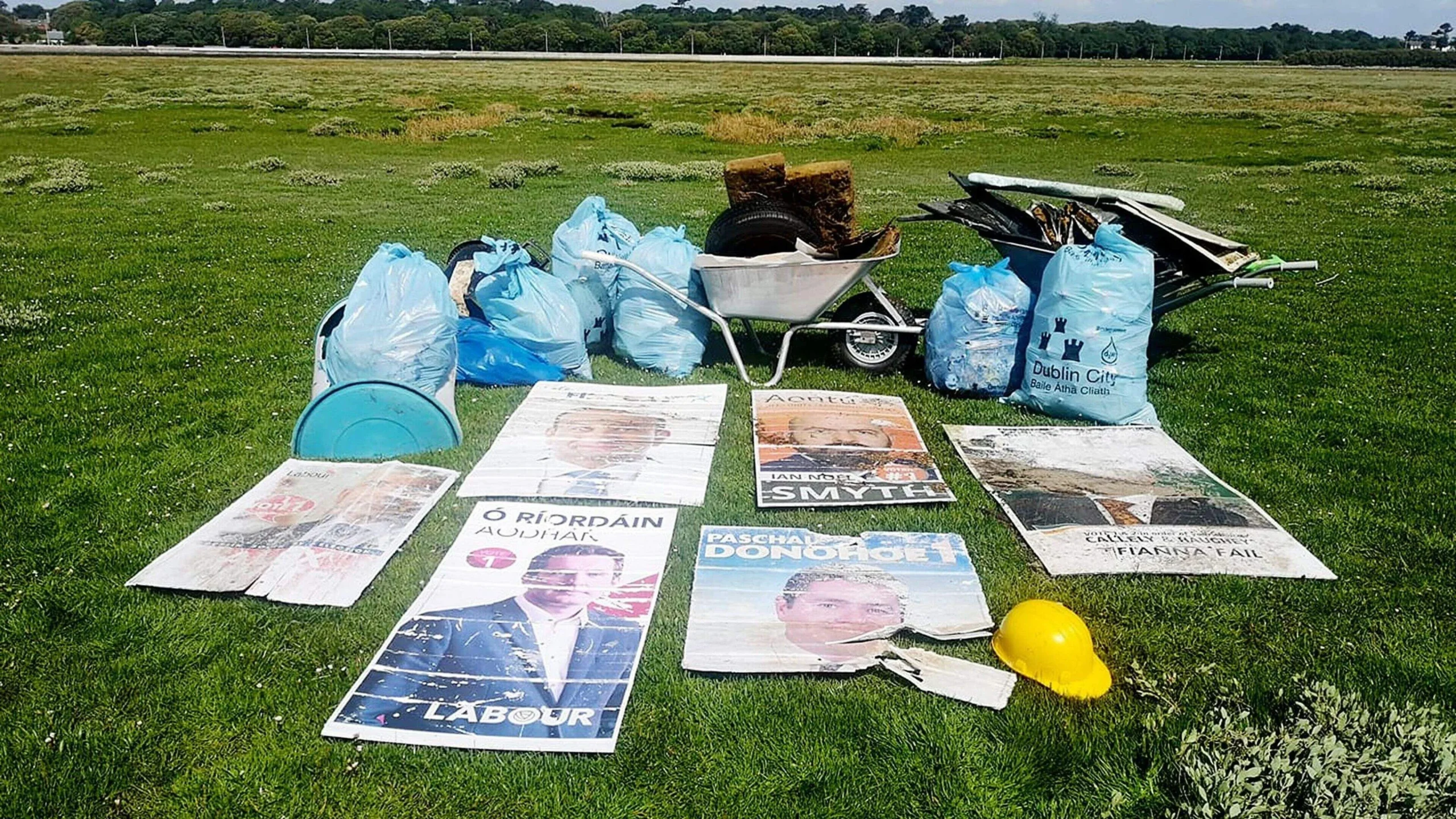
- The plastic waste generated by these signs equals roughly 1.3 million disposable coffee cups.
- The Commission advises stricter legislative enforcement and standardized size caps to mitigate environmental degradation.
The Electoral Commission discovered that physical signs possess superior efficacy over social media networks for elevating public awareness regarding active voting cycles. This medium regularly connects with citizens who demonstrate minimal interest in political affairs, thereby filling an essential niche within the democratic framework.
An institutional assessment concerning the deployment of street posters revealed that while Irish nationals dislike the practice and favor its reduction, politicians view the infrastructure as vital. Data indicates that during the 2024 general election, political operations deployed over 280,000 placards throughout the state.
The resulting plastic refuse matches the volume of approximately 1.3 million takeaway coffees. According to selected metrics, this quantity represents 50% of the total daily coffee consumption across Ireland.
Furthermore, the environmental analysis calculated that the aggregate carbon footprint equals a standard commercial aircraft completing two round-trip flights between Dublin and New York.
Out of roughly €9.2 million disbursed by political parties and individual candidates during the polling window, €2.8 million went directly toward postering. Consequently, these physical advertisements consumed one-third of total campaign budgets.
This financial distribution positions physical posters as the premier expenditure component within an Irish general election cycle.
Representatives from Fianna Fáil, Fine Gael, and Sinn Féin distributed a mean volume of 700 signs per individual candidate. Meanwhile, contenders representing smaller organizations—including Aontú, People Before Profit-Solidarity, the Green Party, Labour, and the Social Democrats—utilized a lower mean of 400 displays.
One argument for posters is that they make people aware of elections
The 171 non-party independent candidates alongside 95 individuals running for minor political groups deployed a mean of 125 signs each.
Statistical tracking executed during the preceding presidential election established that street placards served as the second most prevalent medium for voter campaign discovery.
A supermajority of 77.5% of survey participants learned about the active election via broadcast media networks. This was followed by 59% who noted physical street advertisements, 52.6% through interpersonal dialogues with relatives or acquaintances, and 50.6% via social platforms.
One argument for posters is that they make people aware of elections, the official regulatory review affirmed. Because these materials are pervasive and highly visible throughout Ireland, citizens cannot easily overlook the reality of an active voting event.
Interestingly, the public recognition rate for physical signage surpasses the metrics recorded for social media platforms.
The authors of the report conducted interviews with active candidates who noted that street banners represent an inexpensive avenue to build public profile and establish political credibility. While veteran lawmakers occasionally stated that physical displays are obsolete, first-time candidates noted that they require signage to enter the political sphere.
Following the publication of this research, the Electoral Commission recommended more uniform and rigorous application of statutory rules governing political signage.
The agency additionally suggested that the legal dimensions and configurations of campaign boards faces strict limitations to minimize subsequent ecological harm and municipal waste.
The investigative polling data uncovered an overall unfavorable public perspective toward street campaigns. Even so, 36% of those surveyed acknowledged that physical signage assists them in matching the names and faces of political candidates.
Future Outlook
The Electoral Commission’s recommendations signal a regulatory shift toward tighter oversight for future Irish balloting. If lawmakers codify the proposed size limits and stricter guidelines, political parties will have to adjust their campaign infrastructure for subsequent European, local, and general elections.
Campaign managers may need to reallocate financial resources away from extensive physical production. This change could accelerate the adoption of eco-friendly, biodegradable material alternatives to mitigate the carbon emissions highlighted by the commission.
FAQs
Why does the Electoral Commission support political posters?
The Commission found that physical posters are highly effective at reaching voters with low political interest. Because they are visible on public streets, they serve as a primary method for alerting the broader population that an election is occurring.
What is the environmental impact of Irish election campaigns?
The 2024 general election generated plastic waste equivalent to 1.3 million takeaway coffee cups. Additionally, the carbon footprint of producing and distributing these materials matched the emissions of two commercial airline return flights between Dublin and New York.
How much do Irish political parties spend on postering?
Campaigners spent €2.8 million on posters during the 2024 election cycle. This represented one-third of the total €9.2 million campaign expenditure, making posters the single largest campaign expense for political organizations.
Do minor parties use the same number of posters as major parties?
No. Candidates from major parties like Fianna Fáil, Fine Gael, and Sinn Féin averaged 700 posters each. Smaller parties averaged 400 per candidate, while independent contenders averaged 125 placards.