PM Modi Credits BJP’s Bengal Election Win for Infusing Fresh Energy
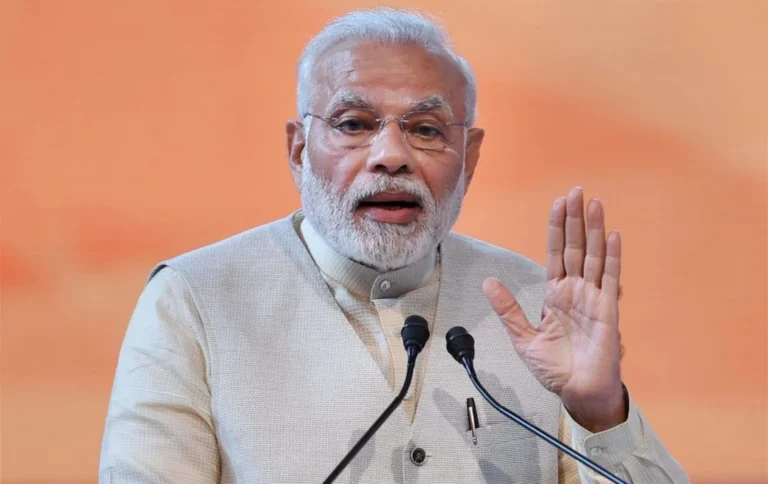
Prime Minister Narendra Modi celebrated the Bharatiya Janata Party’s historic electoral triumph in West Bengal on Saturday. Addressing a massive gathering, he praised the newly formed government under Suvendu Adhikari for injecting renewed vigor into the region and accelerating infrastructure initiatives to resolve systemic administrative hurdles.
Key Takeaways
- Prime Minister Narendra Modi addressed citizens in Tarakeswar during his first public rally since the recent state elections.
- The central leadership commended Suvendu Adhikari’s new administration for launching multi-crore infrastructure projects.
- Officials heavily criticized previous administrations run by the Trinamool Congress and the Left Front for institutional stagnation.
- The rally commemorated West Bengal Day, honoring Syama Prasad Mukherjee’s historical resistance against the 1947 partition proposals.
Prime Minister Narendra Modi commended the Bharatiya Janata Party’s unprecedented electoral success in West Bengal this past Saturday. He stated that the incoming administration, directed by Suvendu Adhikari, has effectively revitalized the regional political environment while fast-tracking strategic initiatives to dismantle deeply entrenched governance barriers.
Delivering his inaugural public speech following the state election sweep, the national leader addressed attendees during the Paschimbanga Divas festivities in the Hooghly district town of Tarakeswar. He openly condemned the legacy policies of both the Trinamool Congress and the Left Front alliances, declaring the region has entered a modern era of advancement.
‘New freshness’ in Bengal
Speaking directly to the large crowd, the Prime Minister observed that recent shifts in the state legislature have generated an undeniable wave of public hope. Citizens are reportedly displaying higher confidence levels in local administrative bodies following the regime change.
Describing the cultural shift, the leader remarked that a distinct, revitalizing atmosphere currently surrounds the region. He characterized the recent political transition as a profound liberation, suggesting that local communities have finally broken free from restrictive historical chains.
The Prime Minister extended his official congratulations to regional residents in honor of the annual statehood observations. He framed the recent polling outcomes as a definitive testament to the sheer force of active civic engagement and democratic voting principles.
Emphasizing the mechanics of the electoral process, he pointed out that the ongoing regional overhaul perfectly illustrates the massive systemic impact generated by individual ballots. The resulting leadership shift serves as a primary example of decisive voter mobilization.
BJP govt working to address ‘past shortcomings’
Highlighting operational efficiency, the Prime Minister noted that the newly installed state officials are executing rapid policy deployments. These targeted interventions are specifically designed to resolve complex administrative failures that compounded continuously over multiple past decades.
He confirmed that corrective measures are advancing at maximum velocity to repair structural damages inflicted by successive Left and TMC administrations. To catalyze this recovery, the government has recently initiated groundbreaking ceremonies for capital projects valued at hundreds of crores of rupees.
The state apparatus now places the highest strategic priority on industrial and social development pipelines, according to the national leader. These aggressive public works programs are structured to neutralize inherited deficits while radically upgrading physical infrastructure networks across the eastern territory.
PM recalls Bengal’s historical struggles
Shifting the focus toward regional heritage, the public address heavily emphasized the profound historical weight and unmatched cultural endurance of the eastern populace. He dedicated a segment of his speech to honoring the territory’s deep-rooted legacy.
The regional history is marked by severe violence and tragic civilian casualties across different eras, he acknowledged. However, he praised the local demographic for fiercely guarding their unique cultural identity and unwavering civil pride against overwhelmingly hostile conditions.
Coordinated separatist movements designed to sever the region from the broader Indian republic were ultimately defeated, the Prime Minister stated. He strongly urged modern educators and civic leaders to thoroughly instruct incoming youth demographics regarding these intense historical conflicts.
Paschimbanga Divas and Syama Prasad Mukherjee
Highlighting the core purpose of the commemorative date, the address framed the observance as a direct tribute to the resistance forces. These localized movements actively fought against aggressive proposals to annex the territory into neighboring Pakistan during the chaotic geopolitical restructuring of the partition.
He argued that modern students must receive continuous education regarding the foundational meaning behind this specific state holiday. The date officially represents the victorious civilian pushback against the forced geopolitical absorption of the territory into Pakistani jurisdiction.
Concluding his historical retrospective, the leader openly criticized rival political factions. He asserted that while the Congress party leadership surrendered to external pressures, visionary statesman Syama Prasad Mukherjee aggressively launched the definitive resistance movement to secure the region’s sovereign status.
Historical Context of Regional Electoral Shifts
West Bengal has traditionally served as a complex battleground for ideological political movements since its formation in 1947. For exactly 34 years, the Left Front maintained an iron grip on the state’s legislative assembly, creating one of the longest-serving democratically elected communist administrations in global history.
This dominance was eventually fractured in 2011 when the Trinamool Congress capitalized on widespread rural dissatisfaction to secure a landslide victory. Over the next decade, the political environment grew increasingly volatile as central and regional powers clashed over resource allocations, infrastructure investments, and administrative jurisdiction.
The recent ascent of the Bharatiya Janata Party represents a massive realignment of the local voter base. Spearheaded by Suvendu Adhikari, the aggressive campaigning effectively dismantled decades of established voting patterns. The victory has unlocked millions in central capital funding, specifically targeting the expansion of highway networks, digital infrastructure, and industrial manufacturing zones to revitalize the eastern economic corridor.
FAQs
Why is Paschimbanga Divas celebrated?
The holiday commemorates the historical resistance movement that prevented the region from being merged into Pakistan during the partition in 1947. It honors the leaders and citizens who fought to keep the territory as an integral part of the Indian republic.
Who is Syama Prasad Mukherjee?
Syama Prasad Mukherjee was a prominent Indian politician, academic, and statesman who actively opposed the partition proposals that sought to absorb the state into Pakistan. He is widely recognized as the ideological predecessor to the modern governing party.
What did the Prime Minister say about the new state government?
The national executive praised the incoming administration for rapidly deploying infrastructure projects and resolving decades of accumulated systemic inefficiencies. He highlighted that the leadership is heavily focused on public works and economic development valued at hundreds of crores of rupees.
How did the recent election alter the regional administration?
The decisive voter turnout led to a massive power transition, ending the long-standing influence of legacy political factions. The resulting administration has initiated sweeping reforms to revitalize local industries and improve overall government accountability across the 23 districts of the state.