India Tourism Renaissance: Infrastructure Meets Cultural Heritage Preservation Accelerated government funding and strate…
India Tourism Renaissance: Infrastructure Meets Cultural Heritage Preservation Accelerated government funding and strategic private collaborations are unlocking India’s architectural potential. India tourism heritage preservation india-tourism-heritage-preservation tourism infrastructure, heritage conservation, ASI monuments, PRASHAD scheme, Swadesh Darshan, cultural diplomacy travel
Acquiring global heritage tags and integrating multi-department urban planning are essential strategies to unlock India’s vast cultural wealth. Driven by modern infrastructure initiatives and corporate partnerships, the nation is systematically transforming historic sites into sustainable economic engines while preserving its deep civilisational legacy.
Key Highlights
- Structural integration between tourism, urban development, and archaeology departments is necessary to create holistic travel experiences.
- Securing UNESCO designations provides a vital global platform to elevate regional identity and boost international visitor arrivals.
- Heritage management priorities must value financial yield and local community enrichment over raw visitor volumes.
- Balancing commercial expansion with strict zoning regulations prevents the structural degradation of historical zones.
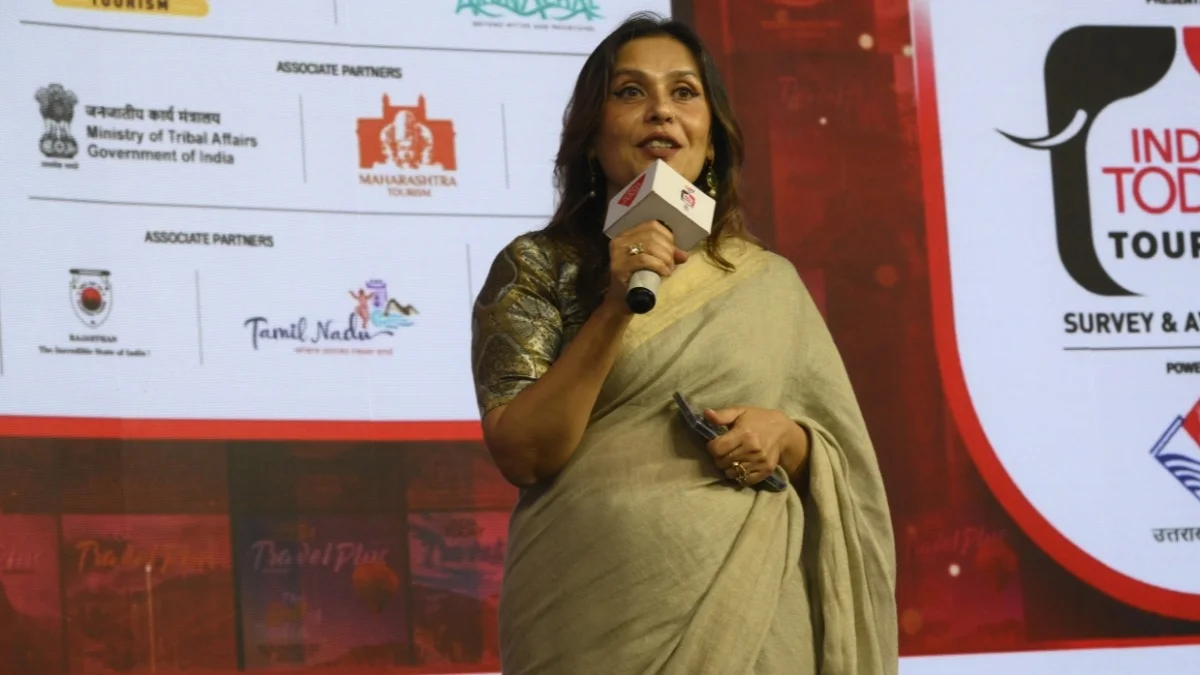
Expert conservationists stress that India possesses an extraordinary wealth of historical architecture that remains largely unexploited due to limited stakeholder awareness. Speaking at a prominent national industry conference in Goa on June 14-15, 2026, leading experts highlighted the critical need to activate this latent economic potential.
Comparative global metrics underscore the scope of the challenge. A single landmark like the Louvre Museum in Paris outpaces the total annual international arrivals to India. Furthermore, India maintains just 3,900 centrally protected structures, whereas the United Kingdom manages over 100,000 registered sites within a fraction of the geographical area.
Unchecked commercial execution and illegal structural expansion around historic zones pose severe risks to conservation. Experts warn that failing to enforce regulatory perimeters around delicate architecture permanently diminishes the long-term value of these irreplaceable national assets.
Comprehensive development strategies must encompass entire regional transit corridors and surrounding landscapes rather than focusing exclusively on single monuments. Historic palaces and local museums serve as primary repositories of regional identity and must be managed as cohesive cultural ecosystems.
Securing UNESCO recognition—whether through tangible monument listings or creative city designations—remains a premier mechanism for global positioning. Nations like China aggressively compile registration dossiers, whereas critical Indian territories like Ladakh and Jammu and Kashmir currently hold no such designations. Meanwhile, official documentation for sites like Sarnath aims to secure subsequent World Heritage status.
Key Takeaways
- Stop looking at tourism just from a marketing and packaging perspective.
- Tourism departments need to sync with urban development, culture, archaeology, heritage and city planning departments to create a more wholesome experience for travellers.
- The UNESCO tag is an ideal way for cities and countries to project themselves, with serial nominations as an effectively strategy. Mumbai’s Victoria and art deco precinct with 83 buildings is an example.
- The quality of tourists coming, the money they pay, and how the local economy is enriched are more important than the volume of footfalls.
- Conservation should be seen as an enabler of community.
Future Outlook
The trajectory of Indian tourism relies on the institutional execution of the “Vikas Bhi, Virasat Bhi” model, which balances economic modernization with civilizational preservation. Between 2014 and 2026, the central framework transitioned from isolated preservation to an integrated socioeconomic strategy.
The Archaeological Survey of India (ASI) manages 3,686 centrally protected monuments, backed by a ₹374 crore allocation during 2024-25. This is supplemented by the National Mission on Monuments and Antiquities (NMMA), which has catalogued 1.84 lakh heritage sites and 17.20 lakh antiquities as of March 2026.
Public-private integration via the Adopt a Heritage 2.0 initiative has yielded 30 active corporate partnerships, drawing 13.59 million visitors in FY 2024-25. Concurrently, infrastructure programs like the PRASHAD scheme have directed ₹1,726.74 crore across 54 spiritual destinations, including major redevelopments at Somnath and Kedarnath.
The strategy has shifted focus through Swadesh Darshan 2.0, which targets destination-centric hubs using a ₹2,208.31 crore portfolio. These systemic interventions, exemplified by the ₹355 crore Kashi Vishwanath Corridor that attracted 25.28 crore devotees in 3.5 years, demonstrate that modern transit infrastructure directly amplifies the economic yield of cultural assets.
FAQs
Why is UNESCO status considered vital for Indian tourism hubs?
UNESCO designations provide instant global visibility and validation, placing regional sites on international travel itineraries. Strategic serial nominations, such as Mumbai’s 83-building Art Deco precinct, allow entire urban zones to attract higher-spending international travellers and boost the local economy.
How does the Adopt a Heritage 2.0 initiative function?
The program allows corporate entities, public undertakings, and non-governmental organizations to adopt protected monuments using corporate social responsibility funds. These partners develop and maintain visitor amenities, improving site accessibility and interpretation services without altering the historic structures.
What distinguishes Swadesh Darshan 2.0 from earlier tourism schemes?
Swadesh Darshan 2.0 shifts the development paradigm from broad, multi-city tourism circuits to a destination-centric approach. This focus ensures deep, localized infrastructure investments that promote sustainability, state-of-the-art visitor facilities, and direct community participation.