India Brands Pakistan a ‘Frankenstein State’ at UNHRC
New Delhi has delivered a scathing condemnation of Islamabad at the United Nations Human Rights Council, characterizing its neighbor as a self-destructive regime destabilized by its own state-sponsored militancy while aggressively rejecting Pakistani assertions regarding Jammu and Kashmir and declaring the historic 1960 Indus Waters Treaty obsolete.
Key Highlights
- India labeled Pakistan a “Frankenstein state” at the UNHRC for harboring cross-border terrorist networks that ultimately cause domestic blowback.
- New Delhi declared the 66-year-old Indus Waters Treaty outdated, freezing its cooperation benefits until Islamabad halts cross-border militancy.
- Indian diplomats firmly rejected territorial claims over Jammu and Kashmir made by Pakistan and the Organisation of Islamic Cooperation.
- India raised grave human rights concerns regarding a lethal security crackdown on civilian demonstrators in Pakistan-occupied Jammu and Kashmir.
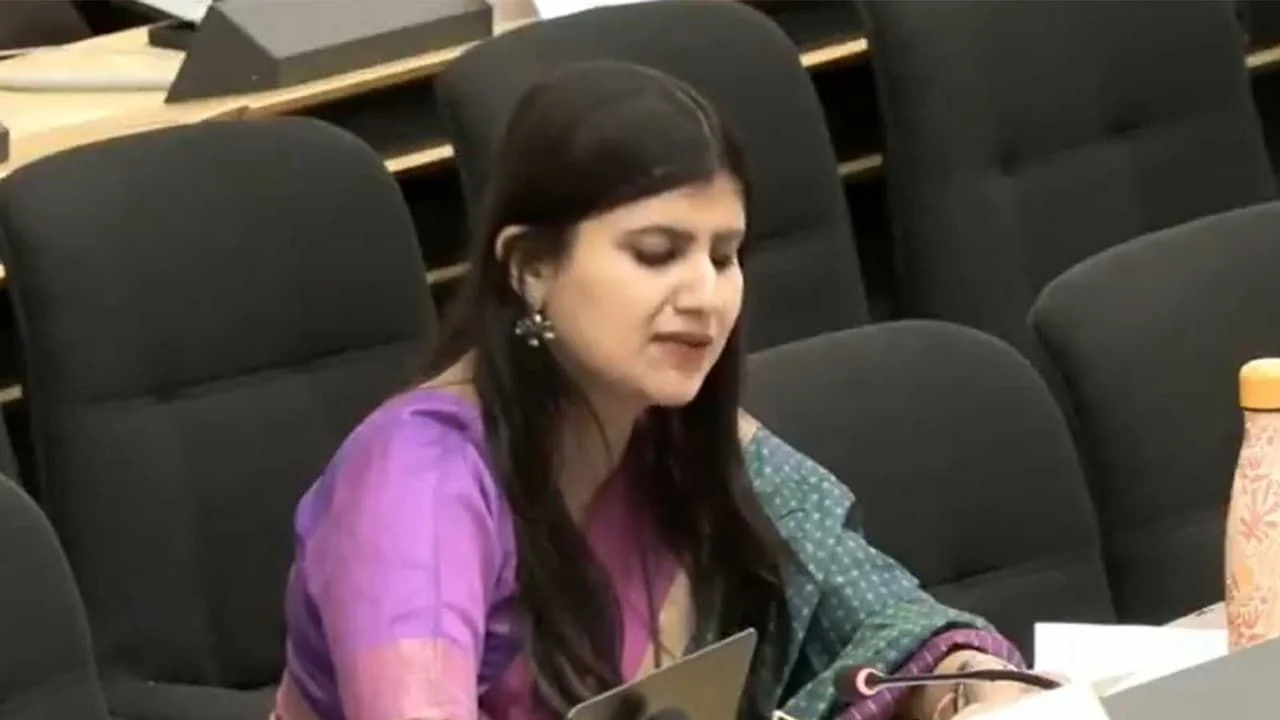
Describing Pakistan as a “Frankenstein state” shocked by the consequences of its own policies, India’s First Secretary at the Permanent Mission to the United Nations, Anupama Singh, launched a sharp attack on Islamabad at the 62nd Session of the UN Human Rights Council, accusing it of nurturing and deploying terrorism while falsely portraying itself as a victim.
Exercising India’s right of reply during the Interactive Dialogue on the UN High Commissioner’s annual report, Singh rejected Pakistan’s allegations against India and criticised its continued attempts to raise the issue of Jammu and Kashmir at international forums.
“This is the country where the sitting Defence Minister boasts of hosting, training and deploying terrorists as a state policy, and yet Pakistan calls itself a victim of terrorism, indeed a paradox which only Pakistan could sustain. It is a living example of a Frankenstein state, which is shocked when its own monster bites back,” Singh said.
India Rejects ‘Baseless and Malicious’ Allegations
She said Pakistan’s allegations against India were baseless and aimed at diverting attention from its own internal challenges and record on terrorism. “India is compelled to exercise its right of reply in response to references made to it by Pakistan and the Organisation of Islamic Cooperation. We categorically reject the baseless and malicious allegations made by Pakistan. We also categorically reject the references to J&K made by the OIC. Pakistan’s propaganda is designed to mask its domestic failures and support for terrorism. Its misuse of the OIC Coordinator’s role only reinforces this deception,” Singh said.
Compounding bilateral tensions, New Delhi expanded its diplomatic offensive by declaring the long-standing Indus Waters Treaty unsuited to contemporary geopolitical realities. Singh noted it defies fundamental logic for a state exporting regional instability to demand privileges built on mutual goodwill.
The bilateral accord, brokered over six decades ago, cannot remain permanently insulated from accountability or detached from modern realities. Following a lethal militant incursions in Pahalgam that claimed 26 lives, India placed the pact in abeyance until Islamabad halts cross-border operations.
J&K ‘Will Always Remain’ an Integral Part of India
Reiterating India’s longstanding position on Jammu and Kashmir, Singh asserted that the Union Territory remains an integral part of India. “Jammu and Kashmir was, is and will always remain an integral and inalienable part of India. The only unresolved issue is Pakistan’s illegal occupation of Indian territories and their return,” she said.
The diplomat urged Islamabad to abandon its territorial ambitions and instead focus on stabilizing its internal socio-economic crises. She dismissed Pakistan’s recurring diplomatic maneuvers at the human rights assembly, stating the seasonal theatrics had long lost any novelty or international relevance.
Concerns Raised Over ‘Brutal Crackdown’ in PoJK
The Indian diplomat also drew attention to the situation in Pakistan-occupied Jammu and Kashmir (PoJK), alleging widespread repression and human rights violations. Referring to recent unrest in Rawalakot, Singh said, “The ongoing tragedy in Rawalakot, the killing of hundreds of civilians and the brutal crackdown across Pakistan-occupied Jammu and Kashmir are the predictable outcome of a system built on forcible occupation and sustained through repression.”
Her remarks came amid reports of a June 14 security operation in Rawalakot. According to the Jammu Kashmir Joint Awami Action Committee, security forces dispersed protesters staging a sit-in at the Eidgah site, leaving at least 2 people dead and several injured. The group also alleged communication disruptions and restrictions on the movement of essential supplies following the operation.
India maintained that Pakistan’s repeated references to Jammu and Kashmir cannot alter the reality of the region’s status and accused Islamabad of attempting to divert global attention from developments in territories under its control.
Geopolitical Context and Hydrological Realities
The escalating diplomatic dispute carries profound economic implications for South Asia’s stability. Security experts emphasize that India’s decision to review its hydro-cooperation directly pressures Pakistan’s fragile agricultural sector, which relies heavily on shared river systems.
Data highlights the severe asymmetric reliance on the Indus river system, which services 80% of Pakistan’s 16 million hectares of arable land. Furthermore, the basin supplies 93% of Pakistan’s total water volume, making any modification to the 1960 legal framework a critical national security concern for Islamabad.
FAQs
Why did India call Pakistan a Frankenstein state at the UNHRC?
India labeled Pakistan a Frankenstein state because Islamabad has historically nurtured, trained, and deployed militant proxy groups as a tool of state policy, only to suffer severe domestic security consequences when those same extremist elements turned against their creators.
What is India’s current stance on the Indus Waters Treaty?
India views the 1960 Indus Waters Treaty as completely outdated and unsuited for present-day realities. New Delhi has suspended the benefits of this cooperative framework following the Pahalgam terror attack, asserting that water cooperation cannot be separated from state-sponsored terrorism.
How dependent is Pakistan on the Indus river system?
Pakistan is highly vulnerable to changes in the river basin, relying on the Indus water system to sustain 80% of its 16 million hectares of agricultural farmlands and to fulfill 93% of its overall national water consumption.
What did India state regarding the legal status of Jammu and Kashmir?
India reaffirmed that the entire territory of Jammu and Kashmir remains an inalienable and integral part of its sovereign nation, clarifying that the only outstanding bilateral issue is the unlawful occupation of Indian lands by Pakistan.