India Slams Pakistan Over Kashmir Misuse at United Nations
India forcefully rebuked Pakistan at the United Nations after Islamabad repeatedly raised the disputed territorial sovereignty of Jammu and Kashmir. New Delhi firmly dismissed the Pakistani remarks, reasserting that the region remains an foundational part of India while accusing Islamabad of exploiting international diplomatic forums to advance its political agenda.
Key Takeaways
- India rejected Pakistan’s statements at the UN, declaring Jammu and Kashmir an internal, integral territory.
- New Delhi accused Islamabad of exploiting global diplomatic platforms for divisive geopolitical gain.
- Pakistan cited historical UN Security Council resolutions, demanding a supervised plebiscite for self-determination.
- The diplomatic clash occurred during the presentation of the annual UN Security Council report.
India strongly slammed Pakistan at the United Nations after Islamabad once again raised the Jammu and Kashmir issue. New Delhi dismissed Pakistan’s remarks, reaffirmed that Jammu and Kashmir is an integral part of India, and accused Pakistan of misusing international platforms to push its agenda while calling for credible reforms in global institutions.
The diplomatic standoff intensified during the United Nations General Assembly session reviewing the Security Council’s annual activities. Indian Permanent Representative Parvathaneni Harish countered the Pakistani narrative, asserting that Jammu and Kashmir was, is, and will always remain an inalienable component of the Indian Union.
Responding to the Indian position, Pakistani diplomat Gul Qaiser Sarwani exercised the right of reply to contest New Delhi’s sovereignty claims. Sarwani argued that the territory maintains an internationally recognized status on the active agenda of the Security Council, stating that historical and legal records cannot be altered.
The friction followed an address by Pakistan’s Permanent Representative, Asim Iftikhar Ahmad, who noted that over 20 bilateral communications regarding the region were processed during the 2025 reporting period. Ahmad stated that the Security Council convened closed-door consultations on the matter in May 2025, illustrating its ongoing international relevance.
Islamabad tied the South Asian impasse to broader global conflicts, comparing the situation to the Palestinian crisis. Pakistani representatives demanded the execution of UN resolution 2803 regarding Gaza while simultaneously renewing their foundational calls for a UN-supervised plebiscite within Kashmir to grant self-determination.
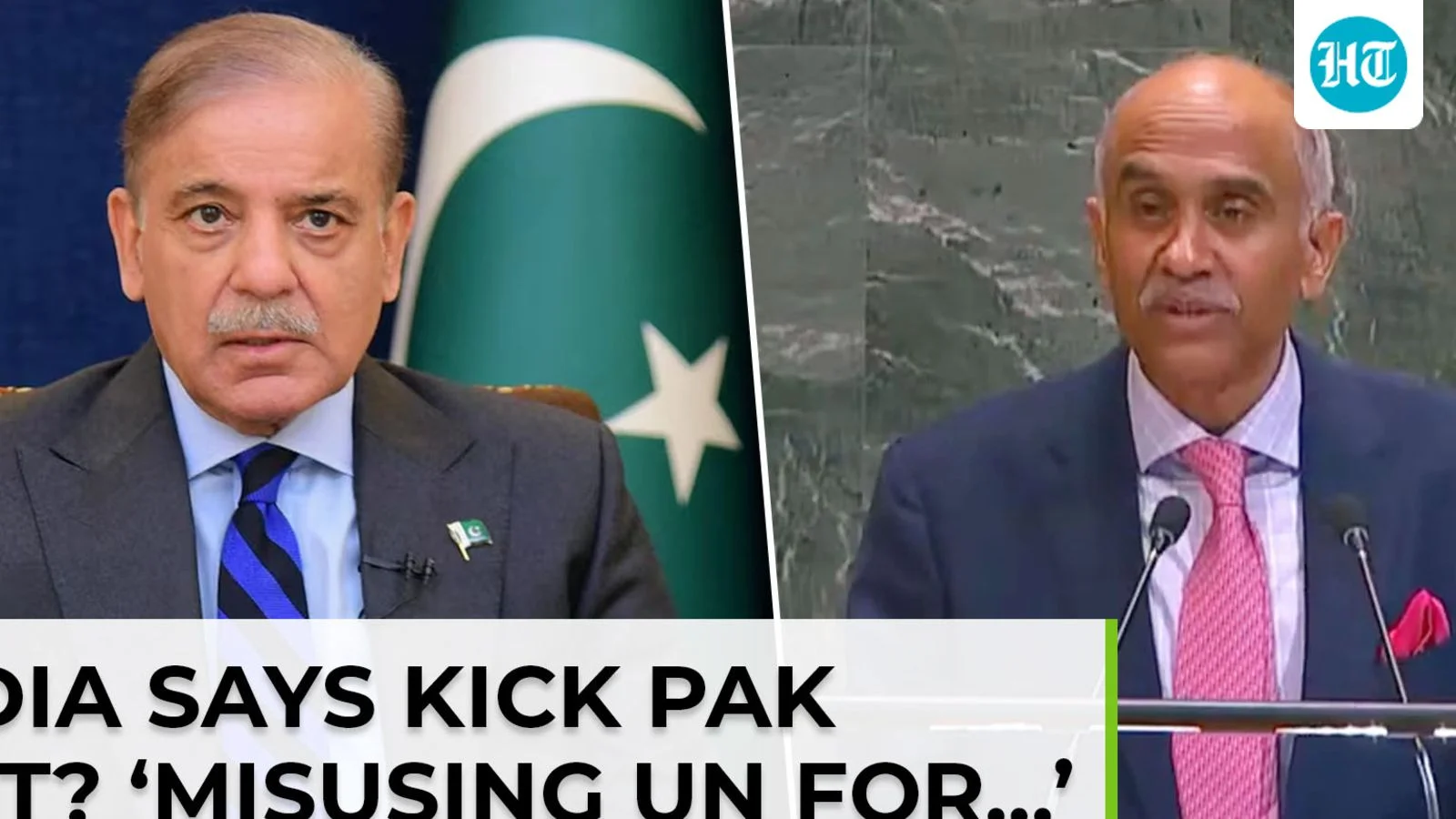
India says kick Pak out? ‘Misusing UN platforms for…’ – Big shock for Sharif
Indian delegates criticized Pakistani leadership under Prime Minister Shehbaz Sharif and military chief Asim Munir, stating that Islamabad routinely exploits multilateral forums for narrow political interests. New Delhi urged the General Assembly to prioritize comprehensive institutional reforms over the repetitive blocking maneuvers executed by select member states.
Watch why people joined Abhijeet Dipke’s demonstration at Jantar Mantar
While diplomatic tensions peaked in New York on June 6, 2026, regional development initiatives continued across the domestic landscape. Union Minister Jitendra Singh inaugurated the fourth annual Lavender Festival in Bhaderwah, showcasing the economic transformation of the Chenab Valley through the sustainable Purple Revolution startup network.
Concurrently, India expanded its subcontinental meteorological infrastructure by launching the seventh Regional Meteorological Centre in Jammu. This specialized high-altitude facility provides localized early-warning disaster tracking and severe weather forecasting for critical transit routes, local agricultural sectors, and thousands of annual religious pilgrims.
History of the Kashmir Dispute at the UN
The geopolitical friction over Jammu and Kashmir has remained on the United Nations Security Council agenda for more than seven decades, originating from the 1948 geopolitical partition of the subcontinent. India maintains that the entire territory legally acceded to the secular union, rendering all subsequent territorial claims invalid. Conversely, Pakistan points to early Security Council resolutions advocating for a regional plebiscite. This structural disagreement continues to spark regular diplomatic confrontations during annual UN General Assembly sessions.
FAQs
What triggered the latest UN dispute between India and Pakistan?
The confrontation occurred during the presentation of the UN Security Council’s annual report, where Pakistan raised the issue of Jammu and Kashmir, prompted a swift counter-assertion of sovereignty from India’s diplomatic delegation.
What is India’s official stance on Jammu and Kashmir at the UN?
India maintains that the entire territory of Jammu and Kashmir is an integral, inalienable, and non-negotiable part of the nation, viewing any external discussion of the region as an interference in its internal domestic affairs.
What arguments did Pakistan present during the General Assembly debate?
Pakistan argued that the territory remains an internationally recognized dispute according to historical UN Security Council logs, noting that the council reviewed over 20 relevant communications during the 2025 calendar year.