Vance Proposed Non-European Troops for Ukraine Ceasefire
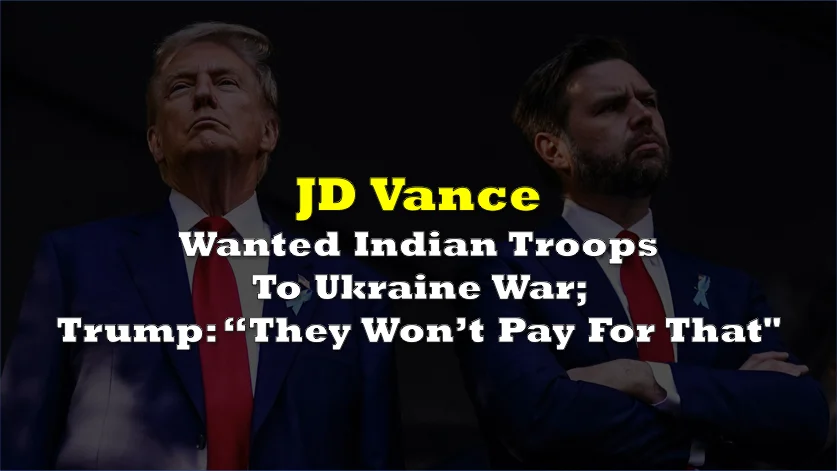
A newly published book reveals Vice President JD Vance proposed utilizing military personnel from India and Saudi Arabia to secure a postwar peace in Ukraine. President Donald Trump reportedly dismissed the suggestion, contending that New Delhi would refuse to finance an external geopolitical deployment.
Key Highlights
- Vice President JD Vance floated India and Saudi Arabia as potential non-European contributors to a postwar Ukraine security apparatus during an Oval Office session on January 30, 2026.
- Special Envoy Keith Kellogg outlined a framework requiring an “Article 5 exemption” to avoid direct NATO and United States military exposure.
- President Trump rejected the concept of Indian involvement, stating Prime Minister Narendra Modi’s government would not fund an external conflict.
- The diplomatic friction coincides with mounting domestic constraints, as the US Senate passed a War Powers resolution in a 50-48 vote to curb executive military actions elsewhere.
A new account from Regime Change, authored by New York Times correspondents Maggie Haberman and Jonathan Swan, details an Oval Office assembly on January 30, 2026. During this session, held 10 days post-inauguration, Vice President JD Vance proposed India and Saudi Arabia as potential non-European contributors to a postwar Ukraine peacekeeping mission. President Donald Trump rejected the suggestion, stating India would not fund such a deployment.
According to the text, which circulated online following initial reporting by the Hindustan Times, special envoy Keith Kellogg presented a blueprint titled “An America First Plan: Trump’s Historic Peace Deal for Russia-Ukraine War.” The strategy detailed a mandatory “Article 5 exemption,” ensuring any security framework for Kyiv would operate entirely outside the statutory defense commitments of NATO.
This specific legal and military mechanism forms the structural core of the administration’s strategic planning. The internal records indicate that White House planners actively sought an alternative stabilizing force capable of reassuring Ukraine while preventing the Western alliance from becoming a direct combatant against Moscow.
Sponsored · Power Metallic Inc.
Vance countered the logistical challenge by suggesting the administration look entirely beyond the European theater, identifying New Delhi and Riyadh as viable candidates. President Trump’s reaction underscored his transactional approach to foreign policy, viewing India not as a strategic partner prepared to manage security risks, but as a nation highly resistant to financing foreign military operations.
“Indians won’t do that,” Trump observed during the meeting, according to the book. “They won’t pay for something like that.”
The volume notes that Trump expressed comfort with British, French, or Dutch personnel deploying to oversee a ceasefire line, provided the United States maintained zero operational or financial exposure.
This represents the primary policy contradiction within the administration. The executive team desired an enforceable territorial settlement in Eastern Europe, yet Trump insisted that any enforcement obligations must terminate before requiring American resources or personnel.
Sponsored · Selkirk Copper Mines
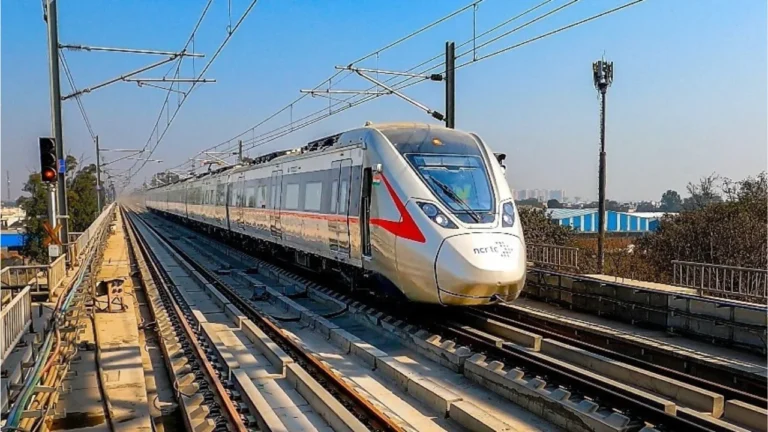
The suggestion of New Delhi was not politically random. India remains a premier contributor to United Nations peacekeeping operations. Historical tracking data confirms the country ranks among the largest global suppliers of uniformed personnel, with a January 2025 UN ledger placing India fourth globally with 5,375 active peacekeepers.
However, an active deployment to Eastern Europe carries unprecedented operational dangers. Entering Ukraine would place foreign forces inside an active combat zone adjacent to a nuclear-armed Russian Federation, operating under a mandate that would face immediate diplomatic resistance within the UN Security Council.
This operational reality explains why India’s extensive UN peacekeeping record does not imply a willingness to enter an active European conflict. In October 2025, Vishwesh Negi, a senior official within the Indian Defence Ministry, confirmed it was highly improbable that UN forces would deploy to Ukraine or Gaza due to structural veto dynamics within the Security Council.
New Delhi’s diplomatic framework has consistently emphasized strategic neutrality and mediation over military intervention. Prime Minister Narendra Modi has routinely advocated for dialogue, reaffirming his support for a peaceful resolution during a 2025 bilateral call with Ukrainian President Volodymyr Zelenskyy, followed by a formal meeting at the G7 summit in June 2026.
Consequently, the strategic architecture proposed by Vance faces severe execution barriers on the ground.
While Trump’s specific rhetoric regarding Indian fiscal policies will attract significant diplomatic scrutiny, the operational impasse presents the more severe hurdle.
Any functional security guarantee for Kyiv requires four foundational pillars: personnel, funding, a unified command hierarchy, and sovereign political consent. The leaked Oval Office minutes demonstrate that all four components remain entirely unresolved.
A formal NATO framework risks direct escalation with Moscow, while an American mission violates Trump’s core mandate to eliminate US military exposure. Conversely, a European coalition relies heavily on London and Paris—whose presence Russian Foreign Minister Sergey Lavrov explicitly called “unacceptable” to Secretary of State Marco Rubio in February 2026—and a non-European force requires neutral states to assume immense risk.
The internal policy divergence between Trump and Vance mirrors a classic Washington geopolitical maneuver, attempting to persuade foreign partners to underwrite a strategic equilibrium that the United States refuses to guarantee directly.
Furthermore, the proposal conflicts directly with Vance’s established public doctrine. In May 2025, Vance explicitly stated that the United States would remain entirely neutral in regional South Asian disputes, designating the India-Pakistan relationship as external to American national security interests.
The details of the troop deployment strategy remain confined to the journalistic text. If validated, the disclosure reveals a fundamental strategic divide between the president and his designated successor.
Future Outlook
The revelation of these high-level disagreements highlights the complex task facing the administration as it attempts to broker an end to the conflict. With Russia maintaining a rigid stance against any Western or NATO-aligned military presence along its borders, the search for neutral, third-party guarantors will intensify. However, as India continues to prioritize its strategic autonomy and economic ties with Moscow, the United States may be forced to look toward alternative security arrangements or increase reliance on European allies willing to operate outside the traditional NATO umbrella.
FAQs
Who attended the Oval Office meeting regarding the Ukraine peace plan?
The meeting on January 30, 2026, included President Donald Trump, Vice President JD Vance, Secretary of State Marco Rubio, Defense Secretary Pete Hegseth, National Security Adviser Mike Waltz, Treasury Secretary Scott Bessent, White House deputy chief of staff Stephen Miller, and Special Envoy Keith Kellogg.
Why did Donald Trump reject using Indian troops for peacekeeping in Ukraine?
President Trump dismissed the idea because he believed India would refuse to pay for or finance a military peacekeeping mission for an external conflict that did not directly involve its own national security.
What is the “Article 5 exemption” mentioned in the peace proposal?
The Article 5 exemption was a legal and military clause in Keith Kellogg’s plan designed to ensure that any security or peacekeeping mission in Ukraine would not trigger NATO’s collective defense obligations, thereby keeping the United States out of direct warfare.