India Slams Pakistan’s War Threats Over Indus Waters Treaty
India Rejects Pakistan‘s Kashmir and Indus Waters Remarks as Desperate Cover-up
New Delhi rejects Pakistan’s remarks on Kashmir and the Indus Waters Treaty, calling them a desperate bid to cover up human rights abuses and internal failures.
politics
India Slams Pakistan’s War Threats and Rights Violations over Kashmir and Indus Waters
Ministry of External Affairs (MEA) spokesperson Randhir Jaiswal dismissed provocative military rhetoric from Islamabad, highlighting systematic state-sponsored subjugation and police brutality in Pakistan-occupied Kashmir (PoK).
indus-waters-treaty, randhir-jaiswal, india-pakistan-relations, pok-protests, khawaja-asif
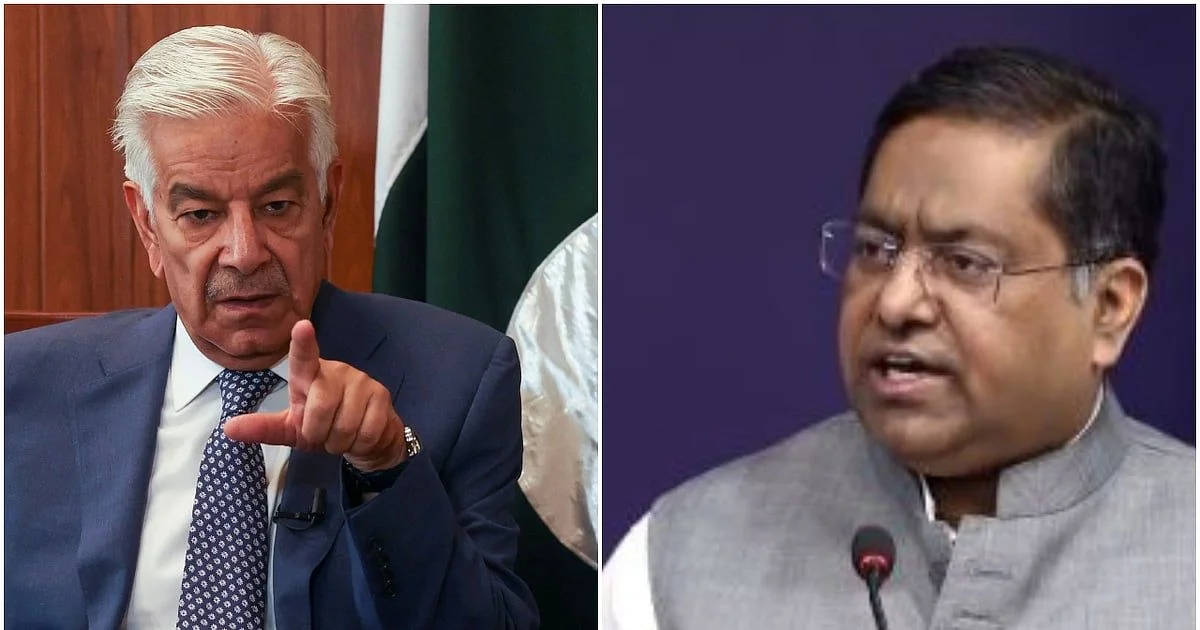
New Delhi has strongly rejected Pakistani Defence Minister Khawaja Asif’s statements regarding Jammu and Kashmir and the Indus Waters Treaty. Indian officials characterized the remarks as a frantic effort by Islamabad to obscure its internal governance failures and deflect international attention from its domestic human rights violations.
Key Highlights
- India categorically rejected Pakistan’s fabricated claims regarding regional water and territorial security.
- New Delhi attributed volatile civil unrest in Pakistan-occupied Kashmir (PoK) to decades of state-sponsored economic exploitation.
- Islamabad issued explicit military warnings, threatening war if its national water security is compromised by Indian policies.
- The Indus Waters Treaty remains in abeyance following a deadly cross-border terrorist strike in Pahalgam in 2025.
New Delhi on Tuesday trashed Pakistan Defence Minister Khawaja Asif’s remarks on Jammu and Kashmir, calling them Islamabad’s desperate attempts to cover up its “own failings”.
Khawaja had criticised India for its suspension of the Indus Waters Treaty as well as for the situation in Jammu and Kashmir. His bellicose rhetoric followed warnings that Islamabad would initiate a military conflict if it perceived India’s river management as a national security threat.
“We have seen some reports on the matter. Such remarks are desperate attempts by Pakistan to cover-up its own failings and deflect attention away from its human rights abuses,” External Affairs Ministry spokesperson Randhir Jaiswal said during a press briefing.
“We categorically reject these fabricated claims with the contempt they deserve.” This diplomatic retaliation followed three days after Asif told a Pakistani news channel that water remains a part of national security and that Pakistan will definitely go to war over it.
“The ongoing protests in Pakistan Occupied Kashmir (PoK) are a direct consequence of Pakistan’s decades-long policy of systemic economic exploitation, denial of fundamental rights, and administrative oppression in areas under its illegal and forcible occupation,” Jaiswal said.
He said the Pakistani state has responded to the protests with extreme brutality, blocking of essential supplies and medicines, internet blackouts, and use of lethal force against unarmed civilians. These severe anti-establishment demonstrations have swept through the volatile occupied territory.
“We hope the international community will hold Pakistan accountable for its misdeeds and abuses,” he said. Jaiswal urged global powers to intervene and penalize Islamabad for its heavy-handed clampdown, noting that several people have lost their lives as a result.
India hit back at Pakistani Defence Minister Khawaja Asif’s military threats, calling them a desperate bid to hide domestic failings and rights violations. MEA spokesperson Randhir Jaiswal highlighted Pakistan’s suppression of protests in PoK.
New Delhi launched a scathing counter-attack against Pakistani Defence Minister Khawaja Asif following his provocative military threats. India characterized the remarks as a frantic bid by Islamabad to obscure its dismal domestic record and egregious human rights violations.
Concurrently, New Delhi cast a sharp spotlight on Islamabad’s ruthless suppression of widespread anti-establishment demonstrations sweeping through Pakistan-occupied Kashmir (PoK). Ministry of External Affairs spokesperson Randhir Jaiswal dismissed the provocative rhetoric during a press briefing.
“Regarding the comments made by the Pakistani Defence Minister, we have seen reports on the matter. Such remarks are desperate attempts by Pakistan to cover up its own failings and divert attention away from its human rights abuses. We categorically reject these fabricated claims with the contempt they deserve,” Jaiswal stated.
India Slams Pakistan’s ‘Systematic Subjugation’ in PoK
Dismantling Islamabad’s narrative further, the spokesperson pointed out that the volatile situation in the occupied territory stems directly from decades of systemic state-sponsored subjugation by Pakistan. The administrative clampdown has severely impacted local civilian populations.
“The ongoing developments in Pakistan-occupied Kashmir are a direct consequence of Pakistan’s decades-long policy of systematic economic exploitation, denial of fundamental rights, and administrative oppression in areas under its illegal and forcible occupation,” Jaiswal added.
“The Pakistani state has responded with extreme police brutality, including the blocking of essential supplies and medicines, internet blackouts, and the use of lethal force against unarmed civilians,” Jaiswal stated, highlighting the intensifying humanitarian crisis.
MEA Urges International Community to Hold Pakistan Accountable
The MEA spokesperson further urged global powers to intervene and penalise Islamabad for its heavy-handed clampdown on the aggrieved civilian population in PoK. The state’s lethal enforcement measures have drawn severe condemnation from Indian authorities.
“As you know, several people have lost their lives as a result. We hope that the international community will hold Pakistan accountable for its actions, misdeeds, and human rights abuses,” Jaiswal stated during the media interaction.
Pakistan’s Threat Over Indus Waters
The diplomatic retaliation from New Delhi followed 3 days after Asif issued a belligerent warning that Islamabad would not hesitate to initiate a military conflict if it perceived India’s management of the Indus River system as a threat to its domestic water security.
While speaking to a Pakistani news channel on Saturday, Asif remarked, “The moment we feel that our national security, and water is part of our national security, is being threatened, we will go to war against India. Definitely.”
The bellicose rhetoric from the Pakistani political establishment is part of a coordinated campaign by both state authorities and shadow non-state actors targeting India. This escalatory posturing intensified after New Delhi placed the Indus Waters Treaty in abeyance.
The decision followed a deadly cross-border terrorist strike in Jammu and Kashmir’s Pahalgam last year. India has firmly maintained that the water pact will remain suspended until Islamabad demonstrates verifiable action to dismantle the state-sponsored infrastructure of cross-border terrorism operating from its soil.
History of the Indus Waters Treaty Dispute
The Indus Waters Treaty, signed in 1960 under the aegis of the World Bank, has historically governed the distribution of the Indus River system between India and Pakistan. It provides India control over the three eastern rivers, while Pakistan manages the three western rivers.
Tensions escalated dramatically in May 2025 following a major cross-border terrorist strike in Pahalgam, Jammu and Kashmir. In a decisive diplomatic departure, India placed the bilateral pact in abeyance, asserting that water cooperation cannot coexist with state-sponsored terrorism.
India has speeded up infrastructure assessments and maintained that the treaty will not be reinstated until Islamabad takes transparent, verifiable steps to eliminate terrorist launchpads and networks operating from its soil.
FAQs
Why did India suspend the Indus Waters Treaty?
India placed the Indus Waters Treaty in abeyance in May 2025 as part of a firm diplomatic response to a deadly cross-border terrorist attack in Pahalgam, Jammu and Kashmir. India maintains that water cooperation cannot continue while Pakistan supports cross-border terrorism.
What sparked the latest diplomatic row between India and Pakistan?
The latest dispute was triggered by Pakistani Defence Minister Khawaja Asif, who threatened military action against India if Islamabad’s water security was compromised. India’s Ministry of External Affairs rejected the threats, calling them an effort to hide internal failures.
What is causing the protests in Pakistan-occupied Kashmir (PoK)?
According to India’s Ministry of External Affairs, the protests in PoK are the result of decades of systematic economic exploitation, denial of basic human rights, and heavy-handed administrative oppression by the Pakistani state.
How has Pakistan responded to the unrest in PoK?
The Pakistani state has reportedly responded to civilian protests in PoK with severe police brutality, including the deployment of lethal force against unarmed citizens, internet blackouts, and cutting off essential medicines and supplies.