India Slams Pakistan Water War Threats Amid PoK Unrest
India has fiercely condemned provocative military threats from Islamabad regarding regional water security. New Delhi characterized the remarks as a desperate ploy to mask domestic governance failures and severe human rights violations in Pakistan-occupied Kashmir, where civil unrest continues to escalate.
Key Highlights
- New Delhi rejected Pakistani warnings of military conflict over the strategic Indus River system.
- The Ministry of External Affairs criticized Islamabad’s violent suppression of civilians in PoK.
- India maintains its suspension of the Indus Waters Treaty following a 2025 terror attack.
- Islamabad defended its position, invoking historical claims and UN-backed self-determination.
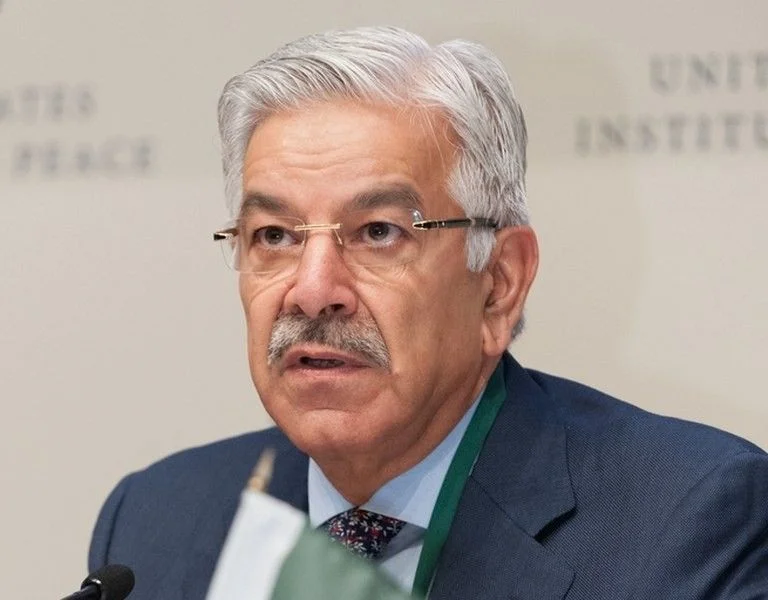
The diplomatic clash intensified after Pakistani Defence Minister Khawaja Asif cautioned that Islamabad could launch military operations if it perceived a threat to its hydrologic security arising from Indian management of the shared Indus River architecture.
In response, Ministry of External Affairs spokesperson Randhir Jaiswal stated that Islamabad was attempting to alter regional focus by deploying manufactured allegations against New Delhi.
“Such remarks are desperate attempts by Pakistan to cover up its own failings and divert attention away from its human rights abuses. We categorically reject these fabricated claims with the contempt they deserve,” Jaiswal stated during an official media briefing.
MEA slams Pak’s handling of PoK unrests
The external affairs spokesperson further rebuked the administrative actions of Islamabad concerning widespread civil demonstrations in Pakistan-occupied Kashmir, asserting that state authorities utilized brute force against local populations to stifle domestic dissent.
Jaiswal observed that the sustained public instability across PoK stems directly from decades-long economic exploitation, systemic denial of basic constitutional liberties, and institutionalized administrative high-handedness enforced by Pakistani authorities.
The Indian official added that security forces responded to the public demonstrations with severe police misconduct, which involved the interdiction of critical medical supplies, regional internet blackouts, and the deployment of fatal force against peaceful protesters.
India urges global attention on PoK situation
The external affairs ministry called upon international observers to scrutinize the deteriorating regional situation and hold the administration in Islamabad legally responsible for its domestic conduct.
“As you know, several people have lost their lives as a result. We hope that the international community will hold Pakistan accountable for its actions, misdeeds, and human rights abuses,” the spokesperson remarked.
Remarks follow Asif’s war warning over water security
The statements from New Delhi followed a television broadcast where Asif asserted that Islamabad retains the option of conventional military escalation if it determines its national liquid resource security is compromised by Indian water management.
“The moment we feel that our national security, and water is part of our national security, is being threatened, we will go to war against India. Definitely,” Asif declared during the broadcast.
The aggressive rhetoric coincides with severe diplomatic friction regarding the bilateral Indus Waters Treaty, which New Delhi effectively froze after a fatal cross-border terrorist strike occurred in Pahalgam, Jammu and Kashmir, last year.
Indian authorities maintain that the transboundary water agreement will remain completely frozen until Islamabad executes verifiable, transparent, and concrete measures to dismantle cross-border terrorist networks operating from its soil.
ISLAMABAD: Concurrently, Defence Minister Khawaja Muhammad Asif asserted on Tuesday that his pronouncements regarding the administrative crisis in Azad Jammu and Kashmir were rooted in absolute sincerity, maintaining that no external narrative could sever the historical alliance linking Pakistan and the region.
“My remarks about the crisis in AJK were frank and honest, Alhamdolillah. Those who have sinister agendas may try to twist them but they cannot take Kashmir out of me or out from Pakistan or take Pakistan out of Kashmir,” the defense chief published on the digital network X.
He stated that the historical sacrifices of regional migrants who relocated in October 1947 are permanently preserved within the national consciousness of the country.
“The struggle of Kashmiris in Indian-occupied Kashmir against Indian occupation is a saga of martyrdom and lives spent in jails over the last 78 years,” he asserted, noting that national dedication to the territory is cemented by military casualties across five historical conflicts, alongside its institutional support for a United Nations-supervised plebiscite.
Given these geopolitical dynamics, the defense minister stated that hostile, externally subsidized factions operating within the region against national security interests must be met with uncompromising state resistance.
He noted that while certain populations endured relocation, others continue to face hardships across Indian Illegally Occupied Jammu and Kashmir. He stressed that communities living under the domestic protection of national security forces must honor the historical struggles of previous generations.
“Belittling these sacrifices is negating the Kashmir cause,” the minister observed.
“In my humble opinion, Kashmiriat is defined by the sacrifices and struggles waged over almost eight decades by Pakistanis including Kashmiris and all others, not by birth certificates,” the defense leader concluded.
PM PROMOTING POLITICAL RECONCILIATION, NEW DEMOCRATIC TRADITIONS
Previously, Asif stated that Prime Minister Shehbaz Sharif is executing structural democratic advancements by fostering a governance model centered on legislative compromise and inter-party stabilization.
Addressing the National Assembly, the defense official called upon minority political factions to participate in these institutional dynamics, emphasizing that the prime minister has established an updated legislative environment nationwide.
The minister noted that Prime Minister Shehbaz Sharif and Field Marshal Syed Asim Munir have collectively elevated the geopolitical standing and sovereignty of the state globally, calling on legislators to evaluate these structural milestones objectively.
The defense official advised parliamentarians to maintain a measured perspective during domestic policy debates and critically evaluate legislative missteps committed during prior governance cycles.
He noted that the administration is systematically working to generate legislative consensus, adding that recent overtures for cross-party discussions demonstrate an institutional commitment to political stability.
Turning to energy infrastructure, Asif stated that all prior administrations over the past 25 to 30 years share systemic liability for complex Independent Power Producers contracts and the subsequent capacity payment liabilities.
He noted that the current Sharif administration successfully restructured operational terms with several IPPs, minimizing national financial exposure under these power procurement compacts by roughly $3.5 trillion rupees over the remaining operational duration of the treaties.
He maintained that this fiscal mitigation would directly advantage domestic energy consumers and stabilize the macroeconomic landscape in the coming years.
The official added that while previous political regimes attempted to renegotiate these structural energy contracts, no functional resolution was realized during their respective tenures.
He noted that if these fiscal obligations are classified as structural policy errors, the systemic accountability must be distributed among all political administrations that initiated or maintained the agreements.
He clarified that the bulk of these IPP networks were constructed during the 1990s and the initial governance phase of General Pervez Musharraf, a period when the state faced critical electrical deficits.
He concluded by explaining that capacity payment architectures were originally introduced as financial incentives to draw foreign direct investment into the infrastructure domain by ensuring fixed baseline revenues even during periods of unutilized power generation.
History of the Indus Waters Treaty
The Indus Waters Treaty is a critical transboundary water distribution agreement brokered by the World Bank and signed in 1960. It allocates control of six major rivers between India and Pakistan. The treaty gives India control over the three eastern rivers (Ravi, Beas, and Sutlej), while Pakistan receives water from the three western rivers (Indus, Jhelum, and Chenab). Despite surviving multiple conventional wars between the two nuclear-armed neighbors, the treaty has faced unprecedented strain in recent years due to shifting geopolitical dynamics, cross-border terrorism, and climate-induced water scarcity in the subcontinent.
FAQs
Why did India suspend the Indus Waters Treaty?
India placed the Indus Waters Treaty in abeyance following a major cross-border terrorist assault in the Pahalgam region of Jammu and Kashmir. New Delhi has maintained a firm diplomatic stance that the treaty will remain suspended until Pakistan executes verifiable and credible actions to eliminate terrorist infrastructure on its territory.
What sparked the latest diplomatic dispute between India and Pakistan?
The latest row was triggered by Pakistani Defence Minister Khawaja Asif, who warned during a television interview that Pakistan would consider conventional military action against India if it felt its national water security was compromised by India’s management of the Indus River system.
How did India react to Pakistan’s military warnings?
Indian Ministry of External Affairs spokesperson Randhir Jaiswal categorically rejected Pakistan’s claims. He stated that the war remarks were a desperate bid by Islamabad to divert international focus away from its own administrative failures and systemic human rights abuses.
What is happening in Pakistan-occupied Kashmir?
Pakistan-occupied Kashmir has been hit by widespread civil unrest and public protests. India alleges that these demonstrations are the result of decades of economic exploitation and administrative oppression by Islamabad, which has reportedly responded to the civilian protests with extreme police brutality and internet blackouts.