India Faces Severe Drug Trafficking Threat From Myanmar as Opium Production Surges
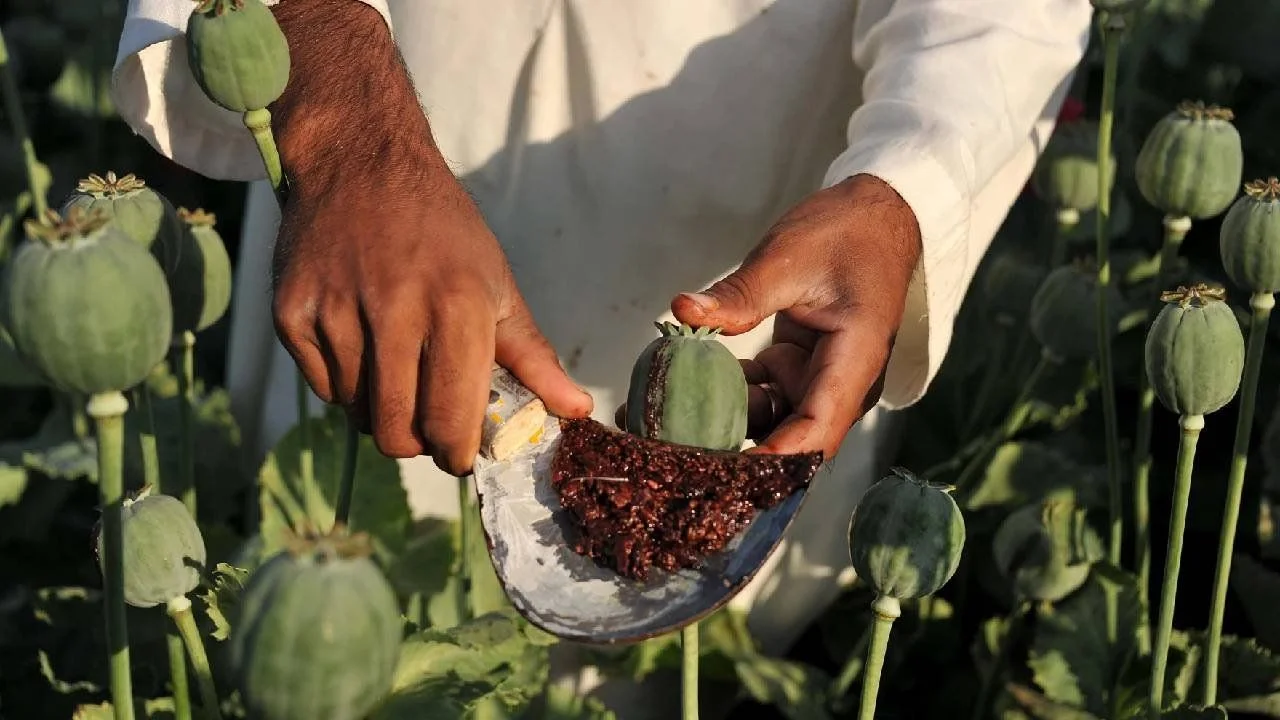
New Delhi tracks a severe rise in contraband smuggling across the Myanmar frontier into domestic territories. A recent intelligence document indicates that an expansion of illegal poppy farming and yield in the neighboring state drives this security crisis.
The 2025 annual report by the Narcotics Control Bureau classifies this regional shift as an immediate danger. The agency marks Myanmar as the primary global manufacturing hub filling the market deficit created by the recent output crash in Afghanistan.
The 1,643-km-long international boundary serves as a primary pipeline for illicit heroin and methamphetamine originating from the Golden Triangle. This cross-border flow utilizes challenging topography and historical free movement policies across Manipur, Mizoram, Nagaland, and Arunachal Pradesh.
India remains trapped between two dominant global narcotics manufacturing regions. The state faces the Golden Crescent along its northwestern perimeter encompassing Pakistan, Afghanistan, and Iran, while confronting the Golden Triangle along its eastern flank.
Though the 2022 Taliban prohibition slashed Afghan opium yields by 93% from historical peaks, United Nations oversight authorities confirm that regional warehouses hold ample contraband volumes to sustain international illicit consumer demand until 2026.
The federal anti-narcotics agency warns that downplaying this reality would be an analytical miscalculation. The temporary reduction in South Asian supply does not equate to a lower security threat for the Indian republic.
Conversely, Myanmar witnessed an opium production spike exceeding 50% between 2020 and 2024. Total land area dedicated to illicit poppy cultivation expanded significantly to encompass 45,200 hectares within the neighboring country.
This agricultural expansion positions the shared frontier as the premier alternative cultivation zone. The region systematically compensates for the global supply vacuum caused by the collapse of traditional operational networks in Afghanistan.
The national eastern frontier provides direct entry routes for this surging production base. Visible impacts include a 140% spike in seizures of Amphetamine Type Stimulants documented nationally between 2020 and 2025, hitting 8.2 tons during 2024.
Federal authorities cite these specific seizure metrics as undeniable proof of the danger. The numbers provide a clear data-driven signal showing how rapidly the security threat on the eastern border has intensified.
Border territories like Manipur, Mizoram, and Nagaland experience the most intense direct contact with these trafficking networks. These jurisdictions serve as the immediate frontline against the arriving wave of foreign contraband.
Relaxed border oversight systems and previous free-transit arrangements enabled an operational evolution. The targeted northeastern border states shifted from peripheral transit pathways into active operational centers managing distribution into the deep domestic market.
Enforcement records identify a major smuggling path entering via Champhai in Mizoram, bordering Chin State. Contraband traverses unfenced territorial gaps, moving through Aizawl transit networks toward Silchar within the Barak Valley of Assam.
From those positions, the illicit cargo transfers through Meghalaya to reach transit centers in Guwahati. The network subsequently uses these urban transport hubs to distribute narcotics across the broader domestic mainland market.
The federal documentation references the UNODC World Drug Report 2025 to verify regional metrics. The data reveals Myanmar generated 995 tonnes of opium during 2024, marking a 50% rise over 2020 volumes.
The enforcement review notes that the reduction of Afghan supply triggered a significant operational reallocation. The trade diversified its distribution channels, causing a substantial volume of narcotics to flow directly toward eastern Indian routes.
The broader strategic reality shows that western border exposure is transforming. The region is evolving from a traditional bulk heroin route into a sophisticated, multi-commodity smuggling theater utilizing advanced modern technologies.
The agency highlights the growing deployment of internet-enabled communication systems by trafficking syndicates. Networks increasingly rely on specialized digital systems, highlighting Telegram as a primary channel for managing illicit operations.
Secure messaging applications including Telegram, WhatsApp, and Signal now operate as major transitional pathways worldwide and domestically. These platforms assist syndicates in connecting directly with buyers while avoiding traditional surveillance.
Unlike darknet marketplaces that necessitate technical configurations, consumer smartphone applications lower entry barriers significantly. This accessibility allows illicit syndicates to reach a vastly expanded audience of potential domestic consumers.
Telegram serves as a prominent modern vector for public narcotics marketing. Open digital channels display comprehensive product catalogues, detailed pricing structures, and localized delivery configurations to massive networks of active subscribers.
The digital application faced a domestic operational suspension during the national re-NEET examination period. This action reflected broader state concerns over secure communications platforms operating within national borders.
Addressing domestic institutional hurdles, the agency notes a severe deficit in its statutory prosecution department. Only 1 legal position out of 38 approved roles remained occupied as of December 2025.
Additionally, all 7 approved positions within the cyber and technical enforcement division remained completely vacant. This human resource deficit creates a substantial vulnerability in digital tracking capabilities.
Key Takeaways
- Myanmar Opium Surge: Opium cultivation in Myanmar grew by over 50% between 2020 and 2024, covering 45,200 hectares and filling the global vacuum left by Afghanistan.
- Frontline Impact: India’s northeastern states, particularly Manipur, Mizoram, and Nagaland, have transformed from transit points into active distribution hubs.
- Seizure Spikes: Amphetamine Type Stimulant (ATS) seizures in India grew by 140% between 2020 and 2025, reaching 8.2 tons in 2024.
- Institutional Deficits: The Narcotics Control Bureau faces severe staffing shortages, with 37 out of 38 legal posts and all 7 cyber cadre positions vacant as of 2025.
Future Outlook
Indian security agencies face an evolving cross-border narcotics challenge through 2026 and beyond. The combination of shifting global supply hubs and sophisticated digital communication tools demands enhanced border surveillance and urgent recruitment drives to fill staffing vacancies within the Narcotics Control Bureau.
FAQs
Why has drug trafficking from Myanmar into India increased?
Trafficking has escalated due to a 50% expansion in illicit opium production in Myanmar between 2020 and 2024. This surge fills the global supply gap created by the collapse of opium production in Afghanistan following the Taliban’s ban.
Which Indian states are most affected by this border trafficking?
The northeastern states of Manipur, Mizoram, Nagaland, and Arunachal Pradesh face the highest exposure due to the 1,643-km-long porous border and historical free movement arrangements.
How are digital platforms being used by drug traffickers?
Syndicates are heavily utilizing encrypted messaging applications like Telegram, WhatsApp, and Signal. Telegram in particular is used for public advertising, displaying product listings, pricing, and delivery details directly to smartphone users.