Dhaka-India Airport Incident Escalates Bilateral Tensions
The interim government of Bangladesh has officially rejected New Delhi’s explanation regarding the airport detention of a top prime ministerial adviser, labeling the diplomatic incident both regrettable and unwarranted.
Key Highlights
- Dhaka officially termed India’s explanation regarding the airport profiling of Dr. Zahed Ur Rahman as unsatisfactory.
- The adviser returned to Dhaka on June 16, 2026, as an immediate protest against his mistreatment at Delhi airport.
- The diplomatic spat has expanded to include sharp exchanges over the security of minority communities in Bangladesh.
- India confirmed immigration officials questioned the envoy before clearing him for the regional multilateral summit.
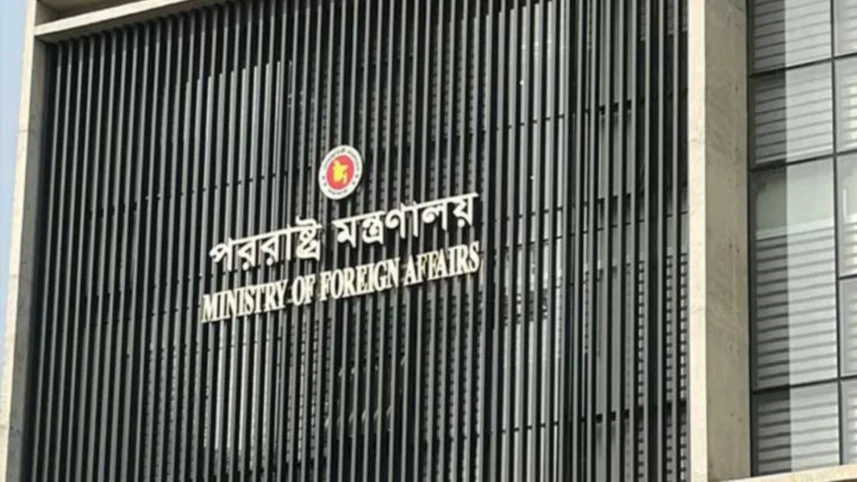
The Ministry of Foreign Affairs in Dhaka described India’s formal explanation regarding the forced return of Dr. Zahed Ur Rahman, the Prime Minister’s Adviser on Policy and Strategic Affairs, as entirely unsatisfactory. The state apparatus characterized the airport altercation in New Delhi as an unwanted and regrettable diplomatic failure.
Diplomatic channels had formally notified Indian authorities in advance that Dr. Zahed would head the official Bangladeshi delegation to the Indian Ocean Rim Association meeting. State officials reiterated that the hostile reception encountered by the senior adviser at Delhi airport remains highly unacceptable.
A spokesperson for the Ministry of Foreign Affairs stated that Dhaka has officially noted the public defenses issued by the spokesperson of India’s Ministry of External Affairs.
In a sharp counter to subsequent remarks from New Delhi regarding minority populations in Bangladesh, Dhaka asserted that all sovereign states maintain an identical obligation to safeguard the rights and security of every citizen residing within their borders, explicitly including minority communities.
The friction intensified after the Indian External Affairs ministry spokesperson highlighted unverified reports regarding the alleged desecration of Hindu deities and religious iconography in Bangladesh, incidents that subsequently triggered localized public demonstrations.
New Delhi publicists stated their explicit expectation remains that the governing administration in Dhaka must implement decisive actions to suppress radical factions and guarantee the absolute safety of Hindu minority populations living inside the country.
Indian state representatives acknowledged on Tuesday that immigration authorities subjected Dr. Zahed to targeted questioning at Delhi airport. Officials granted him entry privileges only after verifying that his arrival directly aligned with the scheduled international conference.
The official spokesperson for India’s Ministry of External Affairs, Randhir Jaiswal, informed reporters during a standard media brief that the adviser ultimately decided to fly back to Dhaka entirely of his own volition.
Indian records indicate the state adviser arrived in the country on June 14, 2026, utilizing a private passport equipped with an official SAARC visa to participate in the 28th Meeting of the Committee of Senior Officials of the Indian Ocean Rim Association.
The Indian Ministry of External Affairs successfully organized the 28th regional gathering from June 15, 2026, through June 16, 2026, in New Delhi. The multilateral event united senior international delegates to review regional socioeconomic cooperation under the core tenets of innovation, openness, resilience, and adaptability.
Speaking at a press conference at the Press Information Department building inside the state secretariat on June 16, 2026, Dr. Zahed clarified that his immediate exit from New Delhi served as a necessary political protest. He emphasized that the current administration possesses a popular mandate, distinguishing it from the ousted Sheikh Hasina regime.
Dr. Zahed stated that he traveled not as a private citizen but as an official representative of the state. He affirmed that the mistreatment he experienced necessitated an immediate institutional response to signal that the state would not tolerate the humiliation of its envoys.
The adviser acknowledged that after the initial profiling occurred, Indian border authorities launched repeated, urgent diplomatic efforts to persuade him to bypass the incident and fulfill his scheduled state engagements.
Dr. Zahed concluded that as a top-tier state adviser, he believed it was vital to establish a firm, unyielding precedent regarding the appropriate diplomatic treatment of Bangladeshi state representatives abroad.
Historical Context
This diplomatic row marks a significant shift in bilateral relations following the collapse of the Sheikh Hasina administration. For over a decade, New Delhi and Dhaka maintained close strategic and political ties. The advent of the new interim government in Bangladesh, which commands a popular mandate, has introduced fresh geopolitical friction, particularly regarding cross-border security, immigration protocol, and the monitoring of minority rights.
FAQs
Why did Dr. Zahed Ur Rahman return to Bangladesh prematurely?
The Prime Minister’s adviser chose to return to Dhaka as an immediate protest against what he described as inappropriate treatment and excessive questioning by Indian immigration authorities at the New Delhi airport.
What was the purpose of the political visit to New Delhi?
Dr. Zahed Ur Rahman was leading the official Bangladeshi state delegation to attend the 28th Meeting of the Committee of Senior Officials of the Indian Ocean Rim Association, hosted by India from June 15, 2026, to June 16, 2026.
How did India defend the airport incident involving the adviser?
India’s Ministry of External Affairs stated that immigration officials merely verified the purpose of the visit before clearing the adviser for entry, claiming he chose to return to Dhaka on his own volition.
What underlying issues are complicating current Bangladesh-India relations?
Bilateral ties are facing strain due to disputes over diplomatic protocols, Indian statements concerning the safety of Hindu minorities in Bangladesh, and Dhaka’s demands for reciprocal state respect under its new government.