Trump Intervenes as Israel-Hezbollah Ceasefire Rescues US-Iran Diplomacy
A newly brokered ceasefire between Israel and Hezbollah has taken effect in Lebanon following a dangerous escalation of regional hostilities. The truce, achieved via intense trilateral diplomacy involving the United States, Qatar, and Iran, successfully preserved a fragile 60-day window for broader Washington-Tehran peace negotiations.
Key Highlights
- Presidential Intervention: US President Donald Trump personally pressed Israeli officials to halt military operations to safeguard broader regional security talks.
- Diplomatic Disruption: The intense flare-up in Lebanon forced the postponement of critical US-Iran bilateral negotiations in Buergenstock, Switzerland.
- Shipping and Economic Relief: The underlying interim deal aims to safely reopen the Strait of Hormuz to 700 transiting vessels and grant Iran substantial sanctions relief.
- Fragile Peace: While cross-border hostilities ceased after 5 p.m. local time, Israel maintains its military deployment inside southern Lebanon.
Israel and Hezbollah agreed to a ceasefire after a deadly escalation in Lebanon, easing pressure on fragile US-Iran diplomacy and helping preserve negotiations aimed at a broader Middle East peace deal.
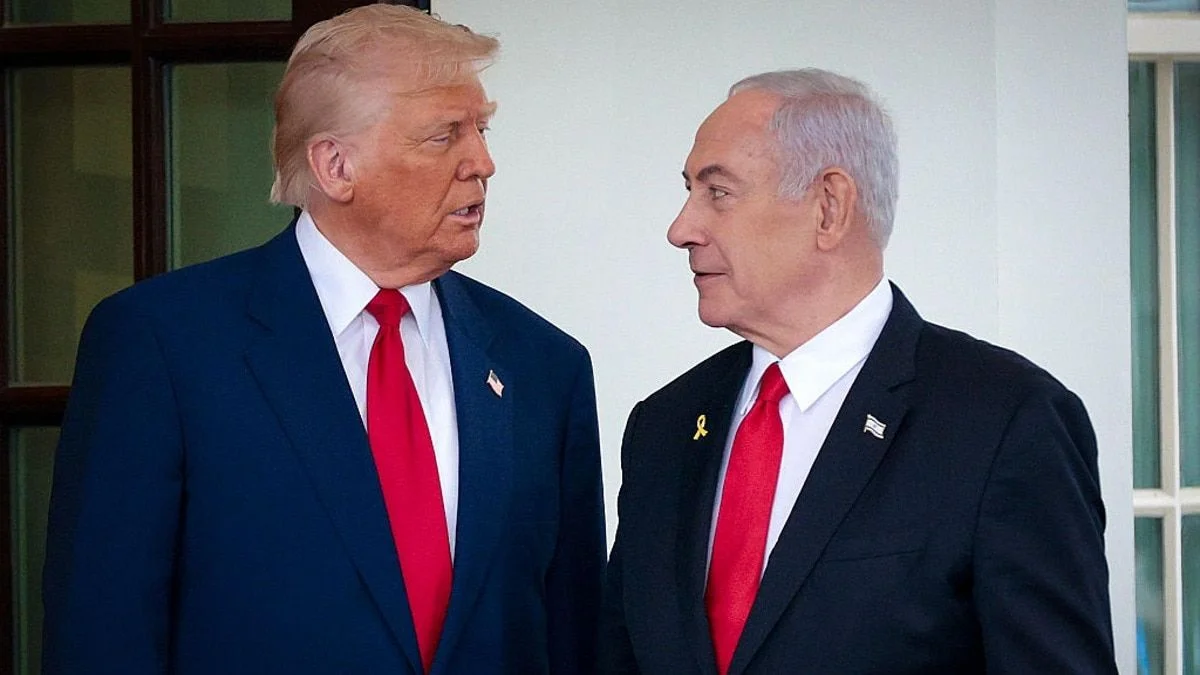
US President Donald Trump confirmed he personally pushed Israeli leadership to accept a truce with Hezbollah. The American leader revealed his direct intervention as intensifying cross-border violence in Lebanon threatened to permanently derail sweeping diplomatic initiatives tied to a delicate peace framework with Iran.
In an exclusive telephonic dialogue with NBC News, Trump detailed his communications with Israeli representatives. He stated that he demanded immediate military restraint, maintaining that prolonged battlefield engagements would inevitably wreck a comprehensive regional accord.
“You just gotta calm down sometimes and use your head,” Trump remarked, according to statements published on X by an NBC News correspondent. The US President explicitly avoided clarifying whether he spoke directly with Israeli Prime Minister Benjamin Netanyahu.
These disclosures surfaced merely hours after Israel and Hezbollah finalized a cessation of hostilities in Lebanon. The sudden surge in military operations had sparked international fears of an unmanageable regional war and cast deep skepticism over converting the interim US-Iran memorandum into a permanent Middle East settlement.
CEASEFIRE AFTER DEADLY ESCALATION
An authoritative US official noted that the truce officially commenced at approximately 4 p.m. local time in Lebanon following an intense final exchange of rocket and missile fire. The diplomat revealed that American and Qatari intermediaries, operating with direct assistance from Tehran, successfully hammered out the terms of the accord.
Two separate Hezbollah representatives and a ranking Israeli government source subsequently confirmed the operational truce to Reuters. “If Hezbollah does not attack us, then for us it is not a time of war,” the Israeli official announced, clarifying that Israeli defense forces would continue to occupy positions across southern Lebanon.
Lebanese intelligence officials reported that the Israeli military executed a dozen airstrikes during the opening hour of the truce. However, all active bombardment ceased completely after 5 p.m.
LEBANON FIGHTING THREATENS IRAN TALKS
The sudden explosion of hostilities across the Lebanese border forced an immediate postponement of highly anticipated US-Iran technical talks in Switzerland. Those high-level meetings were widely deemed vital for unlocking progress on Iran’s nuclear architecture and securing the maritime lanes of the Strait of Hormuz.
Under the stipulations of the interim memorandum finalized earlier this week, Washington and Tehran initiated a 60-day diplomatic clock to hammer out a permanent treaty. The future package is expected to encompass Iranian nuclear constraints, major international sanctions relief, and regional security paradigms.
Hezbollah legislator Hassan Fadlallah stressed that Iranian officials had explicitly conditioned further Swiss negotiations on achieving a total ceasefire in Lebanon. Concurrently, Iranian Foreign Minister Abbas Araqchi issued a stern warning, noting that Washington bears full executive responsibility for guaranteeing that all parties honor the underlying deal.
TRUMP DEFENDS IRAN DEAL
Trump’s diplomatic pressure on Israel coincided with his robust public defense of the interim bilateral agreement with Tehran. The deal has triggered intense pushback from hawkish Republican lawmakers in Congress who claim the White House surrendered excessive economic leverage to the Islamic Republic ahead of the upcoming midterm elections.
Utilizing his social media platform, Trump aggressively countered his critics by arguing that the preceding military conflict had structurally devastated the Iranian state. “The War has diminished Iran!” Trump asserted on Friday. “We didn’t meet out of desperation, Iran did. They are FINISHED!”
The American president further dismissed concerns that the regime in Tehran would secure immediate financial windfalls from the temporary arrangement. “We’ll play out the 60 days. They get no money, not ten cents!” Trump declared.
Casualty toll on the final day of conflict: Lebanon’s health ministry confirmed that heavy morning airstrikes across 11 southern municipalities killed at least 18 individuals and wounded 33 others. Meanwhile, the Israeli military confirmed that four of its soldiers were killed during an operation in Lebanese territory.
Future Outlook
The next 60 days will test the durability of this multi-theater stabilization plan. US Secretary of State Marco Rubio is already scheduled to embark on a diplomatic tour of Kuwait, the United Arab Emirates, and Bahrain next week to consolidate regional support. If the Lebanon truce holds, Swiss mediators expect to reschedule the postponed Buergenstock summit, where negotiators must establish a permanent framework for Iran’s nuclear program and manage a projected $300 billion regional reconstruction fund. However, statements from US Vice President JD Vance emphasizing that American military options remain firmly on the table highlight the razor-thin margin for error.
FAQs
Why did the scheduled US-Iran talks in Switzerland get postponed?
The technical negotiations in Buergenstock were deferred because an outbreak of heavy fighting between Israel and Hezbollah in southern Lebanon threatened the core terms of the broad interim agreement. Iranian officials stated that further diplomatic progress was entirely dependent on a comprehensive ceasefire.
What are the main terms of the broader US-Iran interim deal?
The temporary memorandum establishes a 60-day negotiating window to address Iran’s nuclear program and regional security. In exchange for halting military operations, Iran receives immediate US waivers on petroleum exports, the unfreezing of tens of billions of dollars in blocked assets, and access to a projected $300 billion reconstruction fund.
Is Israel a formal party to the US-Iran peace memorandum?
No. Israel was excluded from the direct bilateral talks between Washington and Tehran. Israeli leadership has explicitly stated that it is not a party to the interim agreement, though it agreed to the localized Lebanon ceasefire on the condition that Hezbollah halts all rocket and missile attacks.