Congress Weighs Guardrails on Pentagon Firings After Military Exits
Lawmakers may establish bipartisan restrictions on Defense Department personnel decisions following a series of high-level military departures. Democratic Senator Tim Kaine of Virginia stated that Congress is evaluating legislative guardrails to oversee leadership changes initiated by the Pentagon during the second Trump administration.
Key Takeaways
- Bipartisan congressional support is emerging to restrict rapid Pentagon leadership ousters.
- Recent high-profile exits include General Chris Donahue, head of U.S. Army Europe and Africa.
- The House defense bill requires a 5-day notification period for firing senior military officials.
- Lawmakers express deep concern over potential retaliation and the silencing of military experts.
Washington — Democratic Senator Tim Kaine of Virginia stated Sunday that following a series of top-tier officer departures from the armed forces during the second Trump administration, legislative limitations on defense firings could garner broad bipartisan backing within Congress.
The exit of several high-ranking military commanders over recent months has generated intense scrutiny regarding structural adjustments at the Pentagon. Retired Admiral Bill McRaven, who directed the operation against Osama bin Laden, observed in a publication last week that defense leadership choices carry severe operational dangers.
McRaven warned that these firings increase the likelihood that senior commanders will withhold critical, candid assessments, thereby elevating the risk of catastrophic strategic errors.
“I don’t think that concern is misplaced. We’re worried about the same thing,” Kaine noted during a broadcast appearance on “Face the Nation with Margaret Brennan.”
Kaine, a prominent member of the Senate Armed Services Committee, openly questioned whether Defense Secretary Pete Hegseth is systematically removing independent strategists to populate the agency with unquestioning loyalists. He further observed that the administrative actions appear disproportionately directed at ground forces.
“He served in the Army. He felt like he wasn’t treated well by the Army, that’s a grudge he’s carried that he’s described publicly,” Kaine remarked. He questioned whether these dismissals stem from personal grievances or national security interests.
Among the prominent leaders exiting active service is General Chris Donahue, the commander overseeing U.S. Army Europe and Africa. Military officials confirmed Donahue will formally step down from his leadership post on July 2, 2026.
Media reports indicated that Donahue, noted historically as the final American service member to depart Afghan soil during the 2021 withdrawal, drew specific administrative disapproval from Hegseth before finalizing his retirement documentation.
Kaine emphasized that the circumstances surrounding Donahue’s abrupt departure feature numerous unresolved issues and very few transparent explanations.
“He was very well regarded in the Armed Services Committee, where I sit. Both sides of the aisle thought really highly of him,” Kaine affirmed, noting the sudden exit blindsided lawmakers who are still awaiting formal Pentagon briefings.
The Virginia senator noted that lawmakers are currently drafting the comprehensive annual defense authorization framework. The initial versions advanced beyond the committee level earlier this month to prepare for broader floor consideration.
In the lower chamber, lawmakers integrated an amendment into their defense policy draft mandating that Pentagon leadership provide a formal written justification to Congress within 5 days of removing any top-tier military official. Kaine observed that the Senate version currently lacks matching language.
“But when we bring it up on the floor, I think by then we’ll have some of our questions answered,” Kaine stated regarding the upcoming legislative debate. He added that if additional protections are required, bipartisan consensus will likely solidify.
Donahue’s removal also drew sharp condemnation from prominent Republicans, including Senator Thom Tillis of North Carolina, who characterized the administrative maneuver as a severe operational mistake driven by ego rather than careful stewardship.
Tillis criticized the management style as insecure, stating that leadership seems focused on purging perceived political opponents rather than empowering experienced, proven patriots capable of commanding the nation’s elite fighting forces.
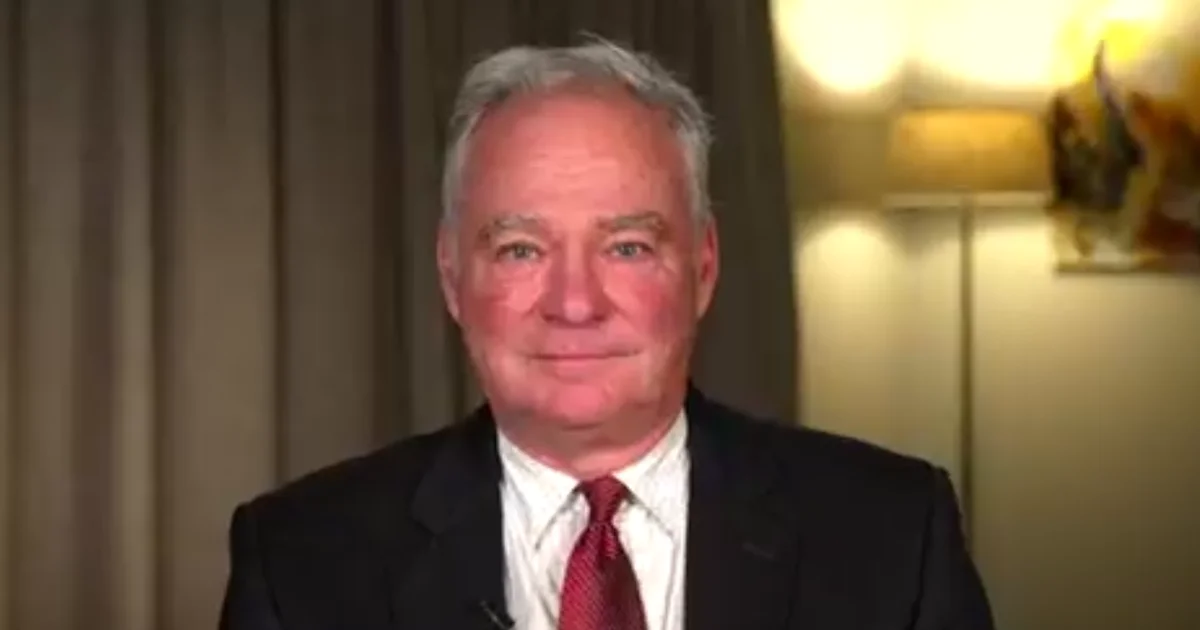
Kaine on guardrails on Pentagon firings
Sen. Tim Kaine says guardrails on Pentagon firings could see bipartisan support in Congress
Future Outlook
The escalating friction between the Pentagon’s civilian leadership and congressional oversight committees sets up a significant legislative showdown during the floor debate for the National Defense Authorization Act. If the House’s 5-day notification mandate gains traction in the Senate, it could fundamentally reshape civil-military relations, establishing permanent statutory checks on the executive branch’s authority to summarily dismiss four-star commanders and changing how future administrations manage Pentagon personnel.
FAQs
Why is Congress considering guardrails on Pentagon firings?
Lawmakers are concerned that a pattern of high-level military dismissals by civilian leadership could pressure senior officers into withholding candid strategic advice, which critics warn increases the risk of severe military miscalculations.
What does the proposed House legislation require from the Pentagon?
The provision adopted by the House Armed Services Committee requires defense leaders to formally notify and explain to Congress the specific reasons for terminating any high-ranking military official within 5 days of the action.
Who is General Chris Donahue and why is his retirement significant?
General Chris Donahue is the commander of U.S. Army Europe and Africa, widely recognized as the last American soldier on the ground during the 2021 Afghanistan withdrawal. His sudden retirement sparked bipartisan concern due to his high standing among lawmakers.
Is there bipartisan support for changing how military firings are handled?
Yes. Both Democratic Senator Tim Kaine and Republican Senator Thom Tillis have raised public concerns regarding current Pentagon personnel management, indicating potential cross-party support for legislative oversight.