Canada Blames Khalistanis for 1985 Air India Bombing
The Canadian Security Intelligence Service has officially acknowledged the involvement of Canada-based Khalistani extremists in the 1985 bombing of Air India Flight 182. This historic admission marks the first time in over 40 years that Ottawa’s premier intelligence agency has directly blamed the group for the tragedy.
Key Highlights
- CSIS publicly named Canada-based Khalistani extremists for planting the explosive device on Air India Flight 182.
- Prime Minister Mark Carney labeled the mid-air explosion the deadliest terrorist attack in Canadian history.
- The formal admission comes amid a transition in leadership following the departure of former Prime Minister Justin Trudeau.
- The development aligns with recent security assessments identifying domestic extremist outfits as severe national security threats.
The Canadian Security Intelligence Service has, for the first time in more than four decades, formally recognized the role of Khalistani terrorists in the bombing of Air India Flight 182. The attack resulted in the deaths of 329 individuals in 1985.
Describing the Kanishka tragedy as an atrocious act of terrorism, the intelligence agency in Ottawa held Canadian-rooted Khalistani operatives responsible for placing the bomb on the aircraft.
The agency stated on social media that on the National Day of Remembrance for Victims of Terrorism, CSIS honors the 329 victims who perished on Air India Flight 182. It noted that on June 23, 1985, an explosive device deployed by local Khalistani radicals destroyed the plane.
The security agency added that the incident remains the most fatal act of terrorism in Canadian history. The event fundamentally altered the operations of the national security establishment.
Intelligence officials revealed that CSIS had been operational for less than one year when the tragedy struck. The disaster heavily influenced the growth of the organization, which remains dedicated to shielding citizens from ideologically and religiously motivated violence.
Historically, Canadian authorities avoided naming the separatist movement during annual public memorials. India has long maintained that the catastrophe originated from a coordinated Khalistani conspiracy.
A separate intelligence report corroborated this stance by classifying Canadian-based Khalistani extremist organizations as prominent national security threats. The review warned that these cells actively use domestic territory to finance, organize, and advance violent agendas.
Canadian Prime Minister Mark Carney addressed the nation on Tuesday, branding the mid-air explosion as the most lethal assault in domestic history. He emphasized that the administration firmly opposes all variations of violent extremism.
The Prime Minister confirmed in an official brief that 41 years ago, the destruction of Air India Flight 182 ended 329 innocent lives, which included 268 Canadians.
What happened in 1985
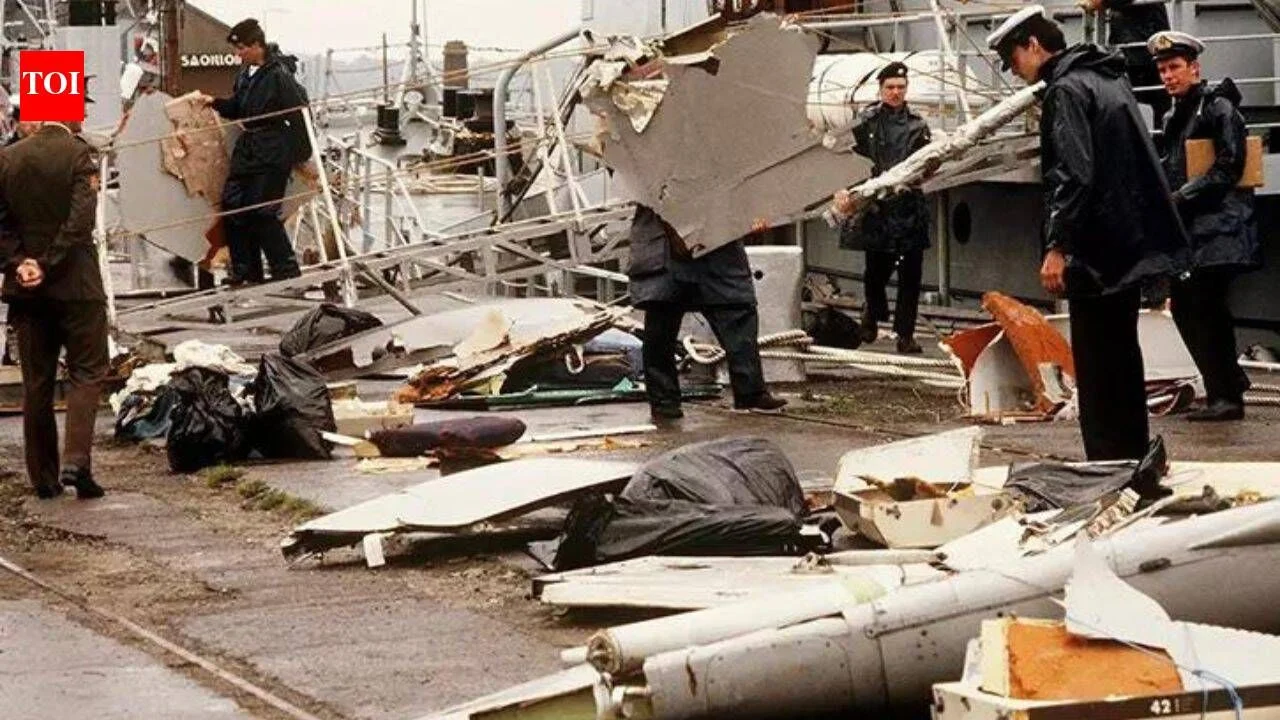
On June 23, 1985, Air India Flight 182, widely known as the Kanishka, was en route from Montreal to New Delhi with a scheduled stop in London. The concealed explosive detonated in the cargo hold over the Atlantic Ocean, off the coast of Ireland, approximately 45 minutes before its planned landing at Heathrow Airport.
The mid-air explosion killed all 329 passengers and crew members on board. The vast majority of the victims were Canadian citizens holding Indian heritage.
Investigators attributed the attack to the outlawed extremist group Babbar Khalsa, acting in retaliation for Operation Blue Star. That military operation was launched by India in 1984 to clear out armed militants from the Golden Temple complex.
The luggage containing the bomb was checked in by a passenger who skipped the flight. The casualty list comprised 268 Canadian citizens, mostly of Indian descent, alongside 24 Indian nationals. Rescue teams managed to retrieve only 131 bodies from the ocean.
Canadian law enforcement operations concluded that Sikh separatists executed the plot as a direct response to Operation Blue Star. Ottawa designated the anniversary as the National Day of Remembrance for Victims of Terrorism in 2005.
Recently, Canada and India launched diplomatic initiatives to stabilize bilateral relations after Carney assumed the prime ministerial office in March of last year.
Bilateral ties had dropped to unprecedented lows under former Prime Minister Justin Trudeau. In 2023, Trudeau triggered a diplomatic standoff by levying allegations linking Indian state agents to the killing of Khalistani figure Hardeep Singh Nijjar. This contentious foreign policy has shifted significantly following Trudeau’s exit from government.
Historical Context
The bombing of Air India Flight 182 remains deeply tied to the political instability in Punjab during the early 1980s. The rise of Sikh militancy led to India’s military intervention at the Golden Temple in 1984, which provoked retaliatory threats from extremist factions globally.
For decades, the investigation faced scrutiny over intelligence gaps between Canadian police and security networks. The new declaration by CSIS represents a formal alignment of Canadian intelligence with long-standing global assessments regarding the networks behind the mid-air attack.
FAQs
What was Air India Flight 182?
Air India Flight 182, also called Kanishka, was a commercial flight operating from Montreal to New Delhi via London. On June 23, 1985, it was destroyed mid-air by a bomb, resulting in the deaths of all 329 people on board.
Who was held responsible for the Air India bombing?
The attack was carried out by Canada-based Khalistani extremists belonging to the banned terrorist organization Babbar Khalsa. The plotters acted in retaliation for India’s 1984 Operation Blue Star at the Golden Temple.
Why is the latest CSIS statement significant?
The statement marks the first time in over 40 years that the Canadian Security Intelligence Service has explicitly named Khalistani extremists in its public communications regarding the responsibility for planting the bomb.
How many Canadians died in the Kanishka tragedy?
Out of the 329 victims who lost their lives in the terrorist attack, 268 were Canadian citizens, the majority of whom were of Indian origin.
How has Canada changed its approach to this event?
Canada officially designated June 23 as the National Day of Remembrance for Victims of Terrorism in 2005. Under Prime Minister Mark Carney, the government has taken a clearer stance on identifying the extremist networks responsible for the historical attack.