California’s 4th Congressional District Primary: Strategic Venture Capital and Hedge Fund Contributions Shape Tight Runo…
California’s 4th Congressional District Primary: Strategic Venture Capital and Hedge Fund Contributions Shape Tight Runoff Position Against Longtime Incumbent A calculated campaign spending effort financed by a San Francisco hedge fund analyst disrupted California’s 4th Congressional District primary, successfully positioning a wealthy newcomer to challenge a 14-term incumbent.
Key Highlights
- Total primary expenditures reached $11.7 million, driven by multimillion-dollar self-funding from a democratic challenger.
- A single out-of-district financier deployed $110,000 to fund marginal Republican candidates and launch targeted attack ads.
- The targeted strategy successfully fractured the conservative vote, allowing the challenger to secure a runoff spot by 1.5 percentage points.
- The upcoming November 2026 election sets up a stark generational and ideological battle for the newly redrawn congressional seat.
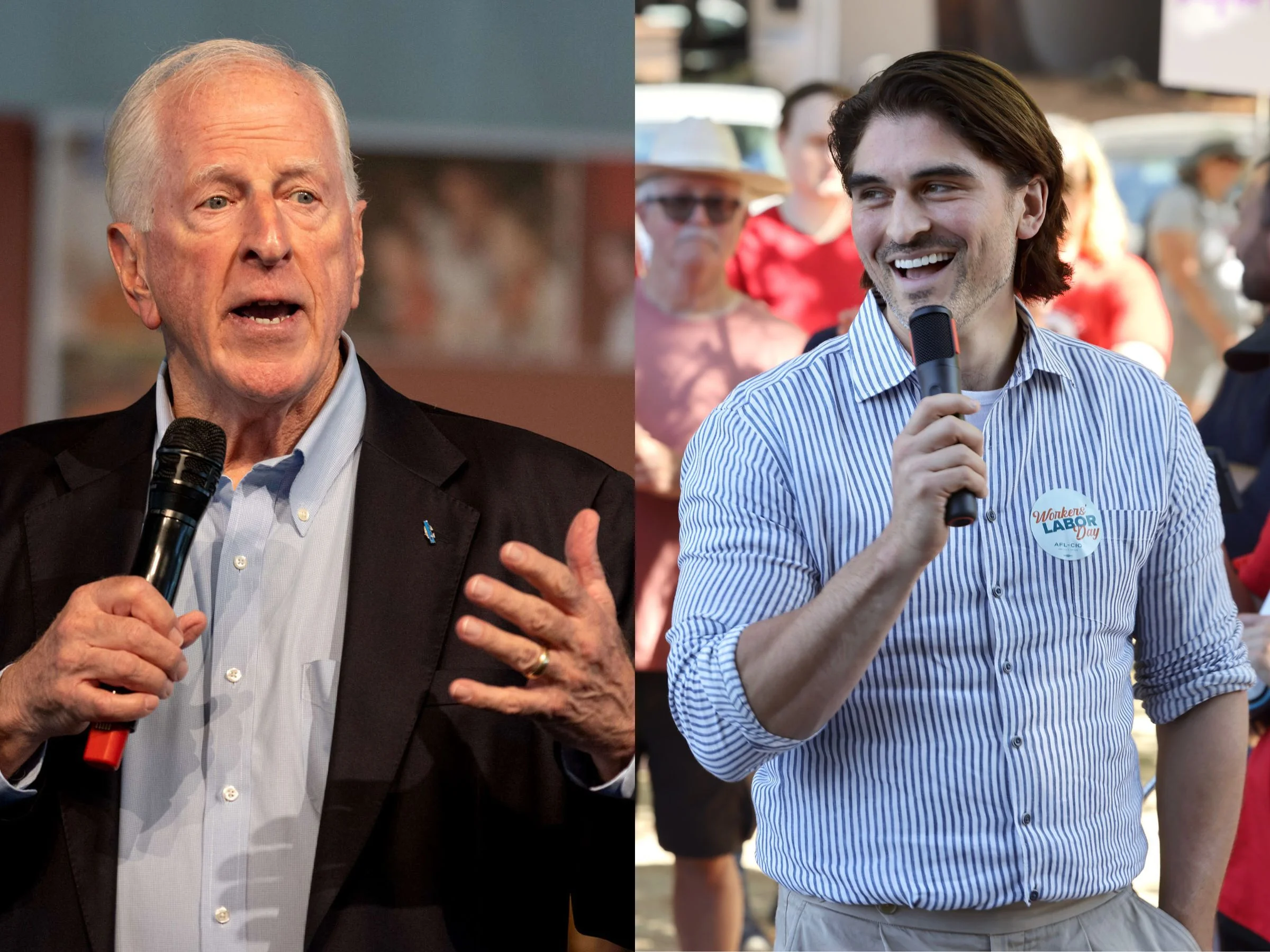
The volume of political capital deployed within California’s 4th Congressional District primary established an unprecedented benchmark for a midterm cycle. Representative Mike Thompson secured approximately $3.5 million to defend his seat. His Democratic opponent, former venture capitalist Eric Jones, injected $8.35 million into his own maiden campaign, a total that includes $5.35 million of personal wealth.
In total, an aggregate of $11.7 million saturated the 4th District primary contest. Across the entire state of California, only the hyper-competitive 40th District—which saw multiple Republican frontrunners battle against a field of Democratic challengers—surpassed this level of financial saturation.
Viewed retrospectively, the most tactically efficient capital allocation in the entire 4th District race may have been a comparatively minor $110,000 expenditure orchestrated by a low-profile hedge fund analyst and his immediate family members.
Rishi Dixit maintains an investment role at San Francisco-based Valiant Capital Partners while residing in Santa Monica. This residence sits roughly 400 miles from the borders of the 4th District, which currently encompasses nine distinct counties stretching from Santa Rosa to the eastern foothills of Yuba County following recent redistricting.
Dixit maintains no visible personal or professional connections to this specific geographical region. Despite this distance, the targeted financial interventions executed by his family unit appear to have definitively altered the primary outcome in favor of Jones.
Dixit, alongside his spouse Georgia Dean—documented as Georgia Dixit on official federal campaign disclosures—and his parents, provided the entire foundational funding for three marginal Republican candidates. Concurrently, they capitalized a newly formed political action committee named the California Leadership Fund, which bankrolled aggressive opposition campaigns against mainstream Republican frontrunner Ray Riehle.
Rishi Dixit additionally executed the maximum allowable $7,000 direct individual contribution to the Jones campaign during this election cycle. Historical campaign disclosure databases indicate that the family’s prior political donations have aligned almost exclusively with Democratic causes and organizations.
While isolating the exact mathematical impact remains challenging, this targeted capital deployment successfully funneled critical votes toward three minor GOP contenders. This fragmentation eroded Riehle’s base, ultimately elevating Jones into the secondary runoff position for the 4th District.
Official tabular updates released on June 12 established that Jones surpassed Riehle by a margin of 1.5 percentage points—representing roughly 3,000 votes—to capture the secondary slot behind Thompson. This ordering is mathematically locked ahead of the final certification, guaranteeing that the 35-year-old Jones will advance to the November 2026 general election against the 75-year-old Thompson.
Concurrently, minor Republican choices Sharon Brown, John Mackenzie, and Mandy Ghusar collectively commanded 10.4% of the aggregate vote. This blocks out roughly 21,400 ballots, with only a nominal volume of uncounted unverified votes remaining as of Thursday, June 18.
The Mackenzie campaign reported $14,000 in total non-party contributions, while the Brown and Ghusar organizations recorded $7,000 each. Every single dollar of this declared funding originated directly from the Dixit family, including a $7,000 injection to Mackenzie from Rishi Dixit’s parents, Rahul and Purnima, who filed under a Florida home address.
Rishi Dixit issued no formal response to electronic inquiries requesting comment on the matter. Georgia Dean similarly declined to provide comment via telephone calls or text inquiries.
The structural impact of this asymmetric spending strategy was readily acknowledged by Riehle, a local commercial business owner who serves on the Citrus Heights Water District Board of Directors.
“My answer is not based on any real science or math,” Riehle stated during an interview. “But I don’t think John or Sharon were going to run for office without that donation. If they didn’t run, that means about another 19,000 votes there. And I think I would have received 80-90% of those votes.”
The campaign leadership representing incumbent Mike Thompson offered a harsher assessment of the primary dynamics.
“This is another example of Eric Jones and his wealthy venture capitalist donors trying to buy a seat in Congress,” campaign manager Thomas Dowling stated via email. “80 percent of voters rejected Eric Jones’ message and we look forward to sending Eric back home to San Francisco in November.”
Electronic communications directed to the official campaign apparatus of Mackenzie were returned as undeliverable.
Funding your rival’s rival
The strategic leadership of the Jones campaign emphasized that their candidate maintained total separation from the creation, funding, or operational governance of the California Leadership Fund. Federal campaign statutes strictly prohibit direct coordination between candidate campaigns and independent expenditure groups.
“We are grateful for every contribution from supporters who want to challenge the status quo, refuse special interest money, and bring real change to Washington,” campaign manager Brian Parvizshahi stated. “While we appreciate Rishi’s support, we cannot speak to his involvement with other candidates or organizations. Our campaign does not coordinate with any Super PAC or outside expenditure committee.”
Thompson’s structural alignment with external political action committees faced separate scrutiny from independent investigative outlets earlier this month. Reports highlighted that the St. Helena representative functions as the treasurer for the Blue Dog Political Action Committee, an entity dedicated to moderate Democratic candidates. An affiliated spending vehicle, the Blue Dog Action Fund, directed at least $1.2 million toward media buys supporting Thompson’s current reelection, alongside a direct $5,000 campaign contribution.
Representatives for the Thompson campaign did not provide immediate commentary regarding his treasury position or the associated independent outlays.
The tactical maneuver of financing an opponent’s ideological rivals represents an established methodology within modern American politics. National party committees and satellite organizations across both major factions have regularly deployed similar targeted interventions in high-stakes state and federal contests over the past decade, drawn under frequent public criticism.
The appearance of these precise funding anomalies within the 4th District aligns with the broader macroeconomic dynamics of the race.
Jones, who accumulated significant capital through a 12-year career at the San Francisco investment group Dragoneer Investment Group, has framed his primary challenge as an insurgent populist movement. He continuously critiques the 14-term incumbent and national Democratic leaders, characterizing them as an inadequate defense against opposing federal agendas.
The underlying fundraising mechanisms of both operations have generated constant rhetorical conflict on the trail. Jones asserts that Thompson operates under the influence of corporate political action committees that anchor his balance sheets. Conversely, Thompson’s team argues that Jones serves as a proxy for concentrated financial sectors, specifically venture capital firms, technology hubs, private equity groups, and hedge funds.
The California Leadership Fund entered the regional media market during the final phases of the primary timeline. Federal Election Commission records indicate the entity deployed just under $60,000 in May 2026 to fund three distinct waves of negative mailers targeting Riehle, supplemented by a $2,600 text broadcast in June.
At least two separate direct mail pieces focused heavily on historical water utility rate increases enacted during Riehle’s governance on the Citrus Heights water board. One piece utilized a low-resolution screenshot captured from a public video broadcast. A secondary mailer detailed sensitive personal history, including a prior mortgage default, a property lien, and historical child support disputes. Riehle described these characterizations as highly distorted, explaining they emerged from a difficult post-divorce transition, and noted he maintains an amicable relationship with his former spouse.
Mandatory compliance disclaimers on the printed mailers verified they were fully underwritten by the California Leadership Fund, which also managed the digital domain TheRealRay.com.
The organization operates under a registered Super PAC structure established earlier in 2026. Its compiled financial ledgers show zero outside revenue beyond two distinct capital injections from Rishi Dixit totaling $75,000.
Big spending, low profile
Riehle, who accumulated a total operating budget of $113,000 for his entire primary bid, stated that constituents raised questions regarding water infrastructure costs once the mailers hit households in the eastern sectors of the district. He questioned the ultimate psychological efficacy of the attack campaign.
“I don’t think people can look at those pictures on the card and take it seriously,” Riehle commented.
The candidate expressed no personal animosity toward the Dixit family regarding their legal use of capital, though he criticized the systemic opacity of modern independent expenditure structures.
“People can spend their money however they want,” Riehle observed. “We have passed laws that allow these PACs to do what they want to do. But when someone makes a donation like that, it shouldn’t be just the PAC’s name. It should be the donors, too, so everyone can look at that information.”
The Dixits maintain a highly reserved public footprint. Rishi, 36, has operated within Valiant Capital for 13 years, while Georgia, 34, serves as a senior corporate director managing brand partnerships for Paramount Pictures. They occupy a rented residence in Southern California and participate in regional philanthropic efforts with the Make-A-Wish Foundation.
The historical donation records of the couple reflect a consistent alignment with the Democratic party.
Prior to 2023, Rishi Dixit’s verifiable political outlays were directed exclusively toward Hillary for America, Biden for President, and the ActBlue clearinghouse, with historical tallies remaining below $3,700. This baseline expanded significantly in 2023 when Dixit began backing South Bay Representative Ro Khanna, delivering a total of $16,400 to Khanna’s campaign apparatus since that period.
Georgia Dean has separately directed more than $10,000 in campaign capital to Khanna.
Throughout the active 2026 election cycle, alongside the capital directed to regional Republicans Mackenzie, Brown, and Ghusar, the Jones campaign, and the California Leadership Fund, Rishi Dixit processed a $7,000 contribution to Zach Dembo, a Democratic congressional candidate in Kentucky.
In a structural parallel to the tactical spending observed in the 4th District, the couple also recorded a combined $7,200 contribution to the 2026 primary campaign of Republican Ritesh Tandon. Tandon is currently seeking a seat in Khanna’s own 17th Congressional District, which encompasses the core geography of Silicon Valley. Rahul and Purnima Dixit provided an additional $14,000 to support Tandon’s bid.
These synchronized asset allocations appear strictly tactical. Tandon secured the secondary position in the District 17 primary, booking a general election match against Khanna in November 2026 and effectively preventing an expensive intra-party Democratic runoff.
Future Outlook
The shifting dynamics inside California’s congressional map point toward an intense general election showdown in November 2026. By employing highly targeted satellite spending to alter the primary candidate field, outside donors have forced a direct ideological contrast between progressive venture capital wealth and traditional institutional incumbency. This race will serve as a key regional test of whether modern independent campaign spending can successfully unseat entrenched, multi-decade lawmakers in redrawn districts.
FAQs
What is the California 4th Congressional District?
The California 4th Congressional District is a federally represented legislative zone that was recently altered under Proposition 50 redistricting guidelines. The expanded borders now span across nine Northern California counties, originating in Santa Rosa and running eastward to the rural foothills of Yuba County.
Who is Rishi Dixit?
Rishi Dixit is a 36-year-old financial analyst employed by San Francisco-based hedge fund Valiant Capital Partners. Despite residing in Southern California, he and his immediate family acted as the exclusive financial backers for multiple minor Republican primary candidates in Northern California during the 2026 election cycle.
What is the California Leadership Fund?
The California Leadership Fund is an independent political action committee, commonly known as a Super PAC, founded in early 2026. Federal campaign finance records confirm the entity was fully capitalized by $75,000 in personal contributions from analyst Rishi Dixit to produce targeted negative media mailers.