Federal Election Fraud Probes Hit California Primary
Federal authorities are investigating multiple election fraud claims during the California primary as millions of votes remain uncounted. Concurrently, the federal government is intensifying scrutiny on welfare programs, issuing subpoenas across four states, including California, to investigate food assistance fraud.
Key Highlights
- Federal prosecutors are probing multiple allegations of voter fraud in the California primary.
- More than 3.5 million ballots remain uncounted during the state’s 30-day canvass window.
- Donald Trump publicly alleged major Democratic misconduct regarding the ongoing vote counting delays.
- The USDA issued subpoenas to California and three other states over a 41 million person SNAP fraud probe.
Federal authorities are actively reviewing several allegations of voting misconduct during the recent California primary marketplace, even though millions of ballots are still awaiting processing.
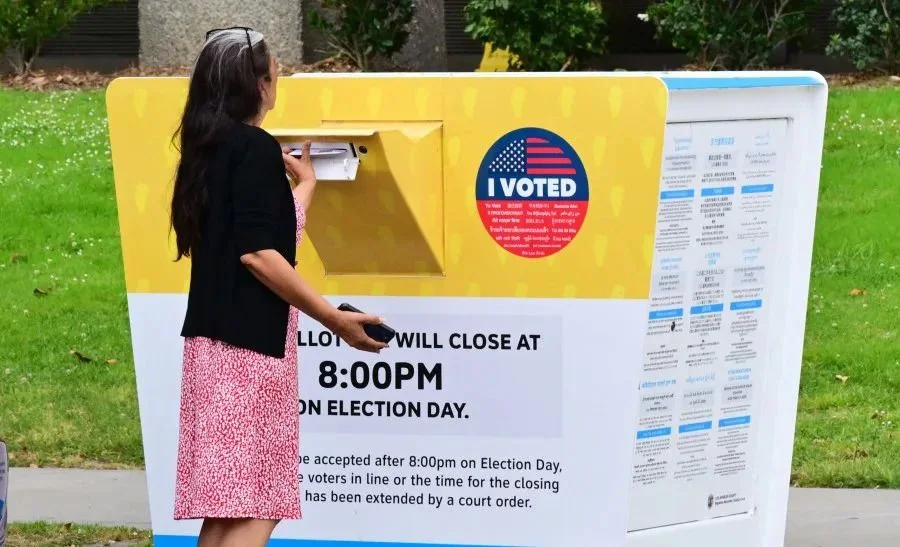
State election administrators confirmed Saturday morning that more than 5 million votes have been processed. However, approximately 3.5 million ballots still need to be tallied.
The California Secretary of State noted that local tabulators possess a 30-day window following Election Day to deliver certified tallies. This duration is designated as the canvass period.
During this 30-day phase, local administrators process provisional, conditional, and mail ballots postmarked by Election Day if received within seven days. This setup includes checking envelope signatures against registered records. Missing or mismatched signatures trigger a voter notification process for validation. State parameters permit voters to confirm their signatures until two days prior to county certification.
Furthermore, counties must tabulate and report the vast majority of ballots by the 13th day after voting concludes. Exemptions apply to duplicated ballots, forwarded items, provisional votes, or those needing signature verification.
U.S. Attorney Bill Essayli announced the federal inquiries on Friday. He refrained from identifying specific targets or detailing the exact nature of the complaints.
Essayli stated on social media that maintaining voting integrity remains a primary objective. He pledged to pursue all available evidence and litigate federal statutory violations to the maximum limit.
These legal disclosures emerged shortly after President Donald Trump posted on Truth Social, asserting that federal prosecutors in Los Angeles were investigating local voting patterns. Trump alleged widespread Democratic misconduct but did not provide immediate evidence.
Trump questioned the processing timeline on his platform, alleging significant foul play by Democrats. He noted that the vote counts remained unresolved and under federal review.
In the gubernatorial primary, former federal health secretary Xavier Becerra secured a spot in the upcoming November general election, according to the Associated Press.
Democrat Tom Steyer mounted a late surge on Friday, narrowing the gap with Republican Steve Hilton for the second general election slot. Hilton maintains over 26% support with 68% of precincts reporting, while Steyer holds 21%.
In the Los Angeles mayoral race, incumbent Karen Bass secured a spot in the November runoff. Her general election challenger remains undecided amid a close contest between Nithya Raman and Spencer Pratt.
As of Saturday, count operations cleared 70%, leaving Pratt at 28% and Raman slightly below 25% of the total vote share.
Simultaneously, broader federal anti-fraud measures are hitting the state. The U.S. Department of Agriculture subpoenaed four state departments, including California, for withholding data from the Supplemental Nutrition Assistance Program.
USDA Inspector General John Walk directed these legal summonses to nutrition assistance agencies in California, Illinois, Michigan, and New York. The federal crackdown targets systemic fraud within the program, which currently supports 41 million recipients nationwide.
History of California Canvassing and Federal Oversight
California’s extended ballot counting timeline stems from legislative expansions of voter access, particularly the universal vote-by-mail system adopted permanently in 2021. The state allows ballots postmarked by Election Day to arrive up to seven days later, creating a protracted tabulation window.
While federal monitoring of state elections occurs regularly under the Department of Justice, public announcements of active fraud investigations during an ongoing count are rare. This dual layer of federal scrutiny—comprising primary election investigations and the USDA’s recent multi-state SNAP fraud subpoenas—signals heightened federal oversight concerning California’s administrative compliance and integrity infrastructure in 2026.
FAQs
Why does it take California weeks to count election ballots?
California allows mail-in ballots postmarked by Election Day to arrive up to seven days late. Additionally, election workers must manually verify signatures on every mail-in ballot envelope against voter registration files, a meticulous process that takes place during a statutory 30-day canvass period.
What are the specific fraud allegations in the California primary?
U.S. Attorney Bill Essayli and federal officials have not disclosed specific details or named individual cases regarding the active investigation. President Donald Trump alleged general misconduct by Democrats, but federal prosecutors have not released supporting evidence at this stage.
How do the USDA SNAP subpoenas relate to the California election probe?
The investigations are separate but reflect concurrent federal crackdowns within the state. While the U.S. Attorney’s office is examining primary election fraud, the USDA Inspector General is using subpoenas to target separate financial fraud within the 41 million recipient food assistance program across California, Illinois, Michigan, and New York.
Which candidates are advancing to the general election in November?
In the gubernatorial race, Democrat Xavier Becerra has advanced, while Steve Hilton and Tom Steyer vie for the second spot. In the Los Angeles mayoral race, incumbent Karen Bass secured her runoff position, with Spencer Pratt and Nithya Raman competing to be her opponent.