India EU Trade Pact Set for Smooth Approval in Late 2026
A landmark free trade agreement between India and the European Union is moving toward rapid implementation after completing final negotiations. Diplomatic officials confirm that the bilateral pact will eliminate tariffs on the vast majority of goods, establishing a unified marketplace serving two billion citizens across both economic regions.
Key Highlights
- Final diplomatic signatures for the bilateral accord are scheduled for December 2026.
- The comprehensive trade framework will eliminate existing tariffs on over 90% of traded goods.
- Enactment is strategically targeted before the conclusion of the current Indian fiscal year in March 2027.
- Diplomatic envoys project minimal legislative opposition during the upcoming European Parliament review.
India-EU Free Trade Agreement Poised for Swift Approval
Germany’s Ambassador to India, Philipp Ackermann, voiced confidence in the smooth ratification of the India-European Union Free Trade Agreement (FTA), anticipated to revolutionize economic ties. With negotiations finalized, the pact could be signed by December, with full implementation expected by the current Indian fiscal year’s end.
German Ambassador Philipp Ackermann expressed strong confidence regarding the upcoming implementation of the comprehensive trade accord between New Delhi and Brussels. He signaled that the legislative approval process within European governing institutions will face significantly fewer political obstructions than previous international treaties.
Ackermann described the comprehensive trade framework as a major economic turning point. The agreement reflects a deepening strategic alliance designed to reshape commercial interactions between European nations and India.
Following the formal conclusion of bilateral negotiations earlier in 2026, legal experts from both regions are finalizing the statutory text. The official signing ceremony is slated for the EU Council session in December 2026, with full implementation planned by the end of the Indian fiscal year.
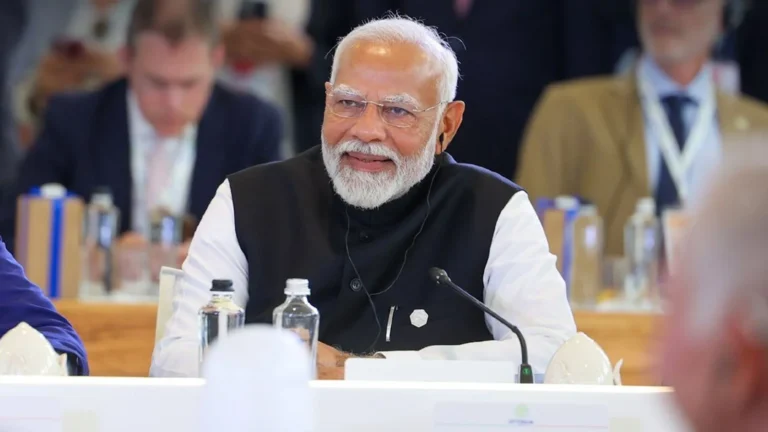
Prime Minister Narendra Modi advanced the momentum of the trade accord during diplomatic discussions at the G7 Summit. Modi held synchronized talks with European Commission President Ursula von der Leyen and European Council President Antonio Costa.
The international agreement will systematically dismantle import duties on more than 90% of commercial products. This structural economic shift establishes a broad free-trade zone encompassing nearly two billion consumers globally.
Ayodhya Outcry: Ram Mandir Donation Scandal Intensifies
An FIR filed against multiple individuals over misappropriation of Ram Mandir donations has ignited strong reactions from Ayodhya’s spiritual community. Local leaders demand strict punishment for those guilty of betraying public trust. The case, registered under numerous Bharatiya Nyaya Sanhita sections, stems from a Special Investigation Team’s inquiry.
Public outrage has intensified across Ayodhya following the formal registration of a First Information Report regarding the alleged diversion of religious temple funds. A dedicated Special Investigation Team identified multiple suspects following a preliminary financial probe.
Local religious figures are demanding severe judicial penalties for the accused individuals. The community leaders emphasize that the alleged financial mismanagement represents a direct violation of public and spiritual trust.
Prominent religious orator Karpatri Maharaj voiced dissatisfaction with the initial boundaries of the police inquiry. He publicly petitioned Uttar Pradesh Chief Minister Yogi Adityanath to escalate judicial actions against the suspects.
Concurrently, Saket Bhawan Peethadhishwar Sitaram Das Ji Maharaj demanded absolute transparency as the criminal case names eight specific individuals. The religious leader stressed that the integrity of the institution must be maintained through clear legal proceedings.
The developing investigation has taken on distinct political overtones within the state. Uttar Pradesh Congress Committee President Ajay Rai stated that sustained political opposition forced the formal registration of the police complaints.
Former state legislator Pawan Pandey alleged that substantial financial contributions were systematically diverted by the accused. Pandey called for a comprehensive investigation led by the Central Bureau of Investigation under direct judicial oversight.
Diverging Voices: Trump‘s Team Shows Foreign Policy Split
Within President Donald Trump‘s administration, a united front is being projected on Iran-related matters, though Vice President JD Vance and Secretary of State Marco Rubio have demonstrated differing views, particularly on Iran-Israel relations. Their distinct stances reflect the Republican Party’s internal foreign policy divisions and outline future political contenders.
The White House is working to maintain an appearance of absolute policy alignment regarding the ongoing conflict involving Iran. Despite these efforts, clear policy differences have emerged between Vice President JD Vance and Secretary of State Marco Rubio regarding West Asian geopolitical dynamics.
Vance openly questioned recent Israeli military operations conducted in Beirut. In contrast, Rubio strongly supported the defense maneuvers, highlighting a fundamental strategic divergence at the highest levels of the executive branch.
Both Vance and Rubio are widely viewed as prominent competitors for the 2028 Republican presidential nomination. Their public policy differences expose broader ideological debates occurring within the conservative foreign policy establishment.
The Vice President has focused on exploring long-term diplomatic stabilize-and-coexist strategies with Tehran. Conversely, the Secretary of State has concentrated on reassuring traditional Gulf allies that Washington will protect their regional security interests.
Executive branch spokespersons continue to downplay any internal friction, insisting the administration remains strategically unified. Independent geopolitical analysts note that the operational differences between Vance and Rubio reveal distinct non-interventionist versus traditional hawk methodologies.
EU Criticizes Turkey Over Cyprus Exclusion Ahead of Global Climate Summit
The European Union has expressed disapproval of Turkey for excluding Cyprus from preparations for the COP31 U.N. climate summit. As tensions rise, EU leaders, including climate commissioner Wopke Hoekstra, demand equal treatment for all member states. Cyprus fears further exclusion if not allowed in key summit events.
Brussels issued a formal diplomatic reprimand to Ankara for blocking Cypriot officials from participating in initial planning sessions for the upcoming United Nations climate conference. The diplomatic snub has strained regional relations ahead of the international summit.
The COP31 climate convention is scheduled to convene in Turkey in November 2026. The global summit will assemble delegation groups from nearly 200 countries to negotiate international carbon reduction frameworks.
Cypriot diplomats formally raised the operational blockade during a gathering of European Union climate ministers. The delegation presented evidence showing their systematic exclusion from pre-summit administrative meetings managed by Turkish hosts.
Turkish government authorities confirmed the operational exclusion of the Cypriot delegation but declined to release an official justification. EU Climate Commissioner Wopke Hoekstra condemned the exclusion, asserting that all European member states must receive equal diplomatic access.
A Global Snapshot: From Tehran to Trump, Today’s Top Stories
Today’s headlines span from Iran’s aggressive actions in the Strait of Hormuz to King Charles‘ decision regarding Buckingham Palace. Also highlighted are Venezuela’s devastating earthquakes, NATO’s defense contracts, and the U.S. Supreme Court‘s pivotal decision backing Donald Trump’s immigration policies. Global events emphasize ongoing political, environmental, and humanitarian challenges.
Security concerns escalated in the Middle East after Iranian military forces targeted a commercial freight vessel in the Strait of Hormuz. Anonymous United States defense sources confirmed the kinetic incident, raising international anxiety over vital maritime trade corridors.
In London, the British monarchy confirmed a significant departure from royal protocol. King Charles announced his intention to permanently relocate away from Buckingham Palace following the completion of extensive architectural renovations.
A pair of powerful earthquakes struck Venezuela, causing widespread structural collapses and trapping hundreds of residents beneath debris. Local emergency response teams are operating at maximum capacity, prompting urgent appeals for international humanitarian assistance.
A Tumultuous Week in US News: Leadership Changes, Security Enhancements, and Legal Battles
The past week in the US was marked by significant events: General Donahue stepping down from his command, surveillance enhancements at the Reflecting Pool, legislative measures on war powers with Iran, a consequential $700 million jet engine sale to Turkey, and the U.S. Supreme Court delivering key legal rulings.
Washington experienced a series of major developments spanning military high commands, federal security mandates, and historic judicial determinations. General Christopher Donahue will officially vacate his post as the commander of US Army Europe and Africa.
The White House ordered immediate security upgrades around the Lincoln Memorial Reflecting Pool following targeted acts of property destruction. Armed National Guard units have commenced regular patrols across the historic site to prevent further vandalism.
On Capitol Hill, federal lawmakers advanced legislative measures directing the executive branch to halt unauthorized military operations against Iranian targets. The war powers debate has triggered intense constitutional arguments among lawmakers.
The executive branch also finalized a controversial industrial defense transaction with Ankara. The administration approved a $700 million military export license for advanced jet propulsion systems despite Turkey’s ongoing utilization of Russian hardware.
Simultaneously, the United States Supreme Court issued a major legal ruling validation. The high court affirmed the administration’s sweeping structural modifications to the federal asylum review process, altering national border enforcement policy.
Controversial Jet Engine Sale: U.S. Plans to Arm Turkey Despite Tensions
The Trump administration has notified Congress of its intention to sell $700 million worth of jet engines to Turkey. Despite Turkey’s ties with Russia, the State Department considers licensing the export. The sale aims to strengthen ties with Turkey amid NATO summit preparations, though met with congressional objections.
The White House formally presented a statutory notification to Congress regarding the proposed $700 million aviation manufacturing transfer to Ankara. The Department of State intends to authorize the export permits despite lingering friction over Turkey’s prior acquisition of Russian missile defense grids.
Bilateral trade officials stated the propulsion system transaction is designed to fortify ties with Turkey ahead of the upcoming NATO defense summit. However, the multi-million dollar defense contract faces immediate resistance from key congressional oversight committees.
Future Outlook
The impending finalization of the India-EU Free Trade Agreement in late 2026 is poised to set a precedent for cross-continental economic pacts. If ratified smoothly by March 2027, the elimination of tariffs on over 90% of goods will likely spark immediate spikes in bilateral investments, particularly in technology, manufacturing, and pharmaceuticals.
However, external geopolitical friction points—such as internal policy debates within the US executive branch regarding Iran, and Turkey’s ongoing diplomatic blockades within UN frameworks—could introduce volatility into broader global trade networks, forcing India and the EU to expedite their economic integration.
FAQs
When is the India-EU Free Trade Agreement expected to be signed?
The free trade agreement is on track to be officially signed during the European Council meeting scheduled for December 2026.
What percentage of goods will be impacted by the India-EU tariff elimination?
The trade pact will completely eliminate import tariffs on more than 90% of all commercial products traded between India and the European Union.
Why is there a religious controversy in Ayodhya?
An official investigation has led to a First Information Report naming eight individuals accused of financial misappropriation and misusing public donations intended for the Ram Mandir.
What is the value of the controversial US-Turkey defense deal?
The White House has notified Congress of a $700 million commercial transaction involving the export of advanced military jet propulsion engines to Turkey.