Bengal UCC Exemption for Scheduled Tribes Confirmed by BJP
The Bharatiya Janata Party has formalized its policy roadmap for the impending roll-out of the Uniform Civil Code in West Bengal. State party leadership explicitly guaranteed complete legal immunity for indigenous populations ahead of the highly anticipated legislative tabling scheduled for Monday, neutralizing intense regional political speculation.
Key Highlights
- Tribal Immunity Guaranteed: The proposed legal framework will completely exclude all notified Scheduled Tribes across West Bengal to preserve ancestral traditions.
- No Population Controls: Leadership categorically denied rumors linking the civil code draft to population control measures or restrictions on childbearing numbers.
- Judicial Review Model: Implementation protocols will mimic those of Uttarakhand, utilizing an independent expert committee overseen by a sitting judicial official.
- Parallel Security Legislation: The legislative session will simultaneously introduce a sweeping public safety bill targeting organized syndicates and habitual offenders.
The Uniform Civil Code remains a transparent, long-standing core commitment within the electoral manifesto of the Bharatiya Janata Party, devoid of any hidden political motives, as verified by Rajya Sabha member Samik Bhattacharya.
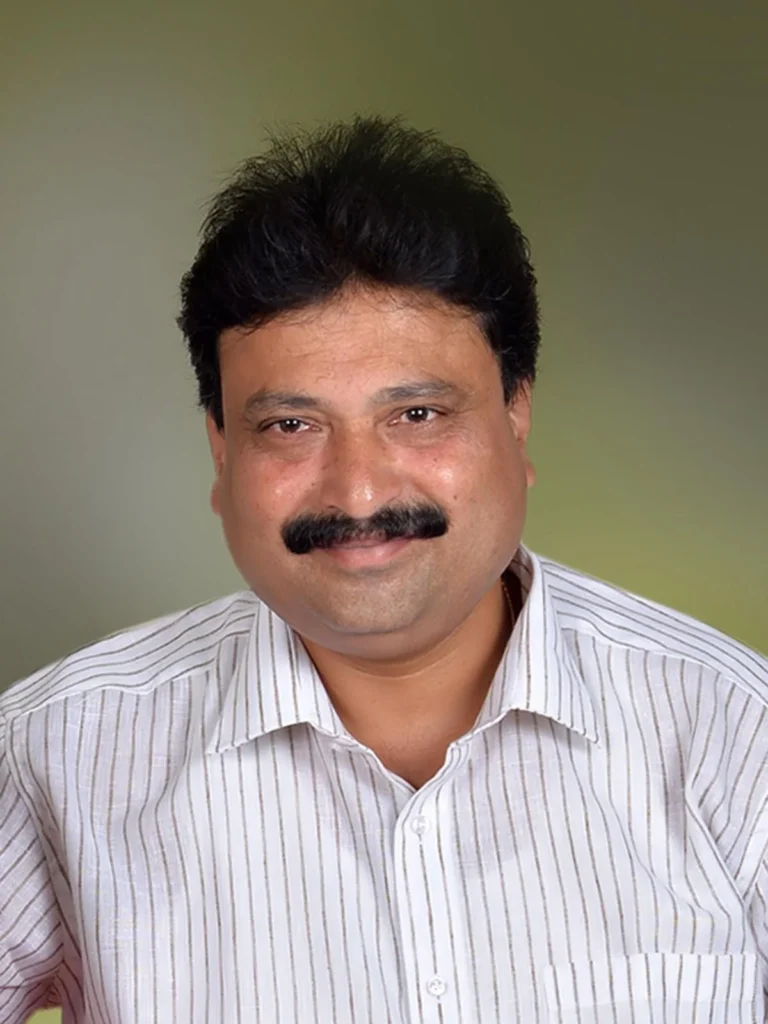
Bharatiya Janata Party State President Samik Bhattacharya formally stated on Saturday that the Uniform Civil Code has systematically anchored the organization’s governance platform. However, the senior lawmaker explicitly clarified that the upcoming statutory framework would completely exclude all indigenous tribal populations residing across West Bengal.
Bhattacharya reinforced this policy position by directly citing foundational statutory protections, confirming that no clause within the code will apply to members of any Scheduled Tribes classified under clause 25 of Article 366 and Article 342 of the Constitution of India.
In tandem with outlining these explicit protections for indigenous populations, the Rajya Sabha member dispelled ongoing public anxieties by asserting that the civil code holds no operational connection to statutory limitations regarding family sizes or individual childbearing numbers.
The state party chief emphasized that supervising or capping the quantity of children an individual can family-plan is absolutely not an objective, nor does it comprise any statutory provision within the structural architecture of the Uniform Civil Code.
These high-level clarifications from Bhattacharya emerged amidst intense legislative speculation that the ruling administration plans to formally introduce the comprehensive civil code draft on the floor of the State Legislative Assembly this coming Monday.
This follows an announcement on Friday by Chief Minister Suvendu Adhikari, who affirmed that the civil code would be deployed across West Bengal through meticulous legislative channels, promising a comprehensive address on the structural framework during Monday’s legislative session.
Adhikari confirmed that West Bengal will mirror the legislative blueprints executed in Uttarakhand, Gujarat, and Assam, establishing a dedicated panel led by a sitting judge to formalize the local draft.
Concurrently, the administration is prepared to table the West Bengal Public Safety and Control of Anti-social Activities Bill, 2026, alongside an additional legislative bill, drastically expanding state powers to combat organized crime networks.
The strategic implementation of a centralized civil framework has remained an absolute ideological priority for the organization, trailing the execution of the Ram Temple construction in Ayodhya and the historic legislative abrogation of Article 370 in Jammu and Kashmir.
Bhattacharya’s public declarations carry immense strategic weight as opposition coalitions and regional interest groups allegedly mobilize narrative campaigns designed to catalyze widespread public anxiety regarding the imminent scope of the legal uniformization.
Prior to the statutory validation of the civil code across three separate states, multiple indigenous councils raised severe concerns regarding potential friction with customary rights, a critical demographic given the tribal vote’s historic role in the party’s electoral rise.
Writing a detailed brief in Bengali, Bhattacharya clarified that a unified civil code remains an administrative necessity in West Bengal to guarantee that every single citizen enjoys perfectly symmetrical legal rights and civic responsibilities before courts.
The state president noted that replacing disparate, faith-based personal laws with a synchronized civil playbook for marriages, divorces, inheritances, and adoptions directly strengthens national integration, social justice, and constitutional equality.
The lawmaker concluded that the impending statutory regime will enforce a standardized set of civil rules for all residents, decisively eliminating deep gender disparities and polygamous practices permitted under historical personal laws while condemning organized misinformation.
This regional legislative push strictly aligns with federal directives issued in May, when Union Home Minister Amit Shah declared that all indigenous communities nationwide would remain entirely outside the jurisdictional ambit of any incoming civil code.
Future Outlook
The impending introduction of the Uniform Civil Code on June 29, 2026, signals a massive structural transformation in West Bengal’s legal landscape. Backed by an absolute majority of 207 MLAs in the 294-seat assembly, the Adhikari administration possesses the legislative leverage required to clear the bill despite predictable opposition. By aligning its draft with the Assam model passed in May 2026, West Bengal will institutionalize mandatory marriage registrations within 2 months, completely ban polygamy, and legally protect live-in relationships. The explicit exemption of the state’s 40 notified Scheduled Tribes, who represent roughly 5.8% of the population, is poised to isolate opposition critiques, shifting the political battleground toward urban personal law reforms.
FAQs
What is the primary objective of the West Bengal Uniform Civil Code?
The Uniform Civil Code aims to replace diverse, religion-based personal laws with a single, secular legal framework governing civil matters such as marriage, divorce, asset inheritance, and child adoption for all citizens, ensuring gender parity and legal equality.
Will the Uniform Civil Code alter or restrict family sizes in India?
No, the state leadership has explicitly clarified that regulating, monitoring, or limiting the number of children an individual or family can have is completely outside the scope and provisions of the Uniform Civil Code.
Why are Scheduled Tribes exempt from the West Bengal civil code?
Scheduled Tribes are explicitly excluded under Article 366 and Article 342 of the Indian Constitution to ensure that their distinct cultural traditions, ancestral customs, and specialized socio-legal rights remain fully preserved and legally protected from uniformization.
What other major legislations are being introduced alongside the civil code?
The state government is concurrently tabling the West Bengal Public Safety and Control of Anti-social Activities Bill, 2026. This stringent security law introduces preventive detention of up to 12 months without trial to dismantle illegal extortion syndicates and organized crime networks.