PM Modi Slams Congress At Republic Summit 2026
Prime Minister Narendra Modi launched a sharp critique against the Congress party during a major national address, pointing out deep governance failures during the previous decade of UPA leadership. Speaking directly to India’s younger demographic, the Prime Minister emphasized that rising public expectations now drive accelerated national development.
Key Highlights
- PM Modi targeted the Congress over decade-long UPA governance failures and chronic political obstructionism.
- The Prime Minister called on Gen Z to recognize political double standards regarding infrastructure and technology.
- Government initiatives like the Rs 25,000 crore SWAMIH fund have successfully delivered thousands of stalled homes.
- Rapid transport expansion now sees metro networks serving over 1 crore daily passengers across India.
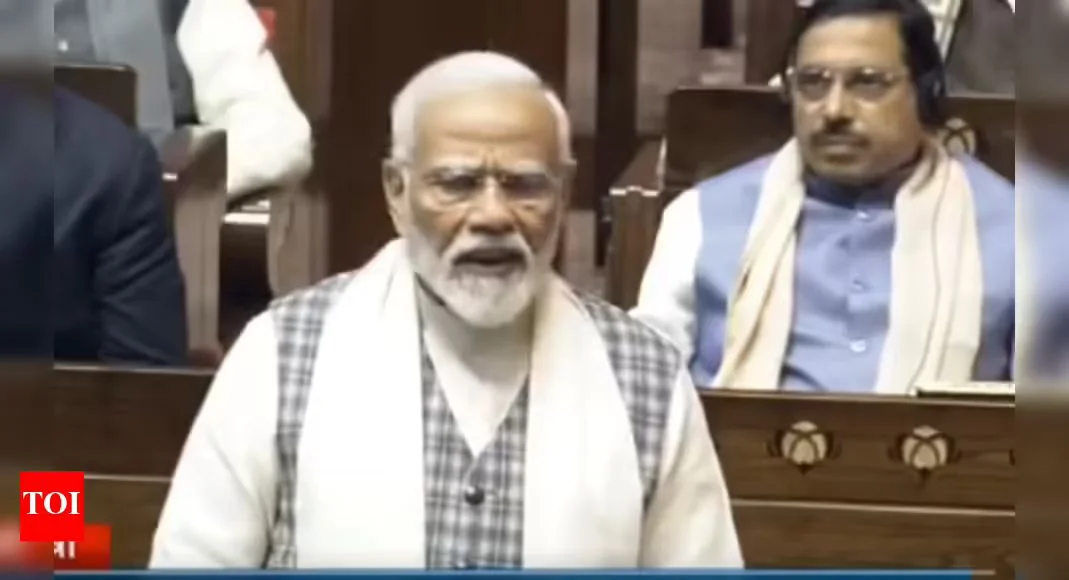
During his address at the Republic Summit 2026 on Monday, Prime Minister Narendra Modi heavily criticized the Congress, asserting that widespread dissatisfaction characterized the 10 years of UPA administration. He noted that citizens previously felt progress was impossible, prompting him to urge youth to counter misleading political rhetoric.
The Prime Minister explained that the rapid operational pace of his administration has heightened public expectations. He observed that even opposition leaders consistently forward demands, demonstrating underlying trust that current governance can successfully implement large-scale national projects.
Modi explained that modern administrative functionality has structurally elevated local ambitions. He noted that completing a single project triggers demands for advanced infrastructure, viewing this trend as positive civic aspiration rather than negative public discontent.
The Prime Minister stated that citizens naturally direct expectations toward leadership capable of executing projects. He added that the Congress party frequently requests policy interventions from his office, proving that political opponents recognize the current administration’s capacity to transform national blueprints into reality.
Global paradigms are shifting rapidly alongside immense industrial disruption, the Prime Minister observed. He emphasized that these contemporary challenges simultaneously generate major economic advancements for the domestic market.
Addressing the younger generation, Modi stated that youth will witness the realization of a developed India firsthand. He urged local entrepreneurs, innovators, and startups to secure emerging market opportunities, promising total state backing under a national priority framework.
India has entered an era of rapid structural adjustment that will continue to gain speed, the Prime Minister affirmed. He asserted that massive administrative efforts match grand developmental visions, relying on the unified contribution of 1.4 billion citizens to establish a developed nation.
Modi expressed absolute certainty that the current generation will experience a completely transformed India. He noted his governance strategy rejects delayed outcomes, focusing instead on delivering immediate structural transformations.
Taking an implicit swipe at Congress opposition to major national initiatives, Modi accused political detractors of maintaining duplicate operational standards. He stated that Gen Z citizens must remain vigilant regarding these contradictory political stances.
The Prime Minister identified a specific political faction defined entirely by constant opposition and chronic negativity. He pledged to outline their political symptoms so the public could easily recognize obstructionist strategies.
Modi countered that critics question local power deficits while simultaneously organizing public protests against critical energy projects. He noted these groups systematically oppose crucial hydroelectric dams, solar installations, thermal plants, and nuclear facilities.
The same political entities previously restricted domestic mining operations but now question India’s position in global rare-earth supply chains, the Prime Minister noted. He highlighted the clear contradiction in their economic arguments.
Modi stated that factions previously criticizing digital focus over basic food security now demand updates on artificial intelligence. Simultaneously, he noted, these groups oppose local data centers and semiconductor manufacturing units.
The Prime Minister emphasized that the public must understand the true motivations of obstructionist politicians. He specifically directed the nation’s Gen Z demographic to analyze these shifting political narratives.
Reflecting on a decade of governance, Modi stated that improving the daily lives of middle-class communities remains a central objective. He highlighted targeted interventions designed to resolve long-standing urban housing crises.
The government established a dedicated Rs 25,000 crore Special Window for Affordable and Mid-Income Housing (SWAMIH) Fund. This financial mechanism enabled the completion of thousands of delayed residential projects nationwide.
Modi affirmed that affordable housing finance, widespread digital systems, and modernized municipal infrastructure upgraded civic living standards. The SWAMIH interventions directly secured home delivery for thousands of anxious buyers.
The Prime Minister concluded by highlighting the massive expansion of national transport networks over 10 years. He pointed to revolutionized urban mobility options as a primary driver of modern economic growth.
Domestic metro rail operations now manage over 1 crore passenger journeys every day. Meanwhile, high-speed rail networks like Vande Bharat, Namo Bharat, and Amrit Bharat continue to strengthen regional connectivity.
Expanded highway systems and modernized airports have boosted economic mobility, Modi noted. These major transit corridors are generating fresh commercial opportunities across both established metropolitan centers and emerging rural zones.
Future Outlook
The infrastructure push highlighted at the summit sets the stage for India’s next economic phase heading toward 2030. With the “Reform Express” gaining momentum, subsequent policy rollouts are expected to prioritize semiconductor self-reliance, advanced AI integration, and deeper urban transit penetration. By centering Gen Z as the primary beneficiaries and drivers of this transformation, the administration aims to solidify a tech-driven economy, ensuring that the target of a fully developed nation moves from a long-term vision to an immediate reality.
FAQs
What was the main focus of PM Modi’s speech at the Republic Summit 2026?
PM Modi focused on India’s transition into a developed nation, contrasting his administration’s result-oriented governance with the governance failures of the previous UPA rule. He highlighted massive infrastructure growth and called on Gen Z to recognize political double standards.
What is the SWAMIH Fund mentioned by the Prime Minister?
The Special Window for Affordable and Mid-Income Housing (SWAMIH) Fund is a Rs 25,000 crore government-backed stress fund created to complete stalled real estate and affordable housing projects across India, delivering homes to thousands of buyers.
How much has India’s public transport network expanded according to the address?
India’s urban metro rail networks now serve more than 1 crore passengers on a daily basis. Additionally, the network has been strengthened by modern rail initiatives such as the Vande Bharat, Namo Bharat, and Amrit Bharat trains.
What did PM Modi say regarding Gen Z and the opposition?
PM Modi urged Gen Z to recognize the contradictory arguments of opposition factions. He pointed out that the same groups protesting infrastructure projects like solar parks and semiconductor plants frequently complain about lacking modern facilities and technological progress.