Ayodhya Temple Corruption Allegations Trigger Scrutiny
Allegations of multi-million rupee financial irregularities and thefts at the Ayodhya Ram Temple have triggered intense political scrutiny in India, sparking demands for accountability and transparent investigations ahead of upcoming state elections.
Key Takeaways
- Alleged financial irregularities at the Ayodhya Ram Temple range up to Rs 1,400 crore.
- Senior political leaders face intense scrutiny for maintaining silence regarding the alleged temple thefts.
- Opposition parties plan to leverage these corruption allegations in the upcoming state elections.
Prime Minister Narendra Modi previously established an electoral platform centered on absolute intolerance toward administrative corruption and financial malfeasance.
In 2019, the executive branch systematically directed federal ministries to identify non-performing and corrupt bureaucratic personnel for compulsory retirement.
To reinforce this anti-corruption message, public guarantees were made regarding the swift retrieval of illicit capital hidden in offshore accounts.
Government declarations assured citizens that recovered overseas wealth would translate to personal financial distributions of Rs 15 lakh per bank account.
Current political developments have raised sharp questions regarding the administration’s prolonged silence over massive missing capital at sacred institutions.
Statutory frameworks clearly define a temple deity as a distinct juristic person holding exclusive ownership rights over institutional properties.
Demands for official executive clarity intensify as allegations surface that self-professed devotees compromised the financial integrity of the Ayodhya site.
Preliminary investigative reports indicate the scale of the alleged asset plundering ranges from baseline fractions up to Rs 1,400 crore.
Institutional transparency advocates express growing concern that the exact quantum of diverted wealth might never be fully disclosed.
Public frustration centers heavily on the sluggish procedural momentum demonstrated by the Uttar Pradesh Special Investigation Team.
Local law enforcement bodies conducted investigative inquiries for 12 whole days before filing an official First Information Report.
Independent monitors report active, behind-the-scenes maneuvers by vested stakeholders intended to misinform the public and disrupt the ongoing probe.
Internal factions within the Vishva Hindu Parishad express acute anxiety that judicial transparency could compromise the wider socio-religious movement.
A regional spokesperson for the organization initially demanded punitive legal actions against whistleblowers raising allegations of asset misappropriation.
The leadership subsequently experienced immense external pressure, compelling the group to formally request an official law enforcement investigation.
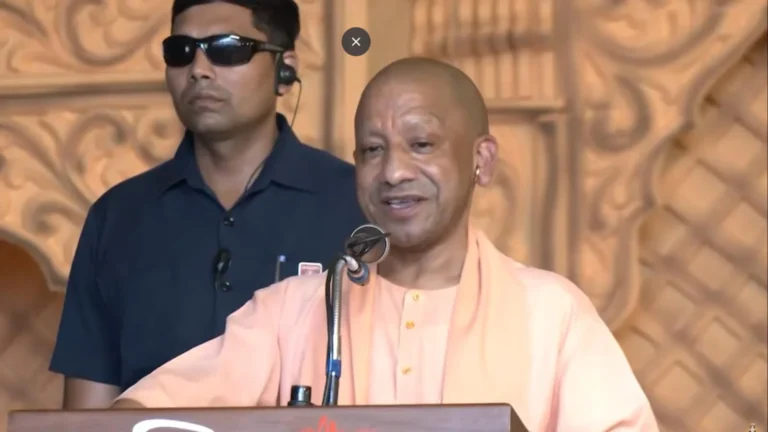
Regional political dynamics show Chief Minister Yogi Adityanath navigating deep systemic rifts between organizational hardliners and pressing electoral mandates.
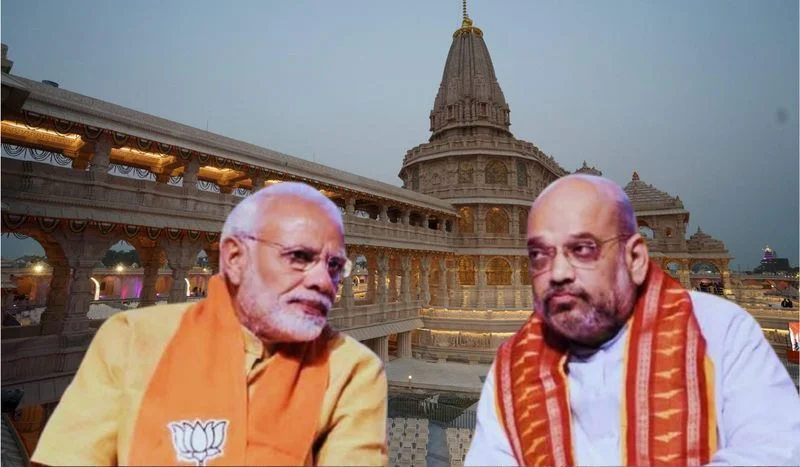
High-ranking national officials, including Home Minister Amit Shah and Rashtriya Swayamsevak Sangh chief Mohan Bhagwat, have withheld public commentary.
Historical records indicate the broader development project has faced recurrent disputes involving real estate transactions and financial administration.
Detailed independent reporting previously highlighted six controversies tied directly to opaque land acquisitions and commercial real estate speculation.
Major opposition groups, including the Samajwadi Party and Aam Aadmi Party, have consistently challenged the validity of these property transactions.
Separate criminal inquiries are investigating the unauthorized interception and fraudulent encashment of Rs 6 lakh at a Punjab National Bank branch.
Daily institutional offerings deposited across 36 donation boxes require processing across two shifts supervised closely by State Bank of India officials.
Severe allegations indicate that gold, silver, and diamond offerings contributed by the public were systematically replaced with counterfeit materials.
Indian Bullion and Jewellers Association representative Anurag Rastogi publicly confirmed that massive silver donations have vanished without administrative records.
Independent commercial donors have come forward claiming the temple trust failed to produce official documentation for substantial precious metal offerings.
Municipal authorities confirmed the multi-site theft of public street lighting infrastructure along major ceremonial transit routes like Rampath.
The stolen property includes 3,800 bamboo lights and 36 gobo projector lights with an estimated valuation of Rs 50 lakh.
Legal complaints were submitted to police forces despite highly unusual initial claims attributing the infrastructure losses to regional wildlife behavior.
Political analysts suggest the central executive cannot maintain a detached stance given the deep public interest in asset protection.
The Prime Minister faces direct calls to deploy federal oversight to track down and prosecute entities responsible for exploiting public funds.
The multi-year infrastructure development represents a close collaborative initiative between the central government apparatus and broader socio-religious networks.
The Prime Minister directly orchestrated the high-profile temple consecration ceremony despite formal canonical objections raised by traditional Shankaracharyas.
Senior administrative official Nripendra Misra, former principal secretary, was explicitly deployed to supervise the operational trust managing the site.
Millions of ordinary citizens provided foundational support for the development through direct liquid capital contributions and intense physical labor.
Asset management challenges and internal governance friction represent persistent issues across multiple religious administrative bodies throughout the country.
In a separate enforcement action, the Andhra Pradesh Crime Investigation Department detained an archbishop following an extensive multi-million rupee scam.
Internal administrative conflicts regarding liquid asset distribution and structural governance frequently occur within minority religious groups and trusts.
Legal experts emphasize that institutional credibility depends entirely on the efficiency of systems used to discover and punish fraud.
Senior institutional veterans, including Vinay Katiyar and Rajneesh Singh, have directly accused specific internal trustees of active financial misconduct.
Regional organizers Santosh Dubey of Dharm Sena and Sharad Shukla of Youth Congress have submitted formal documentation to police forces.
Parliamentary representative Brij Bhushan Sharan Singh publicly confirmed he possessed prior awareness regarding systematic asset diversion at the complex.
Multi-source reviews indicate that numerous regional political figures maintained silence regarding the ongoing discrepancies due to high-command pressure.
Samajwadi Party leader Akhilesh Yadav positioned his party at the forefront of the issue, offering investigative cooperation to regional authorities.
The opposition alliance is prepared to center its upcoming campaign around the financial discrepancies during regional assembly elections in 2027.
Senior political strategists recognize that unaddressed reports of asset embezzlement are generating significant negative public sentiment among core voters.
Administrative observers state that the mismanagement of sacred public offerings requires distinct handling compared to typical commercial white-collar crimes.
Because the religious landmark was established via joint public-state cooperation, financial transparency failures directly affect millions of individual donors.
Dedicated supporters are following audit developments with deep anxiety, monitoring asset verifications conducted by state-owned banking personnel.
Massive capital inflows have rapidly elevated the newly constructed location into the upper tier of wealthy religious institutions nationwide.
Other major historical sites, including the Padmanabhaswamy and Tirupati institutions, have historically navigated significant regulatory debates regarding wealth oversight.
Mirroring the Ayodhya developments, parallel allegations of severe asset misappropriation have emerged at the Sree Krishna Janmasthan site in Mathura.
Religious representative Dinesh Phalahari Maharaj submitted formal documentation to the Chief Minister requesting an immediate high-level administrative investigation.
The submission alleges that closed-circuit surveillance systems were deliberately deactivated inside counting rooms to facilitate unauthorized asset removal.
Digital channels have experienced a massive surge in verified video evidence documenting broader transparency failures across multiple regional shrines.
Documented cases include empty high-value checks and unauthorized cash handling, sparking intense public demonstrations demanding structural management reforms.
Historical Context
Indian religious institutions manage some of the largest public trusts globally, historically attracting intense regulatory and political scrutiny.
Endowments at elite sites require specialized bureaucratic accounting, drawing direct involvement from state institutions like the State Bank of India.
The integration of state administrative officials into religious trust governance is designed to provide institutional checks against asset diversion.
The current investigative focus highlights a broader systemic shift demanding enhanced accountability within traditionally autonomous institutional frameworks.
FAQs
What is the estimated scale of the Ayodhya temple donation scam?
The alleged financial irregularities at the temple range from small amounts up to Rs 1,400 crore, according to preliminary reports.
Which agency is currently investigating the Ayodhya temple fraud allegations?
The Uttar Pradesh Special Investigation Team is managing the primary inquiry into the financial irregularities and asset diversions.
What specific items were reported stolen from the Ayodhya transit routes?
Authorities reported the theft of public infrastructure worth Rs 50 lakh, including 3,800 bamboo lights and 36 gobo projector lights.
How are daily donations processed at the temple to maintain transparency?
Public contributions from 36 donation boxes are processed during two shifts by tellers under State Bank of India supervision.