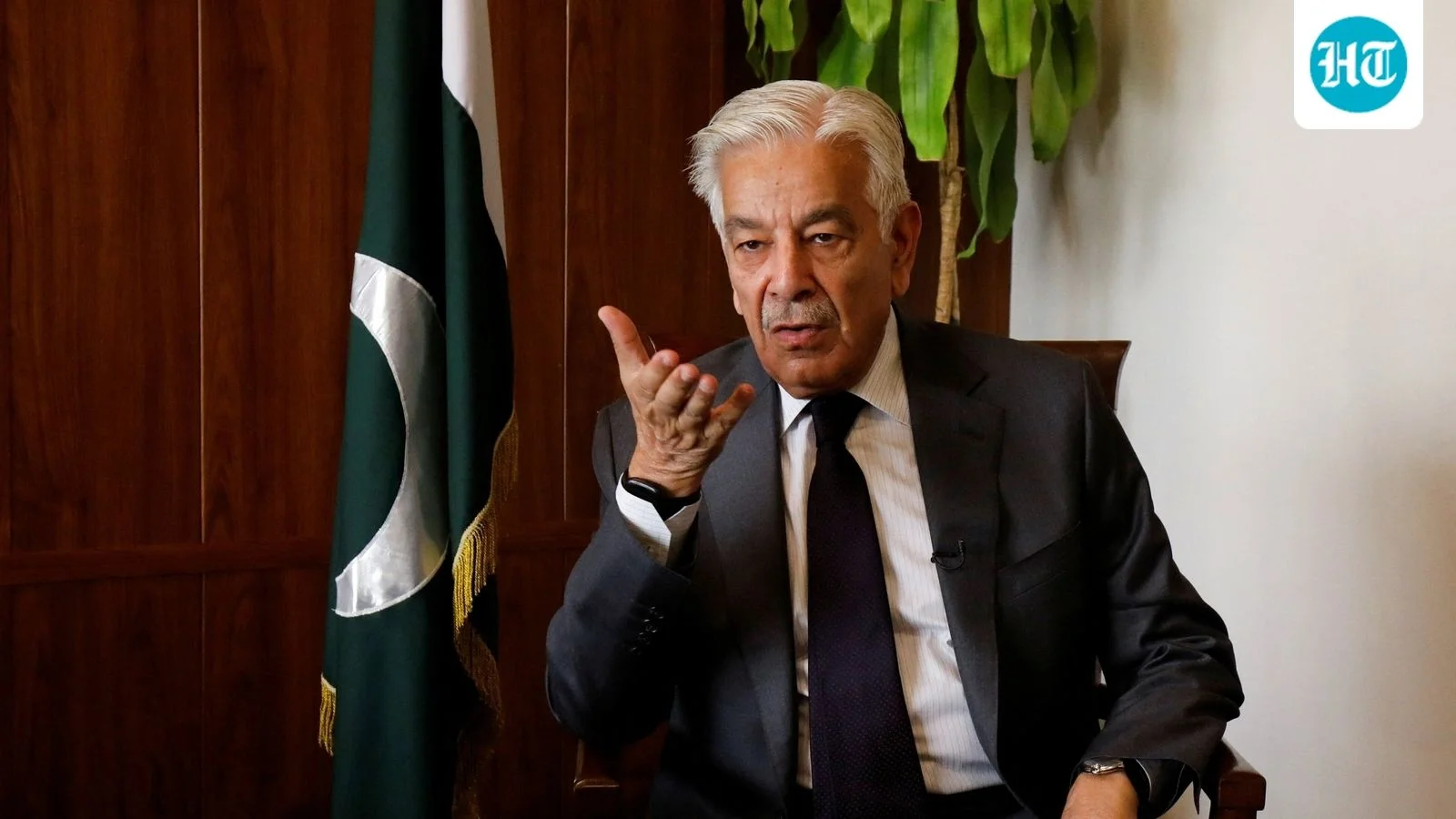
Pakistan Threatens War With India Over Suspended Indus Waters Treaty Amid Crisis
Islamabad has threatened military confrontation against New Delhi following India’s decision to maintain the suspension of the 1960 Indus Waters Treaty. The warning coincides with a debilitating domestic water crisis across Pakistan, which independent analysts blame on severe structural mismanagement by state authorities.
Key Takeaways
- Pakistan Defence Minister Khwaja Asif declared readiness to initiate war if India alters or restricts river flows.
- New Delhi placed the historic 1960 water-sharing accord in abeyance following a deadly terror assault in Pahalgam in April 2025.
- India maintains the treaty will remain frozen until Islamabad completely dismantles its cross-border terror networks.
- Internal mismanagement has left one-third of Pakistan’s population facing severe water scarcity, notably in Sindh and Balochistan.
Pakistan’s Defence Minister, Khwaja Asif, has issued a direct military warning to India regarding bilateral water security. This escalation follows New Delhi’s confirmation that its stance on keeping the Indus Waters Treaty in abeyance remains completely “unchanged.”
The firm position maintained by India acts as a direct countermeasure to the Pakistan-backed terrorist operation in Pahalgam executed in April 2025, an attack that resulted in 26 fatalities.
The aggressive rhetoric from Asif arrives at a critical juncture for the Pakistani administration, which is currently grappling with profound internal instability and a systemic water emergency.
Interfacing with ARY News on Saturday, Asif stated that the state would immediately initiate war against India the moment national security and vital water resources are perceived to be under threat.
The defense chief asserted that military options would be actively deployed if Islamabad uncovers verified signs that India is working at an alarming pace to disrupt downstream river flows.
India has remained resolute in its suspension of the historic 1960 water-sharing framework. New Delhi demands that the treaty will not be reinstated until Islamabad enforces verifiable and irreversible actions against regional terror cells operating from its soil.
The World Bank-brokered pact historically guarantees Pakistan access to 80% of the expansive Indus water basin to fuel its agricultural sector. However, systemic structural failures within Pakistan have left critical farming zones acutely vulnerable.
Khwaja Asif accuses India of ‘weaponising water’, fails to back up claim
The defense minister attempted to shift the narrative regarding domestic shortages by alleging that New Delhi is actively weaponising water resources, altering Chenab River flows, and denying vital hydrological data.
Despite making these public allegations, Asif conceded that he possessed no current intelligence regarding infrastructure developments over the preceding 12 months, notwithstanding his assertion that Pakistani inspectors previously executed roughly 115 technical site visits.
Concurrently, local structural failures have exposed nearly one-third of the Pakistani populace to severe water deficits, with the provinces of Sindh and Balochistan bearing the brunt of the collapse.
Data compiled by the irrigation department in Sindh underscores the scale of infrastructure decay. The North West Canal is currently operating at a 64.1% deficit, while the Rice Canal and Dadu Canal show deep shortages of 38% and 82% respectively.
As water volumes at the pivotal Sukkur Barrage continue to diminish, regional administrative leaders are warning of an imminent economic catastrophe driven entirely by the central government’s failure to resolve internal water distribution friction.
Historical Context and Future Outlook
The Indus Waters Treaty, signed in 1960 after protracted negotiations facilitated by the World Bank, has long been considered one of the world’s most resilient transboundary water treaties, surviving multiple full-scale wars between India and Pakistan. It allocates the three eastern rivers (Ravi, Beas, and Sutlej) to India and the three western rivers (Indus, Jhelum, and Chenab) to Pakistan.
However, the geopolitical landscape fractured fundamentally following the April 2025 terror attack in Pahalgam, forcing India to pivot toward a strict policy linking ecological cooperation directly to counter-terrorism. Tensions have intensified following statements from India’s Jal Shakti Minister, CR Patil, hinting at a potential total cessation of Indus water flows to Pakistan by June 2028.
With Islamabad’s Deputy Prime Minister, Ishaq Dar, formally seeking UN Security Council intervention over alleged Indian maneuvers to reroute the Chenab River via a new river-linking project, the water dispute has transformed into an volatile nuclear flashpoint.
FAQs
Why did India suspend the Indus Waters Treaty?
India placed the 1960 Indus Waters Treaty in abeyance following a Pakistan-sponsored terrorist attack in Pahalgam in April 2025 that killed 26 people. New Delhi maintains that the suspension will remain in place until Pakistan takes verifiable actions to dismantle its cross-border terror infrastructure.
What did Pakistan’s Defence Minister say regarding the water dispute?
Defence Minister Khwaja Asif stated that Pakistan would definitely go to war with India if it perceives that its national security and water access are threatened, or if India acts quickly to alter river flows.
How severe is the domestic water crisis inside Pakistan?
The crisis currently impacts nearly one-third of Pakistan’s population, driven heavily by internal mismanagement and failing infrastructure. Canals like the North West Canal face a 64.1% deficit, while the Dadu Canal reports an 82% shortage, leading local leaders to warn of an economic disaster.