Samoa Appeals Court Upholds Ouster of Deputy PM
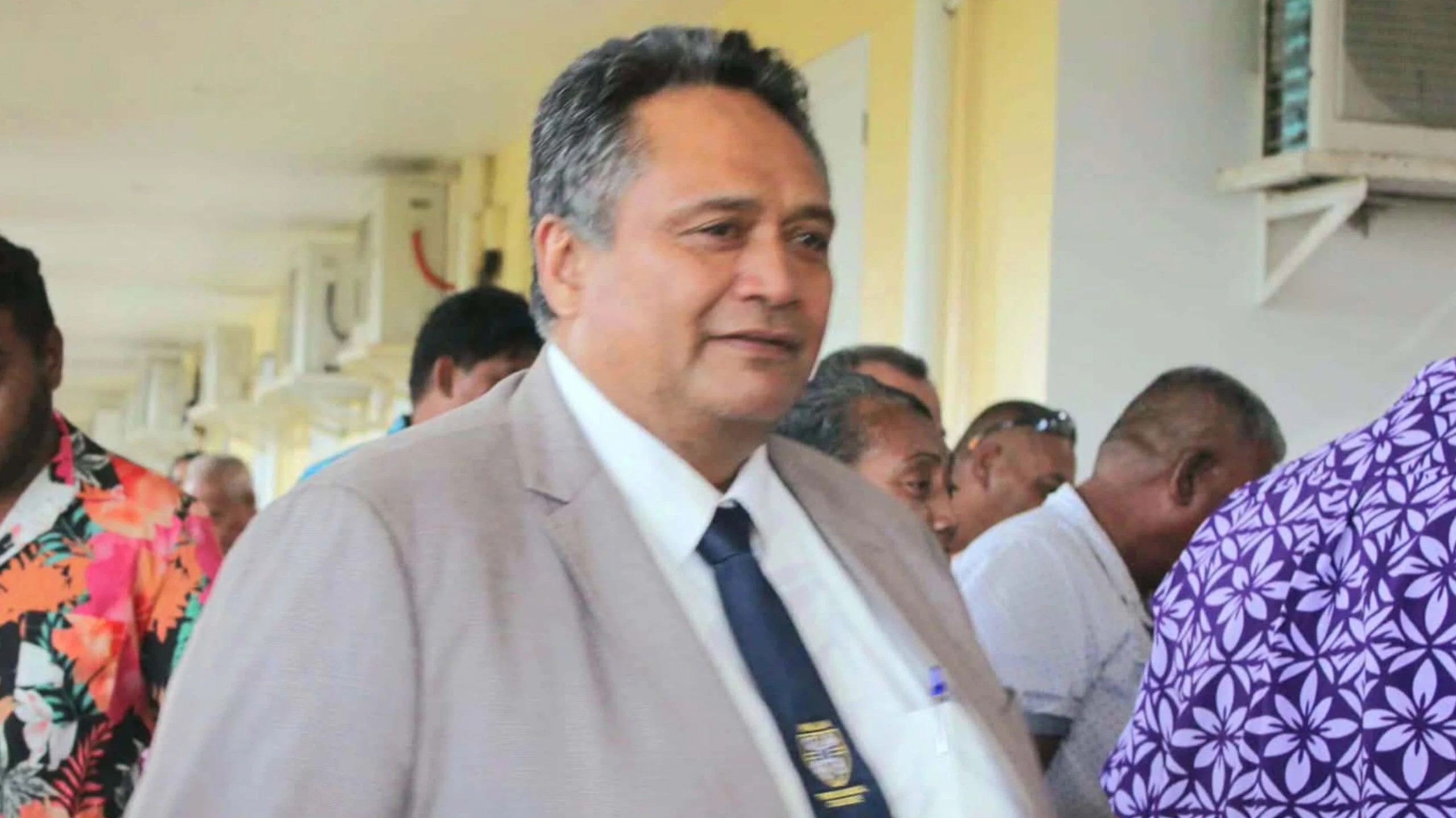
Samoa’s Court of Appeal has officially dismissed an application by former Deputy Prime Minister Toelupe Poumulinuku Onesemo, solidifying a prior judicial decree that invalidated his parliamentary victory. The decision affirms the country’s stringent stance against democratic corruption and cements the vacancy of his constituency seat.
Key Highlights
- The Court of Appeal rejected claims that the former Deputy Prime Minister was denied a fair trial.
- The legal challenge sought to overturn a March 24, 2026 Supreme Court ruling regarding corruption.
- Judges confirmed that local election rules prioritize public interest and independent inquiries.
- A mandatory statutory report will now be sent to the Speaker of the Legislative Assembly.
The Court of Appeal has dismissed an application by former Deputy Prime Minister, Hon Toelupe Poumulinuku Onesemo, upholding the Supreme Court’s decision that voided his election as the Member of Parliament for Falealili No. 1.
The unanimous judgment was delivered on Monday morning by Justices David Harrison, Christine Asher and Brendan O’Regan, by video link to Mulinuu.
The Court rejected claims that Onesemo’s constitutional right to a fair hearing had been breached during the election petition.
The justices noted that the architects of the Electoral Act intentionally granted the Supreme Court inquisitorial powers. They determined that checking election fraud remains vital to democracy, validating the lower court’s robust investigative actions as entirely appropriate.
The application filed by the former official seeking to declare the March 24, 2026 ruling invalid was completely thrown out. As a consequence of this dismissal, the Supreme Court is now legally required to submit its formal statutory brief directly to the Speaker.
This legal battle began after judicial findings established that an agent working for the politician engaged in bribery. The individual distributed $150 to a local voter right before the 2025 General Election.
That specific corrupt act caused his parliamentary victory to be legally canceled.
Legal representation for the unseated politician included Jack Hodder KC and Muriel Lui. Meanwhile, the legal interests of the legislative leader were managed by Taulapapa Brenda Heather-Latu during the appeal.
The original petitioner, Tuiloma Laneselota Lameko, did not appear before the bench. To assist the court with complex matters, Christopher Finlayson KC, Su’a Hellene Wallwork, and Stephen Rankin were named as amici curiae.
A critical legal debate centered on whether parliamentary petition outcomes can face constitutional challenges given that local statutes explicitly designate these specific judicial conclusions as entirely conclusive and final.
The panel clarified that simply bringing up a constitutional matter does not automatically allow courts to re-examine decided election petitions. They emphasized that an undeniable violation of basic rights must be proven first.
Judges firmly rejected assertions that the politician was blocked from cross-examining critical witnesses during the initial trial.
Instead, the appellate bench clarified that the defense team repeatedly chose to withhold counter-evidence and passed on opportunities to contest the corruption accusations during the original courtroom arguments.
The tribunal emphasized that the responsibility fell entirely on the politician, who failed to leverage his legal rights or provide any concrete arguments to counter the initial corruption claims.
During the initial trial phases, defense counsel Muriel Lui explicitly elected not to cross-examine the solitary witness who presented evidence before the court.
Appellate judges also dismissed separate claims that the initial bench displayed prejudice by continuing the investigation after parties attempted to pull the petition from the docket.
The higher court praised the initial handling of the case, reiterating that judicial reviews of electoral fraud serve a much larger societal objective that outweighs individual political figures.
The justices emphasized that public interest regarding court inquiries into democratic integrity remains paramount, validating the decision to keep investigating despite multiple roadblocks.
The final ruling mentioned that the lower court properly advanced its investigation despite clear strategies meant to disrupt the integrity of the ongoing judicial process.
The bench successfully showcased its complete structural neutrality by executing the hearings despite clear evidence pointing toward multiple corruption instances and systemic witness meddling.
Ultimately, the appellate body declared that defending the fundamental fairness of democratic voting processes remains the primary core purpose behind the local Electoral Act.
The higher court reiterated that the legal framework intentionally empowers judges to thoroughly root out democratic subversion to protect the wider public.
Because the appeal failed, the judicial order striking down the victory remains fully active.
The politician previously secured the regional seat during the August 29th election by a margin of nearly 400 ballots before ascending to the rank of Deputy Prime Minister.
History of Falealili No. 1 Electoral Disputes
The Falealili No. 1 constituency has drawn significant political scrutiny following the 2025 General Election. The initial victory by Toelupe Poumulinuku Onesemo by nearly 400 votes briefly consolidated his position, leading to his appointment as Deputy Prime Minister. However, subsequent petitions brought to light widespread tracking of illicit financial influence, highlighting structural vulnerabilities and the heightened role of judicial oversight in safeguarding democratic processes within the nation.
FAQs
Why was the election of the Deputy Prime Minister voided?
The election was voided because the Supreme Court discovered that an agent acting on behalf of the politician committed bribery by giving a voter $150 right before the 2025 General Election.
Who handled the appeal case for the state and the defense?
Jack Hodder KC and Muriel Lui represented the ousted politician, Taulapapa Brenda Heather-Latu appeared for the Speaker, and Christopher Finlayson KC served among the court-appointed amici curiae.
Can final election petition decisions be challenged on constitutional grounds?
The Court of Appeal ruled that simply raising a constitutional point does not reopen an election case. A clear, undeniable violation of a constitutional right must be proven to warrant any judicial re-examination.