India Chhattisgarh Christian Attack Demands Justice
A violent mob assault on more than 60 Christians during a church service in central India has sparked urgent international demands for legal accountability. Advocacy groups are pressuring regional authorities to immediately prosecute the perpetrators behind the targeted communal violence.
Key Highlights
- An aggressive mob invaded a church service in Sadrapal village, assaulting congregation members including young children.
- At least 30 worshippers sustained injuries, with 5 victims left in critical condition following the assault.
- Local hospital officials reportedly delayed life-saving medical care until police filed a First Information Report.
- Activists link the rising hostility to the recent passage of a stringent state anti-conversion law in 2026.
Demands for accountability are intensifying after an aggressive mob targeted a gathering of more than 60 Christians attending a Sunday ritual inside a village in central India.
The international human rights organization Christian Solidarity Worldwide has formally petitioned the administration of India’s Chhattisgarh State to apprehend and penalize the individuals responsible for the outbreak of violence.
The violent incident transpired within Sadrapal village, located in the Sukma District, on May 31.
Information obtained by advocacy investigators indicates that a crowd forced entry into the sanctuary at approximately 9:30 AM, commanding the assembly to abandon their religious beliefs prior to launching physical assaults. Multiple children were present among the congregation during the raid.
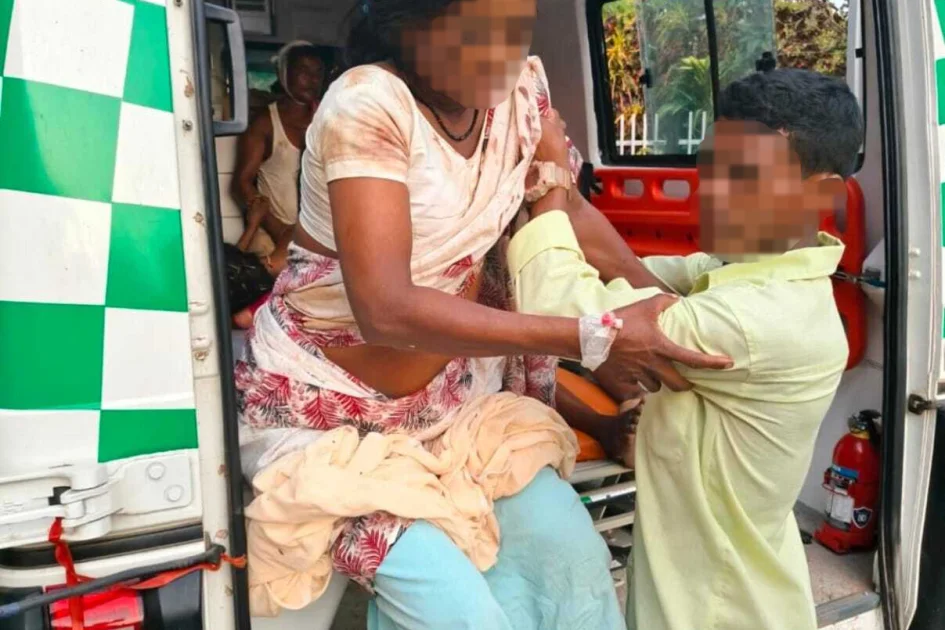
A total of 30 church attendees suffered physical trauma, and 5 believers sustained life-threatening wounds. Reports from local contacts indicate that medical personnel initially withheld emergency treatment until a First Information Report (FIR), the document mandatory for initiating an official police probe, was recorded, which caused a critical delay in medical intervention.
Law enforcement personnel eventually detained 12 suspects on June 7, though authorities released all of them just 3 days later.
According to monitoring documentation, the Christian minority residing in Sadrapal village has endured persistent societal hostility. Roughly 80 Christian households reside in the locality, and numerous families have experienced systematic denial of community water infrastructure in recent years, forcing residents to travel significant distances to retrieve water.
The director of advocacy for the organization, Anna Lee Stangl, stated that the group is profoundly alarmed by the latest aggression targeting religious minorities in Chhattisgarh, expressing particular concern over accounts that medical facilities initially blocked urgent healthcare for severely injured victims.
Stangl pressed the responsible governmental bodies to conduct a comprehensive probe into the operational failures and ensure that every individual who organized or executed the violence encounters strict judicial retribution.
In March of this year, the Chhattisgarh legislature approved a stringent Freedom of Religion Bill, which operates primarily as an anti-conversion statute targeting spiritual transitions. The current framework explicitly criminalizes the use of force or misrepresentation to alter an individual’s religious identification.
Nevertheless, radical factions frequently misinterpret these legislative frameworks as a total prohibition on all departures from Hinduism, incorrectly viewing Christian worship and ministry practices as entirely unlawful activities.
Local communities continue to seek legal interventions and protection for the congregation fractured by the morning assault.
Civic leaders remain hopeful that state administrators will uphold constitutional mandates to safeguard vulnerable communities and ensure rapid recovery for those targeted by the violence.
Future Outlook
The legislative shift in Chhattisgarh points toward a tightening legal environment for religious minorities across India. Legal analysts predict that vague interpretations of anti-conversion statutes will continue to fuel vigilante actions unless higher judicial bodies clarify the parameters of religious freedom. Human rights monitors are expected to increase surveillance on rural regions like the Sukma District, pushing for structural reforms in how local police forces and public hospitals interact with targeted minority populations during communal emergencies.
FAQs
What happened during the church incident in Chhattisgarh?
An aggressive mob disrupted a Sunday service in Sadrapal village, demanding that the congregation renounce their faith before launching a physical assault that injured multiple worshippers.
How many people were injured in the Sadrapal village attack?
At least 30 individuals suffered injuries during the targeted assault, with 5 victims left in critical condition.
Why was medical treatment delayed for the injured Christians?
Local hospital staff reportedly refused to provide immediate medical attention until the police formally registered a First Information Report (FIR).
What is the current status of the suspects arrested for the violence?
Local authorities arrested 12 individuals in connection with the attack on June 7, but all 12 suspects were released from custody 3 days later.
How does the new Freedom of Religion Bill impact local communities?
Passed in March 2026, the anti-conversion law criminalizes forced religious conversions, but radical groups frequently misinterpret the statute to mean that all non-Hindu religious practices are illegal.