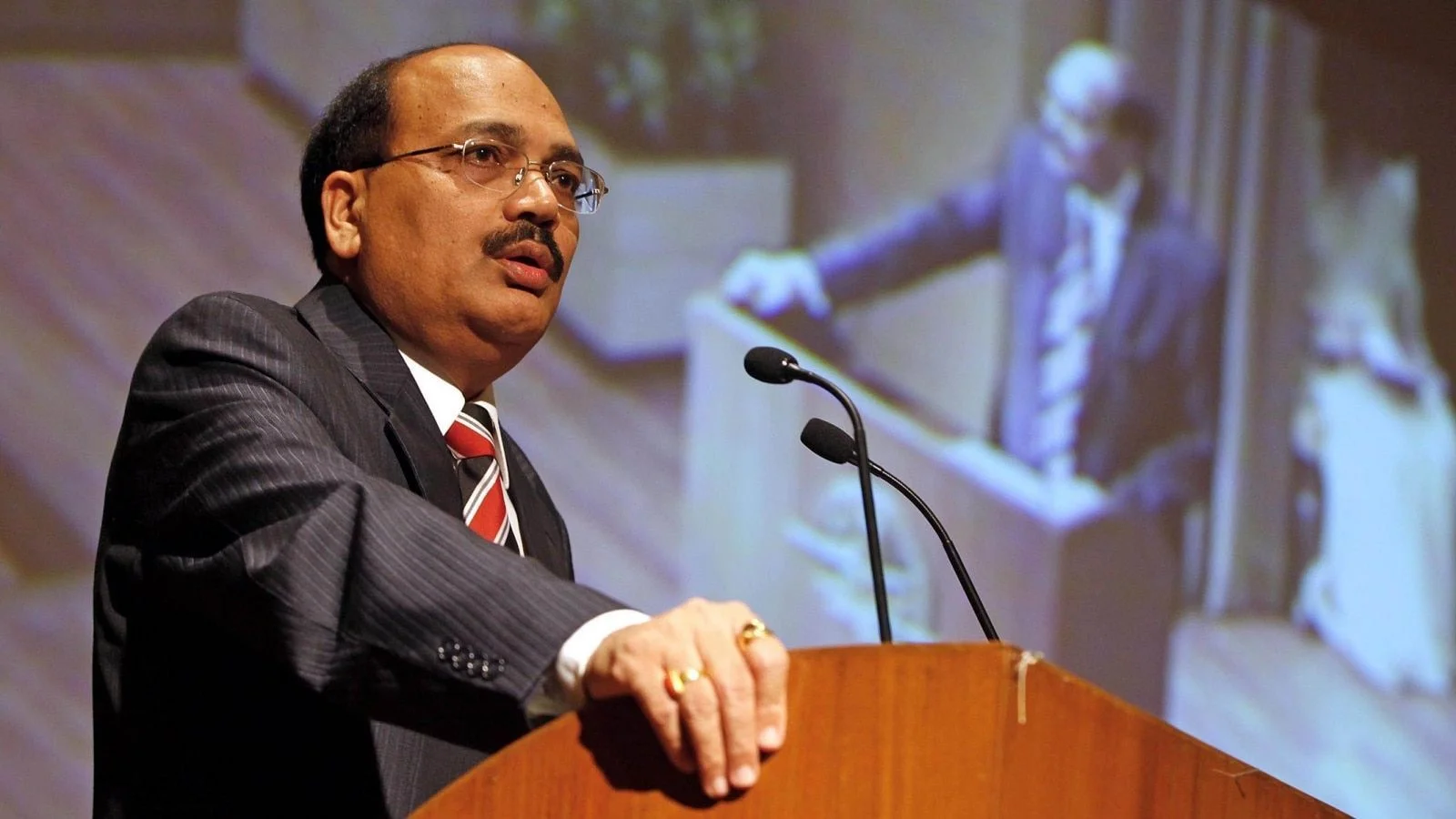
CJI Surya Kant Urges Judiciary Vigilance on Constitutional Supremacy
Chief Justice of India Surya Kant stated that judiciaries cannot remain passive observers within a constitutional system. Speaking in Sweden, he emphasized that courts must aggressively protect constitutional supremacy, ensuring that every deployment of state power remains strictly compliant with established legal frameworks.
Key Highlights
- Chief Justice Surya Kant declared that courts must act as vigilant guardians against arbitrary state power.
- The independent judiciary remains the primary safeguard ensuring the Executive and Legislature respect constitutional limits.
- The Supreme Court utilizes the Collegium system to shield judicial appointments from executive influence.
- While exercising judicial review, Indian courts respect institutional boundaries without acting as a super-executive.
The Chief Justice delivered these remarks during an international summit organized by the International Institute for Democracy and Electoral Assistance in Sweden.
Addressing the core theme of protecting legal frameworks based on the shared experiences of India and Sweden, the Chief Justice explained that the rule of law serves to regulate governmental authority. This framework ensures that state entities operate under transparent, permanent, and universal regulations.
Consequently, this structure ensures equal legal treatment for all citizens and prevents individuals from becoming vulnerable to unregulated executive decisions.
Chief Justice Kant stressed that the survival of a constitutional democracy depends entirely on how faithfully the Executive and legislative branches adhere to foundational norms. He noted that an autonomous judiciary is the most critical element ensuring both branches execute their respective obligations.
He observed that the Indian Constitution establishes an extensive framework for legal governance, intentionally dividing enforcement responsibilities among diverse constitutional bodies. Beyond establishing the judiciary as the ultimate legal interpreter armed with judicial review, the framework mandates that other state organs actively protect federal structures, democratic principles, and institutional harmony.
The Chief Justice detailed how Indian constitutional courts have historically engineered innovative legal doctrines during periods of intense national emergencies and widespread public distress. These judicial innovations successfully curbed excessive state power while significantly expanding legal access for marginalized populations.
He argued that the process of executing judicial review is frequently misunderstood as an exercise of judicial dominance. In his view, this power represents a mandatory obligation and responsibility directly assigned by the Constitution, turning abstract legal promises into tangible realities for citizens.
Drawing a parallel from classical Indian literature, he recalled an episode from the Mahabharata where King Prahlada arbitrated a high-stakes dispute involving his own son and a scholar. The Chief Justice used this narrative to demonstrate that true justice requires adjudicators to remain completely insulated from external pressures.
He asserted that the broad scope of judicial review forms an indispensable pillar of the democratic framework in India. This mechanism continuously verifies that legality and adherence to the constitution remain non-negotiable prerequisites before any governmental body exercises public authority.
The framers of the Constitution specifically integrated judicial review into the foundational text. To guarantee unbiased execution, they purposefully designed an independent judiciary isolated from executive manipulation and political interference.
Following this specific constitutional ideology, the Supreme Court established through legal precedent that the selection of judges for both High Courts and the Supreme Court must be managed primarily by the judiciary via a specialized Collegium system.
Chief Justice Kant remarked that this permanent dedication to institutional autonomy empowers the Indian judiciary to look beyond basic dispute resolution or boundary defense. It allows courts to actively influence the democratic identity of a heterogeneous population.
Concurrently, the Supreme Court consistently acknowledges that systemic legality survives only when the judiciary respects its own structural limitations while holding external branches to theirs. The apex court explicitly avoids acting as a secondary appellate body or an overarching executive over technical policy decisions.
Ultimately, the historical path of India demonstrates that constitutional principles carry universal relevance when deeply integrated into a complex, multi-layered democracy. The core power of the judiciary rests upon both its courage to defend the constitutional framework and its institutional wisdom to exercise strategic restraint.
History of Constitutional Judicial Review in India
The power of judicial review in India has evolved through landmark legal battles that shaped the balance of power between Parliament and the judiciary. Following the adoption of the Constitution in 1950, the early decades saw intense friction over property rights and land reform laws. This struggle culminated in the historic 1973 Kesavananda Bharati verdict, where the Supreme Court established the “Basic Structure Doctrine,” ruling that Parliament cannot amend core constitutional features. Over the subsequent decades, the court expanded its reach through Public Interest Litigations (PILs) in the 1980s and solidified its administrative autonomy by establishing the judicial Collegium system through successive judgments in 1993 and 1998.
FAQs
What is the primary role of the judiciary according to CJI Surya Kant?
According to Chief Justice Surya Kant, the judiciary must act as a vigilant guardian of constitutional supremacy. It cannot be a mere spectator and must ensure that all public power is exercised under the discipline of law.
Why did the Indian Supreme Court adopt the Collegium system?
The Supreme Court adopted the Collegium system through judicial dictum to ensure that the appointment of judges to High Courts and the Supreme Court remains free from the control and influence of the Executive branch.
Does the Indian Supreme Court interfere in all executive decisions?
No, the Supreme Court recognizes its own institutional boundaries and does not act as a super-executive or secondary appellate authority over the complex socio-economic or technical choices made by other branches of government.