US Supreme Court Upholds California Mail-In Ballot Grace Period Law
The United States Supreme Court has preserved a California law that permits mail-in ballots postmarked by Election Day to be counted up to seven days later. The 5-4 decision rejects a legal challenge from the Republican National Committee, safeguarding the state’s extended ballot receipt window.
Key Highlights
- The Supreme Court ruled 5-4 to protect California’s one-week grace period for receiving mail-in ballots.
- Justice Amy Coney Barrett authored the majority opinion, joined by Chief Justice Roberts and the liberal bloc.
- Conservative dissenters argued that late-arriving ballots increase fraud risks and undermine public confidence.
- State officials allocated $39 million to accelerate ballot tallies and encourage earlier voter returns.
A judicial decision rendered on Monday in the case of Watson v. RNC confirmed that California’s extended ballot receipt timeline will remain intact.
During a news conference on Monday morning in San Francisco, Senator Alex Padilla characterized the high court’s determination as a victory for voting rights. He stated that the ruling signals that election administration remains driven by the public rather than presidential overreach.
The 5-4 majority opinion was authored by Justice Amy Coney Barrett. She clarified that federal election statutes established by Congress define a uniform date for voting but do not govern ballot receipt deadlines.
Barrett emphasized that congressional text does not regulate when ballots must be received, noting that the judiciary cannot insert terms that lawmakers omitted.
Chief Justice John Roberts, along with Justices Ketanji Brown Jackson, Elena Kagan, and Sonia Sotomayor, aligned with Barrett to form the majority.
Conversely, Justices Samuel Alito, Neil Gorsuch, Brett Kavanaugh, and Clarence Thomas issued a dissenting view.
Alito wrote that allowing mail-in ballots to arrive days or weeks after voting concludes creates opportunities for deception. He added that the process risks damaging public faith in election results, especially as early returns are broadcast.
Via social media, President Donald Trump labeled the judicial outcome a major setback. He subsequently called on Congress to implement national voter identification mandates and restrict mail-in voting options. The White House had previously supported the Republican National Committee by filing an amicus brief.
Arguments presented by Alito during the March session highlighted concerns that delayed ballot processing diminishes civic confidence by slowing down overall tabulations.
However, historical data indicates that California’s extended counting timeline stems primarily from the massive volume of mail-in ballots delivered before Election Day concludes.
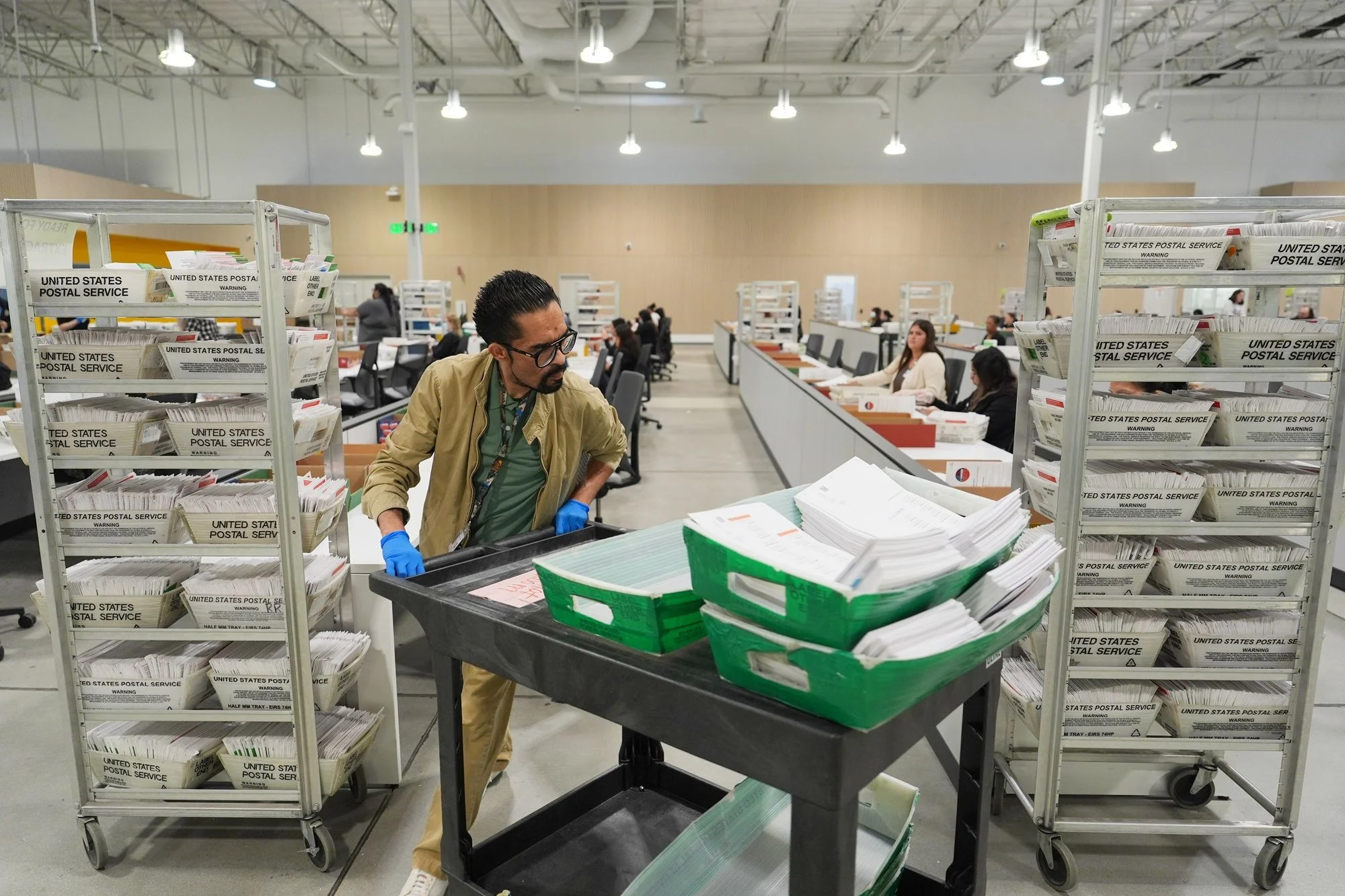
Following the June 2 primary election, state administrators reported 2.5 million uncounted ballots delivered by Election Day, while fewer than 400,000 arrived during the subsequent grace period.
For years, regional election administrators have advised the electorate to utilize drop boxes or mail ballots early to guarantee valid postmarks.
Even so, during the 2024 general election, 406,132 valid ballots reached offices after Election Day, representing 2.5% of the total voter participation.
Kim Alexander, who serves as the president of the California Voter Foundation, expressed relief regarding the ruling, noting that the protected grace period impacts a substantial number of citizens.
A state budget compromise finalized by Governor Gavin Newsom and legislative leaders on Friday allocates $29 million to help municipalities purchase modern counting machinery and recruit additional personnel. An additional $10 million will fund state and local campaigns urging early ballot submissions.
Alexander noted that statutory disputes over mail-in voting systems will persist beyond this specific case. She highlighted a separate federal push requiring the United States Postal Service to verify mail-in envelopes against local registration rolls.
California is actively contesting that postal mandate in court. Democratic senators criticized the directive last week, arguing it improperly positions the postal service to judge voter eligibility.
Alexander concluded that while the latest judicial decision stabilizes regional rules, ongoing disputes involving federal postal policies mean election systems face continued legal scrutiny.
Future Outlook
The Supreme Court ruling secures California’s voting framework for the upcoming midterms, but the broader battlefield shifts toward federal agency policies. Legal experts anticipate that the ongoing lawsuit over the United States Postal Service’s voter verification mandate will dictate the next phase of mail-in voting access. State leaders hope the fresh $39 million fiscal injection will successfully compress the lengthy tabulation windows that critics frequently target.
FAQs
What did the Supreme Court decide regarding California’s mail-in ballots?
The Supreme Court ruled 5-4 to uphold a California statute that allows mail-in ballots postmarked by Election Day to be counted if they arrive up to seven days later.
Which Supreme Court justices voted in favor of the California law?
The majority opinion was written by Justice Amy Coney Barrett and joined by Chief Justice John Roberts, alongside Justices Ketanji Brown Jackson, Elena Kagan, and Sonia Sotomayor.
How many ballots typically arrive in California after Election Day?
In the 2024 general election, 406,132 ballots arrived during the post-election grace period, which accounted for 2.5% of the state’s total voter turnout.
How is California planning to speed up its vote-counting process?
The state has allocated $29 million to help counties upgrade equipment and hire extra staff, plus $10 million to advertise and incentivize early ballot returns among voters.