Indian Idli Origin Debunked: Southeast Asian Culinary Myth Challenged
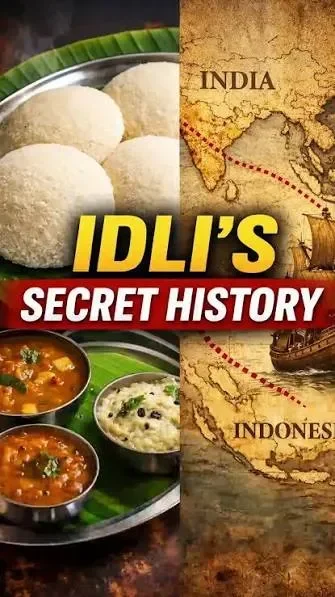
A culinary investigation into the origins of idli reveals that India’s favorite breakfast staple evolved through domestic innovations rather than foreign introduction. While recent theories suggest Southeast Asian roots, extensive literary evidence and historical records confirm that the dish matured locally within South Indian culinary traditions over a millennium ago.
Key Highlights
- Claims suggesting the idli originated from the Indonesian dish “Kedli” lack linguistic and historical documentation.
- Kannada literature from 920 CE references “Iddalige,” establishing the dish’s presence long before major maritime expeditions.
- Ancient Indian texts document indigenous fermentation practices well before recorded contact with Southeast Asian techniques.
- The evolution of the modern rice-and-lentil steamed cake reflects centuries of local South Indian culinary refinement.
Every culinary creation carries a historical narrative that frequently becomes obscured across generations. The idli, a universally embraced breakfast staple throughout India, presents a particularly compelling case. Serving as a mainstream offering from street-side eateries to fine dining establishments, it remains an essential food item consumed throughout the day. Though universally recognized as an architectural anchor of South Indian cuisine, recent alternative assertions have emerged, proposing that the ultimate architectural blueprint of the idli actually traces back to Indonesia.
This historical counter-claim introduces profound questions regarding the true geographic provenance of one of India’s most celebrated dietary staples. Interrogating this potential maritime connection requires an analytical examination of more than 1,000 years of regional documentation and scholarly debates among prominent culinary historians. As researchers and food experts scrutinized early textual references, a highly complex chronicle of the dish’s geographical journey began to materialize.
Once viewed simply as an everyday nutritional staple by millions, the contemporary reputation of the idli has encountered historical challenges that openly question its indigenous roots. This investigative journey brings to light both the verified historical foundations of the food item and the cross-cultural dynamics that ultimately helped define its modern identity.
The Chola Dynasty’s Influence
To properly contextualize the shifting historical narrative surrounding the idli, it is vital to analyze the governance of the Chola Empire, which flourished between the 8th and 12th centuries. This specific historical window was characterized by extensive naval deployments and robust commercial networks stretching into Southeast Asia. Strategic Chola military campaigns, specifically the assault against the Srivijaya Empire in 1025 CE, triggered deep cultural exchanges and population movements, establishing the conditions for external culinary concepts to potentially influence domestic traditions.
The late food historian KT Achaya posited in his landmark 1994 research that the precise methods required for fermenting and steaming rice-based cakes were brought to the Indian subcontinent via trade relations with maritime Southeast Asia. His working hypothesis focused on the relocation of Indonesian royal chefs into Southern India as the primary catalysts for this gastronomic evolution, maintaining that these professionals introduced structural preparation methods that altered regional cooking styles.
Nevertheless, subsequent analytical work conducted by linguistic specialists and investigative food journalists revealed that the alleged Indonesian ancestral dish, frequently cited as “Kedli,” enjoys no verifiable basis in Indonesian linguistics or culinary records. This critical discovery introduces substantial skepticism regarding any direct ancestral connection to a foreign dish, highlighting the necessity for intense academic scrutiny when evaluating historical declarations about ethnic food origins.
Culinary Evidence and the Idli Narrative
A central pillar of this historical debate focuses on the specific process of food fermentation, a biochemical methodology previously claimed to have been imported from Southeast Asia. This specific preparation method remains vital to the physical consistency of the idli, providing its trademark light and aerated structure. Even so, clear documentary proofs concerning indigenous fermentation systems inside ancient India significantly pre-date any plausible historical windows for Indonesian cross-cultural contact. Ancient Indian manuscripts have meticulously detailed the manufacturing of diverse fermented food items, proving these technical skills were mature long before the first recorded mention of the idli.
Furthermore, the most ancient literary descriptions of food items mirroring the contemporary idli reside within historical Kannada literature instead of Southeast Asian archival materials. For instance, in 920 CE, the classical writer Shivakotiacharya explicitly documented a local dish named “Iddalige,” proving that comparable culinary iterations were widely consumed within India long before the famous Chola maritime expeditions occurred.
Supplemental early descriptions detailing idli-like food preparations surface clearly within the pages of the Lokopakara, an encyclopedia compiled in 1025 CE. These specific literary records, when synthesized alongside further descriptions extracted from 12th-century source manuscripts, demonstrate a systematic, regional evolution of the idli inside Southern India, rather than a abrupt introduction from a foreign territory. These records validate that indigenous domestic practices were progressing independently, with the standard rice and black gram formulation of the modern idli developing over multiple centuries.
In summary, the ongoing academic discourse surrounding the idli highlights the elaborate dynamics of food development across consecutive generations. Instead of tracing back to a basic, singular point of origin, the idli embodies a sophisticated lineage driven by regional innovation and domestic adaptation, mirroring the intricate cultural exchanges that define India’s expansive culinary heritage.
Historical Context
| Century / Year | Historical Milestone & Literary Reference | Documented Significance |
|---|---|---|
| 920 CE | Shivakotiacharya’s Kannada text mentions “Iddalige” | Earliest recorded Indian reference to an idli precursor. |
| 1025 CE | Chola Dynasty attacks Srivijaya Empire; Lokopakara compiled | Era of maritime trade; texts show independent domestic evolution. |
| 12th Century | Later South Indian medieval manuscripts | Documentation of refined rice-and-lentil preparation methods. |
| 1994 | KT Achaya publishes food history hypothesis | Proposed Indonesian origin theory, later challenged by linguists. |
FAQs
Did idli originate in Indonesia?
While historical hypotheses suggested that fermentation and steaming techniques were imported from Indonesia via ancient trade routes, subsequent linguistic and culinary research has found no evidence of a purported precursor dish named “Kedli” in Indonesian history.
What is the earliest historical record of idli in India?
The earliest known written reference to a precursor of the dish appears in the Kannada text written by Shivakotiacharya in 920 CE, where he describes a preparation called “Iddalige.”
How did the Chola Dynasty impact Indian cuisine?
The Chola Dynasty, ruling from the 8th to 12th centuries, engaged in extensive maritime trade and naval expeditions in Southeast Asia, notably in 1025 CE. While this facilitated deep cultural exchanges, records indicate that Indian fermentation and steamed cake techniques were already independently established before this period.