Indian River County Food Pantry Adapts to Surging Regional Demand
The Food Pantry of Indian River County is expanding its operational capacity to address a dramatic surge in localized food insecurity driven by persistent inflation and rising household expenses.
Key Highlights
- Approximately 11% of county residents and 16% of minors experience regular food insecurity.
- The facility distributed over 380,000 pounds of provisions during 2025, yielding 325,000 individual meals.
- Purchasing strategies allow each donated dollar to generate $2.50 to $3.00 in procurement power.
- Operational guidelines now permit clients to access supplemental food supplies two times per month.
CONTRIBUTE IMMEDIATELY. Each distributed package and carton from the Food Pantry of Indian River County signifies a local household striving for economic survival.
Addressing hunger challenges, this regional institution confronts escalating nutritional deficits within the community.
For multiple generations, the Vero Beach operation has administered critical nutritional assistance. Administrators report accelerating demand as escalating supermarket pricing, housing overheads, and daily expenditures strain household budgets.
Development Director Mark Rice stated that the core objective involves delivering sustenance to resident individuals experiencing nutritional deficits.
The ongoing local initiative highlights how the organization manages regional food deficits.
Rice indicated that nearly 11% of the local population and 16% of minors experience sustained nutritional deficits.
Rice characterized the current situation as a severe emergency.
Operating as the premier food-exclusive distribution hub in the region, the entity relies solely on volunteer labor. Utilizing rent-free church facilities in Vero Beach, the charity directs over 90% of cash contributions toward purchasing provisions.
The facility opens five days weekly, assisting roughly 50 families daily. Eligible individuals access provisions up to two times monthly, offsetting shortfalls between wages, public aid, and baseline household assets.
Volume allocations correspond to family size, encompassing preserved goods, grains, dairy, and available frozen proteins. Staff distribute bakery items routinely, allowing locals to collect these goods during standard operational windows.
Throughout 2025, the center distributed exceeding 380,000 pounds of provisions, representing 165 tons. This volume generated upwards of 325,000 meals, with over 50% allocated to elderly individuals and children.
Rice emphasized that these metrics capture only a fraction of the broader regional systemic pressure.
Management reports a distinct demographic evolution among the individuals seeking nutritional relief.
Rice noted the client base transitioned from people encountering temporary emergencies to individuals facing chronic, daily deficits.
Historical documentation outlines the growing volume of assisted individuals over recent operational cycles.
Severe macroeconomic pressures over recent years pushed unfamiliar households toward the distribution center. Initial visits often coincided with federal welfare reallocations, requiring continued aid as domestic finances remain severely constrained.
Rice explained that grocery inflation has surged dramatically. He added that for low-income workers, elevated fuel prices consume a disproportionate segment of disposable household capital.
To address this demand, administrators doubled client visitation allowances. The program transitioned from a single monthly allotment to two distributions, offering enhanced economic relief.
The nonprofit acquires most provisions independently, maximizing logistical efficiency. Rice detailed collaborations with regional wholesalers, supermarkets, and the Treasure Coast Food Bank to stretch financial resources.
Rice mentioned that procurement agents track market shifts carefully. A single dollar contribution generates approximately $2.50 to $3.00 in localized commercial buying capacity.
The administrative infrastructure functions completely through uncompensated community support.
Longtime participant Sandy Bolway has completed weekly shifts at the location for three consecutive years with his spouse.
Bolway manages diverse tasks, including sorting inventory, packaging provisions, allocating dairy resources, and staffing the public service portal.
Bolway identified the primary shift as an accelerating influx of individuals requesting nutritional support.
Bolway remarked on the intensifying demand, stating that 99% of recipients express immense gratitude for the provided aid.
Interacting frequently with incoming clients, Bolway observed that numerous first-time applicants experience significant anxiety or stigma during intake procedures.
He noted that while vulnerability causes discomfort, economic instability can affect anyone at various intervals.
He recounted a frequent recipient who performs songs for personnel, noting that witnessing youth contentment provides profound internal fulfillment.
Directors maintain that establishing human solidarity remains as critical as distributing physical caloric resources.
The corporate mandate emphasizes providing sustained infrastructural support alongside traditional emergency disaster relief.
The arrival of the summer season amplifies the urgency of these community operations.
School closures eliminate academic meal programs, transferring immense fiscal stress onto parental budgets. Rice identified this interval as a historically complex operating window for non-profit entities.
To sustain current outputs, management is requesting immediate funding injections alongside expanded personnel recruitment.
The group seeks capital for commercial refrigeration equipment. Upgraded infrastructure allows high-volume meat procurement during price drops and increases capacity for perishable agricultural donations.
Rice asserted that the asset upgrade directly elevates both aggregate volume metrics and the micronutrient profile of inventory.
With regional deficits escalating, directors conclude that public engagement remains essential to mitigating localized food shortages.
This targeted regional campaign remains a vital vehicle for mitigating local food insecurity.
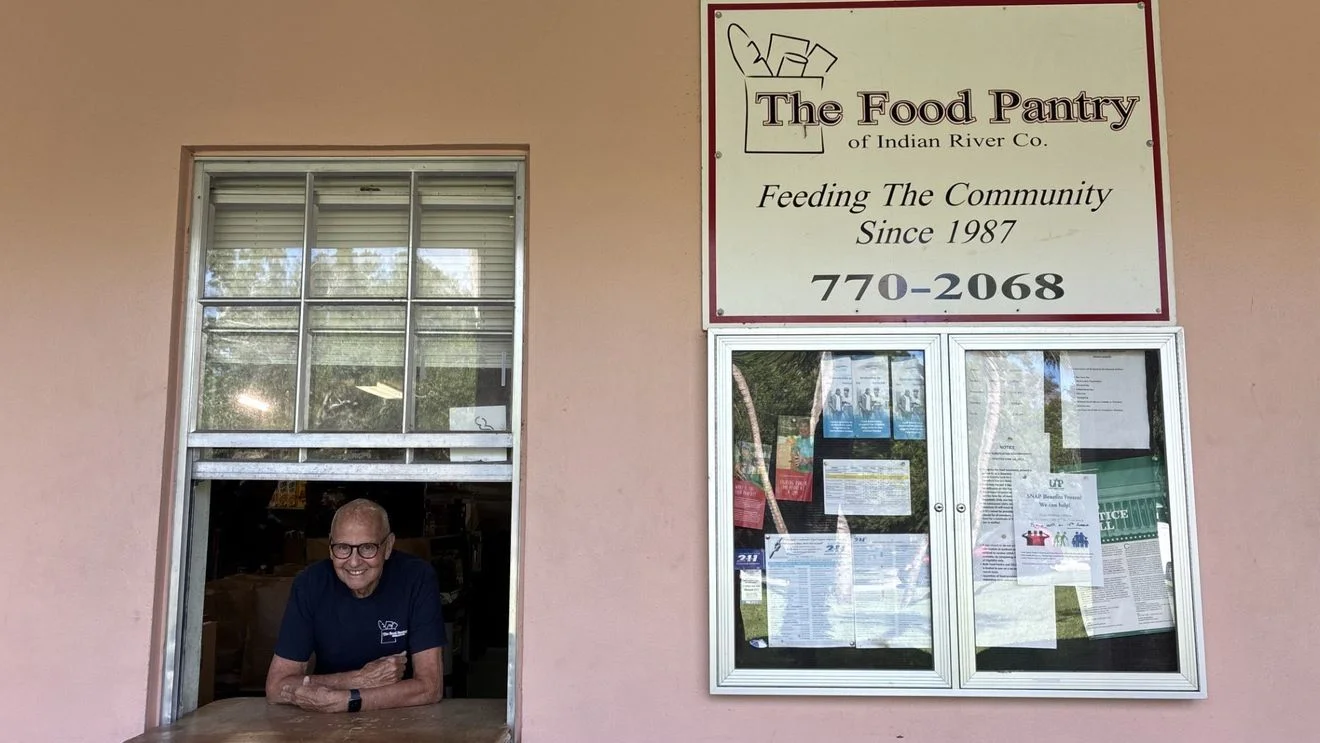
The distribution center operates at 2206 16th Avenue in Vero Beach, accepting capital, inventory, and labor year-round.
Future Outlook
The Food Pantry of Indian River County is actively positioning its infrastructure to combat long-term systemic food insecurity through strategic modernization. The acquisition of advanced walk-in freezing and refrigeration units represents a meaningful milestone in their logistical capacity, allowing the organization to hedge against market volatility by stockpiling protein resources when market pricing is favorable. By expanding cold storage capabilities, the organization will scale its integration with major regional networks, including the Treasure Coast Food Bank, ensuring a more consistent supply of fresh, nutrient-dense agricultural produce throughout the year. As macroeconomic shifts continue to squeeze the budgets of working-class families, the pantry’s transition toward a permanent supplemental model will require sustained community partnerships and an expanded volunteer labor force to safeguard food security across Vero Beach.
FAQs
What percentage of Indian River County suffers from food insecurity?
Approximately 11% of all county residents and 16% of children within the region currently face food insecurity challenges.
How has the food pantry adjusted its distribution rules to meet growing demand?
The organization increased its service frequency, allowing registered families to receive supplemental grocery distributions two times per month instead of just once.
How efficiently does the organization utilize financial donations?
The center operates entirely through volunteer labor and uses donated church facilities, enabling it to direct more than 90% of all monetary contributions directly toward food procurement.