NEET-UG Re-test Spark Controversy in Bengaluru Amid BJP-Congress Blame Game
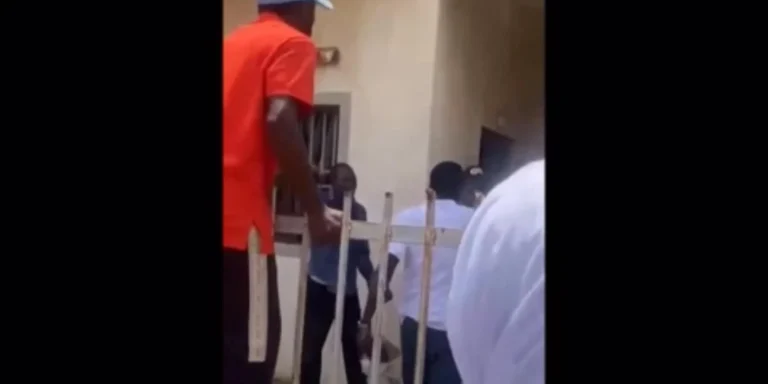
A heated political dispute has emerged in Karnataka after several NEET-UG re-examination candidates were locked out of a Bengaluru test center for arriving late. The opposition BJP cited traffic gridlock caused by a major ruling party convention, while the state government dismissed the accusations as fabricated political outrage.
Key Highlights
- Multiple medical aspirants faced entry denials at Bengaluru centers during Sunday’s national NEET-UG re-test.
- The opposition BJP linked the delays to traffic congestion from a concurrent Congress convention at Palace Grounds.
- Congress leaders defended their logistics, reporting only 3 candidate absences were verified at the central facility.
- The ruling state party announced an internal committee to investigate student hardships during the rescheduled national exam.
The NEET-UG re-test in Bengaluru triggered a political clash after some late candidates were denied entry amid traffic complaints. The BJP blamed the Congress convention at Palace Grounds, while the government called the charge manufactured outrage.
A sharp ideological confrontation has intensified across Karnataka following the exclusion of delayed medical aspirants from their designated test halls during the recent national re-examination. While the opposition blamed a massive ruling party gathering for choking city roads, the administration labeled the narrative a calculated distraction.
The friction intensified on Sunday as the ruling party hosted a major political gathering at the Palace Grounds to celebrate BK Hariprasad assuming leadership as the new state unit chief.
This event took place concurrently with the national medical entrance re-test, which authorities organized for thousands of students after widespread structural leaks compromised the initial pan-India test cycle.
Opposition lawmakers insisted that the political gathering systematically crippled the municipal transport network, leaving vulnerable students trapped in transit as entry deadlines approached.
State opposition leader BY Vijayendra Yediyurappa publicly condemned the ruling administration for staging a large-scale political demonstration despite having advanced knowledge of the high-stakes academic schedule.
“Tens of thousands of candidates were scheduled for the entrance test, which was a matter of public record. Yet the ruling party prioritized its internal leadership transition at Palace Grounds, fully aware of the vehicular gridlock it would inflict,” Vijayendra noted.
He further asserted that the state leadership chose to prioritize partisan mobilization over student welfare, demonstrating a clear lack of institutional empathy during a critical academic window.
“The administration chose a competitive display of political leverage over the professional prospects of our youth,” he noted, contrasting the situation with how federal protocols managed prime ministerial transits in New Delhi without affecting active test-takers.
Vijayendra claimed at least 3 young aspirants were completely disenfranchised by the resulting urban congestion, stating that the incident exposed the underlying priorities of the current administration.
Similarly, federal lawmaker Tejasvi Surya criticized the scheduling framework, arguing that the political organization could have easily shifted its state rally to an alternative date.
“The ruling party possessed the flexibility to schedule this assembly on any other calendar day. Instead, they selected the precise window when thousands of vulnerable youth were navigating transit routes,” Surya remarked.
He asserted that the resulting road closures forced candidates to reach centers under immense psychological pressure, leaving many to openly beg administrators for structural exceptions.
Conversely, State Minister Priyank Kharge strongly countered the allegations, accusing opposition figures of systematically weaponizing unverified narratives.
“The opposition representation continues its established pattern of circulating incomplete data and orchestrating artificial public anger,” Kharge stated across digital communication channels.
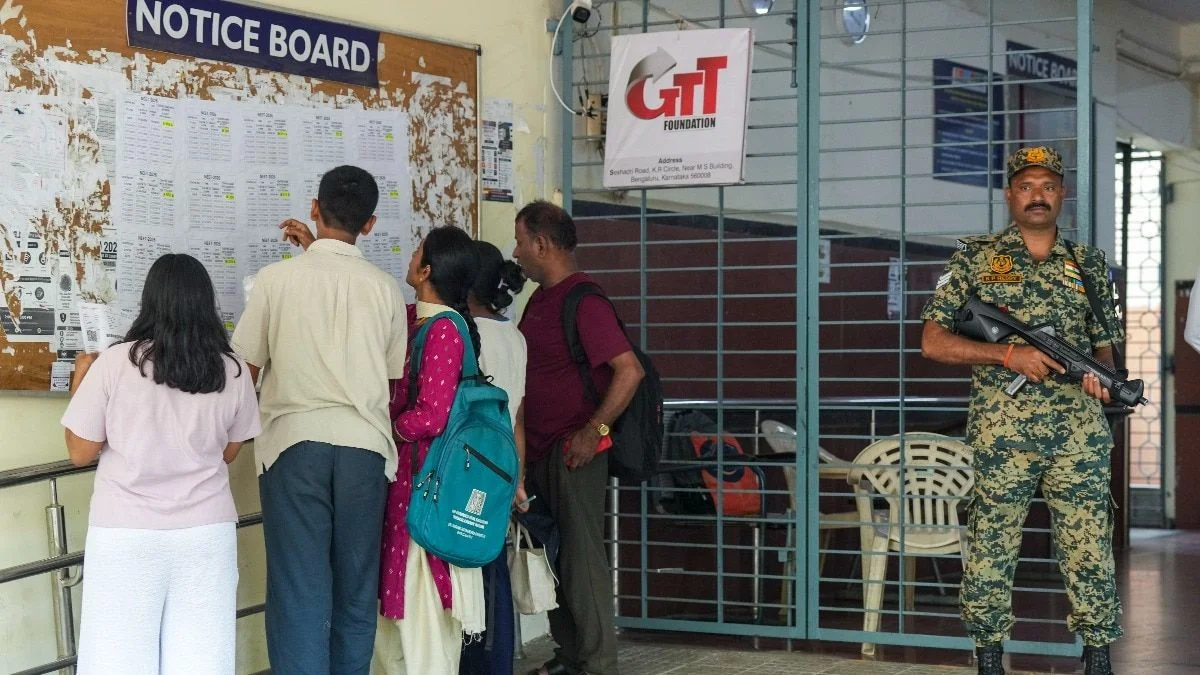
The minister clarified that out of 720 registered applicants assigned to the local RC College facility, exactly 142 individuals did not report, noting that the remaining isolated delays were not structurally tied to the political rally.
According to institutional reports shared by Kharge, one individual commuting from the outlying town of Magadi missed institutional deadlines due to localized bus shortages, while another arrived presenting an invalid hall ticket from the original May 3 testing sequence.
He added that only a solitary applicant approaching from the RT Nagar transit corridor suffered delays linked to urban movement, with the specific logistics of that case still undergoing formal validation.
Kharge emphasized that municipal traffic divisions had distributed detailed routing advisories well in advance, suggesting the opposition was attempting to deflect from the broader systemic crisis affecting 2.2 million students nationwide.
The minister argued that if the local administration faces accountability for a single student’s transit delay, then federal leadership must claim total responsibility for the systemic leakages and psychological distress marking the initial national exam cycle.
“The critical opposition has run out of convenient rhetorical escapes after leveling these unverified structural assertions,” Kharge remarked in a direct rebuttal to Surya.
Congress accuses BJP of ‘political blame game’ over NEET row
State party chief BK Hariprasad subsequently countered the opposition claims, asserting that the federal ruling party is aggressively trying to manipulate local events to obscure its failure to secure national testing systems.
Addressing external observers, Hariprasad demanded institutional accountability from central authorities regarding the total absence of security safeguards during the broader testing cycle. “Our local structures executed extensive logistical precautions. Without these measures, thousands of commuters would have faced severe gridlock. The federal center must explain its own operational failures instead of relying on diversionary politics,” he stated.
The high-stakes national re-examination for medical enrollment concluded across domestic centers and 14 international locations on Sunday, operating under tight scrutiny following persistent structural leaks.
Criticism over handling of previous exam leaks
The regional party leader highlighted a pattern of vulnerability across national testing bodies, pointing to recent security breakdowns under federal administration. “The central ministry has refused accountability despite widespread institutional failures. We have witnessed recurring leaks across civil service reviews and national board examinations, yet the victims of these systemic flaws are blamed for their own hardships,” Hariprasad observed.
Congress announces probe, assures assistance
The state leadership maintained that internal teams worked closely with municipal traffic controllers to insulate student transit routes from the political assembly. “We regret any isolated disruption that transpired despite our extensive coordination. Our organization collaborated directly with law enforcement, deploying personnel to actively manage vehicular movement throughout the day,” he noted.
Hariprasad announced that the party would form an independent review panel to document student challenges during the re-test, promising direct institutional restitution for verified grievances. “We will deploy dedicated observers to investigate any verified transport hardships. If candidates require direct support, our organization will provide necessary aid, though the ultimate focus must remain on penalizing those behind the national question papers security failures,” he added.
Centre refutes fresh leak allegations
The localized political debate coincided with a broader national effort by the National Testing Agency and federal authorities to suppress emerging claims of a secondary security breach.
The central media validation department formally dismissed online videos alleging a fresh paper leak via secure messaging channels on Monday, declaring the digital materials entirely fraudulent and unfounded.
Future Outlook
The escalating friction between the state and central administrations indicates deep institutional gridlock ahead of upcoming legislative sessions. As state parties form independent inquiry panels to track student grievances, pressure is mounting on federal oversight bodies to reform structural testing protocols. The upcoming parliamentary debates are expected to focus heavily on establishing decentralized examination safeguards to prevent recurring transit and security disputes in major urban educational hubs.
FAQs
Why were NEET-UG candidates denied entry at the Bengaluru center?
Candidates were denied entry because they arrived after the official gate-closure deadlines. While the opposition blamed traffic congestion caused by a political rally, state officials noted other factors, including transport shortages from neighboring towns and invalid hall tickets.
How many students missed the NEET-UG re-examination at the central Bengaluru facility?
According to official state metrics, exactly 3 students were unable to take the examination at the RC College center. Out of 720 registered candidates at that location, 142 were marked absent for the day.
What measures are being taken to address the hardships faced by the delayed students?
The Karnataka state majority party has announced the formation of a dedicated inquiry team to investigate transport challenges experienced by students during the re-test, promising appropriate assistance and compensation for verified cases.