India National Examination Crisis Demands Deep Institutional Reform
India face a profound systemic crisis in its national examination framework, demanding an immediate structural overhaul rather than temporary fixes. Recent controversies surrounding widespread paper leaks have exposed deep vulnerabilities within the National Testing Agency, highlighting the urgent need for robust institutional, technological, and administrative governance redesign.
Key Highlights
- The National Testing Agency annulled the May 3 NEET-UG exam after systemic irregularities impacted 2.2 million aspirants.
- India’s testing infrastructure managed 244 examinations for 12.2 million candidates between 2018 and 2023.
- A high-level committee under K Radhakrishnan has proposed a comprehensive overhaul for transparent testing.
- The rescheduled NEET-UG 2026 re-examination is set to take place on June 21 amid intense political scrutiny.
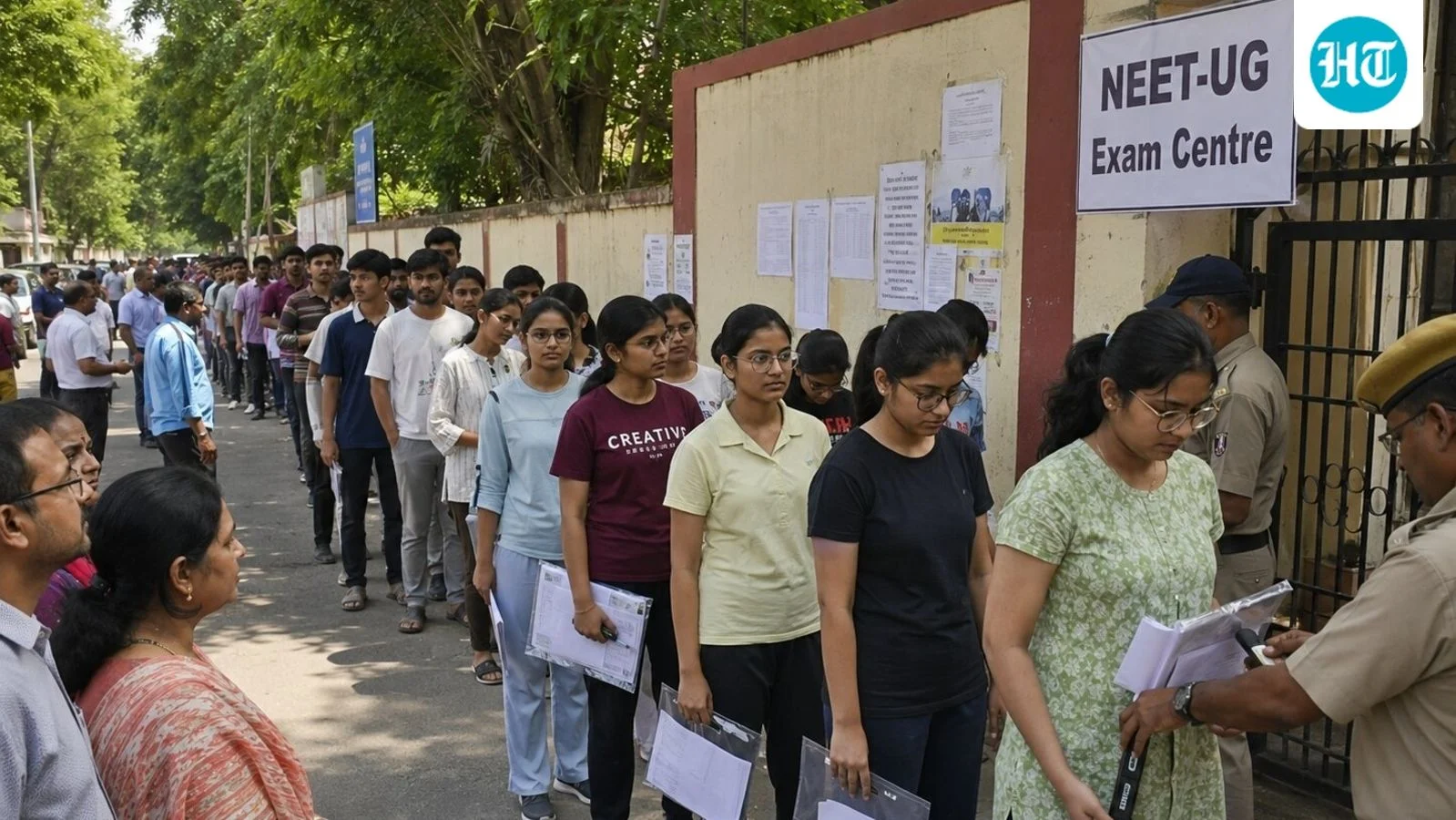
India’s examination crisis should be recognised as a systemic failure rather than simply a scandal of leakage. The National Testing Agency (NTA) annulled the National Eligibility-cum-Entrance Test Under-graduate (NEET-UG) on May 12, days after 22.7 lakh aspirants had already appeared for it. This is the second incident of irregularities in two years.
Predictably, India witnessed massive public outrage after the May 12 cancellation, and the Supreme Court stepped in. The issue also became a political contest. However, outrage does not constitute reform. Resignations do not redesign systems. Cancellation, while sometimes necessary, ultimately penalises honest students who have adhered to the rules.
The fundamental issue is that India is attempting to run some of the world’s largest and most consequential examinations through an ecosystem that hasn’t yet been redesigned and built for concordant scale, complexity and incentives. This problem can’t be managed through ad hoc vigilance. It needs institutional redesign, technological transformation and a new doctrine of examination governance.
Also Read: For Viksit Bharat, NEET must be done neatly
India’s scale of examinations is without parallel. NTA conducted 244 exams from 2018 to 2023. Over this period, the candidate pool doubled from about 6.7 million to roughly 12.2 million. NEET alone draws 2.2–2.4 million candidates on a single morning.
China’s Gaokao had 13.4 million registered candidates in 2024, while South Korea’s CSAT had about 554,000 applicants in 2026. India’s NEET is smaller than the Gaokao but far larger than Korea’s single national test. And unlike China or Korea, India does not conduct a single centrally administered examination per year. Our testing calendar is continuous, federal, multilingual and sprawling.
That is why simply importing the “fortress model” of China or Korea will not work. Those countries can mobilise the full machinery of the State around one decisive exam day. India cannot turn the entire State into an examination-security apparatus ten times a year. We require a system suited to the Indian scale, one that is resilient, modular, technology-backed, decentralised in delivery but centralised in standards.
The high-level committee under K Radhakrishnan, set up after the 2024 controversies around national testing, recognised precisely this challenge. Its report proposed a comprehensive reform framework for transparent, smooth, and fair conduct of examinations through NTA. The deeper message of that report was clear: India needs a new operating system for examinations.
Also Read: Real test of AI regulations: Reducing pendency of court cases
The first reform must be institutional. Technology cannot compensate for a weak institution; it only digitises the system’s fragility. India must rebuild NTA into a permanent, professional, mission-mode assessment institution, with deep in-house capacity in psychometrics, cybersecurity, logistics, data analytics, paper-setting, vendor management, and legal enforcement.
A bare-bones agency, excessively dependent on private vendors, temporary invigilators, and outsourced processes, cannot carry the burden of India’s most high-stakes examinations.
The second reform must be in question setting. The most secure paper is one that no single individual ever fully sees. This is the great strength of institutions such as UPSC and JEE Advanced: Large, anonymous, compartmentalised panels; multiple parallel sets; randomisation; strict isolation; and minimal exposure to private intermediaries.
This architecture makes certain that even if one node is compromised, the entire examination is not. NTA examinations must move decisively towards a blind, multi-panel, multi-paper system where secrecy is not dependent on trust, but on design.
The third reform must be technological, but technology must serve architecture. India must move away from the single physical paper that becomes a valuable commodity the moment it is printed. The future lies in large, continuously refreshed item banks, computer-based testing and, over time, adaptive testing.
Global testing systems use item response theory and computerised adaptive testing to draw calibrated questions from a bank, lessening reliance on a single finite paper and advancing measurement quality.
Also Read: Sarvam AI, and India’s role in the future of high technology
India must build a public digital testing backbone. The Radhakrishnan Committee’s proposal to build 1,000 Kendriya Vidyalayas and other trusted public institutions as secure testing centres should be executed at the earliest. The idea is simple: The question paper should be generated, encrypted, transmitted, and decrypted only at the centre, as close to examination time as possible. It is necessary to minimise the transport window and reduce the system’s vulnerabilities.
Fourth, identity and invigilation must be hardened. NTA’s own 2026 preparedness note mentioned Aadhaar-based biometric authentication, CCTV surveillance, 5G Jammers and GPS-enabled movement of confidential material. These are necessary steps that should be built into auditable national protocols.
A “Digi-Exam”, something similar to Digi-yatra, should authenticate candidates, invigilators, centre staff, and the movement of confidential materials. Chain of custody must become a digital record, not mere paperwork.
Fifth, India must use Artificial Intelligence (AI) as a forensic tool. AI can detect abnormal score clusters, improbable answer patterns, centre-level deviations, impersonation risks and suspicious social-media circulation.
Statistical forensics must become continuous, not post-mortem. The system should detect organised cheating before an alert from a teacher, a parent, or a police unit triggers national panic.
Finally, India must reduce the winner-take-all nature of examinations. A single morning should not decide the destiny of a young student. Multi-stage testing, multiple attempts, normalised scoring, and transparent grievance redress can reduce pressure, dilute the black-market value of a single paper, and make the system more humane.
I am confident that the education minister, with a track record of delivering some of the large-scale reforms and welfare schemes of this government can lead such a transformation. His earlier tenure was particularly marked by transformative initiatives that aligned closely with the reform agenda of the Modi government, be it the Pradhan Mantri Ujjwala Yojana to provide clean cooking fuel to millions of economically disadvantaged households or developing a national gas grid and city gas network or promoting biofuels or through technology-driven governance. His ability to coordinate effectively with the states and converge policy innovation, administrative efficiency and meticulous implementation is now needed to reform the examination system of India.
Political Backlash and Rescheduling Developments
The escalating exam controversy has initiated a fierce political dialogue across the country. In Shimla, Himachal Pradesh Leader of Opposition Jairam Thakur backed the central government’s strict actions against perpetrators of the paper leaks, condemning the political weaponization of student concerns.
Thakur emphasized that Prime Minister Narendra Modi and Education Minister Dharmendra Pradhan are managing the crisis directly, implementing rigid protocols to avoid future security breaches.
Conversely, Leader of Opposition in Lok Sabha Rahul Gandhi met with students in the coaching hub of Kota, Rajasthan, to highlight structural deficiencies. Gandhi criticized the high-stress environment created by the privatization of education, noting that the current infrastructure places immense psychological pressure on competitive aspirants.
The canceled test from May 3 has been rescheduled, with the NTA organizing the national NEET-UG 2026 re-examination for June 21, operating from 2:00 pm to 5:15 pm.
Future Outlook
The future of India’s testing infrastructure depends on executing the Radhakrishnan Committee recommendations. Transitioning to decentralized digital question generation, encrypted transmission networks, and establishing 1,000 certified public testing centers will change how high-stakes exams are secured. Integrating adaptive testing and continuous AI forensics will help India move past vulnerable physical papers toward a secure testing ecosystem.
FAQs
Why was the NEET-UG 2026 examination cancelled and rescheduled?
The initial exam held on May 3 was cancelled by the central government following massive public outrage and evidence pointing to institutional irregularities and paper leak controversies. The National Testing Agency subsequently rescheduled the examination to protect the integrity of the competitive selection process.
What are the main institutional changes proposed by the Radhakrishnan Committee?
The committee recommended transforming the National Testing Agency into a highly professional, permanent body. This includes developing robust in-house capabilities for psychometrics, data analytics, advanced cybersecurity, paper-setting, and removing excessive reliance on outsourced private vendors and temporary staff.
When will the rescheduled NEET-UG 2026 re-examination take place?
The National Testing Agency has scheduled the national re-examination to take place on June 21, with testing hours fixed from 2:00 pm to 5:15 pm.
How can technology prevent paper leaks in future Indian examinations?
Future solutions involve moving away from printed physical papers toward computer-based adaptive testing drawn from large item banks. Utilizing secure public digital backbones allows questions to be encrypted and transmitted directly to centers right before the exam, minimizing transport windows and security breaches.