Europe vs India Heatwave Debate: Why 43°C Feels Different
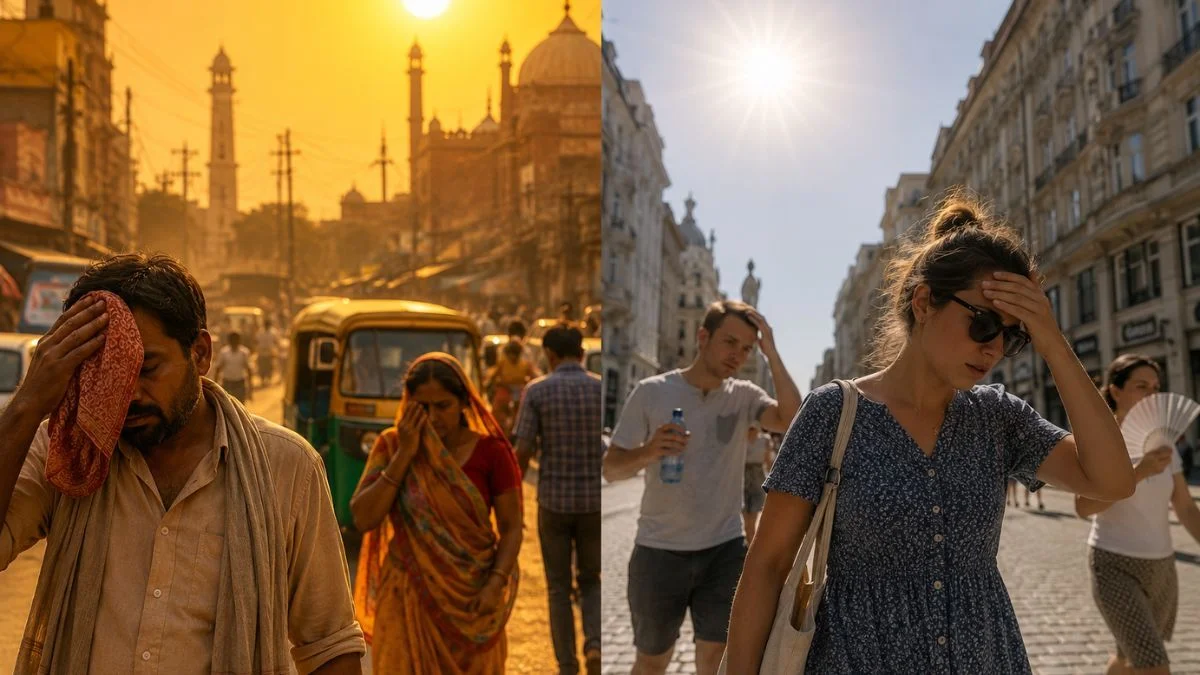
A viral social media debate has erupted over whether experiencing 43°C in Europe matches the same intensity as 43°C in India. The online discussion emphasizes how regional factors like infrastructure, climate, and human adaptation alter the real-world impact of extreme thermal stress.
Key Highlights
- An online query comparing identical temperatures sparked global debate regarding geographical climate differences.
- European architecture designed for winter heat retention exacerbates indoor discomfort during intense summer heatwaves.
- Geographic variance gives Europe up to 17 hours of daylight, causing urban centers to radiate heat all night.
- Biological acclimatization allows populations in India to tolerate prolonged heat better than residents in Europe.
The query that triggered the debate
The widespread online conversation started when users compared the ongoing European heatwave to the extreme seasonal weather that impacts multiple territories in India annually.
Platform users noted that while India routinely crosses the 40°C threshold, European populations face immense difficulty managing comparable conditions during current meteorological events.
Why do many users say the heat feels different?
Discussions strongly focused on structural infrastructure. Participants noted that European residential and commercial buildings are engineered to trap warmth during freezing winters, meaning they frequently lack cooling systems and become unbearably hot inside.
Conversely, communities across India are accustomed to intense summer conditions. Residential areas regularly utilize ceiling fans, evaporative coolers, and standard air conditioning systems to mitigate predictable seasonal spikes.
Climate and humidity play a role
Participants emphasized that ambient air temperature is only one component of thermal stress. Human comfort depends on humidity levels, wind velocity, solar radiation intensity, nocturnal minimums, and structural heat storage.
Europe’s location means the sun behaves differently due to its northern latitude. Cities like Paris sit further north than Toronto, causing the summer sun to remain above the horizon for 15 to 17 hours, which leaves pavements radiating energy late into the evening.
Furthermore, atmospheric conditions alter these dynamics. Pollution changes how the Sun feels because suspended particulate matter in Indian cities scatters sunlight before the monsoon. Clearer European skies allow direct solar radiation to strike the skin with greater intensity.
Additionally, calm air can make Europe’s heat feel suffocating during current stagnant atmospheric conditions. Lack of wind prevents evaporative cooling, whereas India’s heat often involves moving air currents, even if they are dry or humid.
Finally, humidity changes how the body cools itself. While parts of India face high humidity that blocks sweat evaporation, European heatwaves are often dry, causing rapid dehydration, though humid Mediterranean coastlines remain equally oppressive.
Division on social media
While many observers argued that European metropolitan areas remain unprepared for extreme summer paradigms, others stated that dangerous heat levels cause severe suffering regardless of location.
Commenters noted that 40°C heatwaves cause massive struggles globally, and millions of people in India suffer immensely every year without access to electricity or cooling infrastructure during a zero-cooling crisis.
Regulatory issues also restrict modernization. Air conditioning not a part of European lifestyle historically because temperatures above 25°C were rare, though climate change is rapidly altering this mindset.
Furthermore, urban design also plays a role as historical preservation rules restrict external cooling compressors to protect architectural heritage, though these rules face scrutiny as extreme weather intensifies.
Ultimately, people in India are better acclimatised through repeated historical exposure, which improves cardiovascular efficiency during thermal stress, though extreme conditions remain dangerous for all populations.
Weather beyond temperatures
The viral interaction demonstrates that atmospheric conditions involve complex variables beyond baseline thermometer readings. Real-world experiences fluctuate based on architectural choices, regional geography, local moisture levels, and community adaptation.
This complex interplay explains why a baseline comparison of 43°C has generated such extensive global dialogue.
Future Outlook
Climatologists warn that Europe’s latest thermal event is far from over, with a secondary heat dome projected to push July temperatures up to 46°C. As these intense patterns become the new global normal, European municipalities are facing mounting pressure to alter historic building regulations and rapidly adopt cooling strategies pioneered by countries accustomed to managing extreme tropical climates.
FAQs
Why does a 43°C heatwave feel more severe in Europe than in India?
The difference stems from infrastructure and geography. European homes are insulated to retain heat for winter and mostly lack air conditioning. Additionally, Europe’s northern latitude provides up to 17 hours of summer daylight, preventing cities from cooling down at night.
How does air pollution affect how hot the sun feels?
In many industrial or developing regions like India, high levels of suspended particulate matter scatter and diffuse incoming solar radiation. Europe’s clearer skies allow sunlight to hit the ground and skin directly, making the sun feel sharper at identical thermometer readings.
Why is air conditioning less common in European households?
Historically, much of western and northern Europe experienced only a few days above 25°C each year, making residential AC unnecessary. Historic urban preservation laws also ban external cooling units on historic buildings to maintain city aesthetics.