India Approves 15 Foreign University Campuses For August Launch
India has approved 15 international university branches to establish local operations, with the majority scheduled to commence academic sessions by August 2026, a structural shift enabling domestic students to acquire globally accredited qualifications at substantially lower costs.
Key Highlights
- The Indian government has authorized 15 transnational educational bases to deliver degree programs locally.
- Academic enrollment at these domestic hubs is projected to cross 560,000 students by 2040.
- The domestic model provides a 30% to 40% cost reduction compared to traditional overseas education.
- Initial academic program selections focus heavily on STEM tracks and Artificial Intelligence.
The pursuit of international credentials and elite corporate placement traditionally necessitated migration. However, domestic regulatory pathways have simplified this trajectory, removing passport complexities, standardized language assessments, and extensive credit liabilities while delivering equivalent international qualification status.
Regulatory acceleration materialized following strategic bilateral deliberations between the Ministry of Education and senior diplomatic envoys from Australia, the United Kingdom, and the United States, securing commitments for four additional institutional facilities to reach the current total of 15.
Long-term market projections compiled by Deloitte and Knight Frank indicate aggregate student enrollment across these international branch sites could scale past 560,000 by the year 2040.
Retaining this demographic domestically is estimated to conserve $113 billion in national foreign exchange reserves that would otherwise exit the domestic economy.
Undergraduate candidates will secure options to execute academic semesters at overseas anchor sites during their second year or utilize specialized pathways to finish final-year requirements abroad, subject to clear institutional metrics.
The operational footprint currently features three functional international campuses within the domestic territory:
Deakin University – GIFT City
University of Wollongong – GIFT City
University of Southampton – Gurugram
The subsequent deployment phase will introduce institutional operations from:
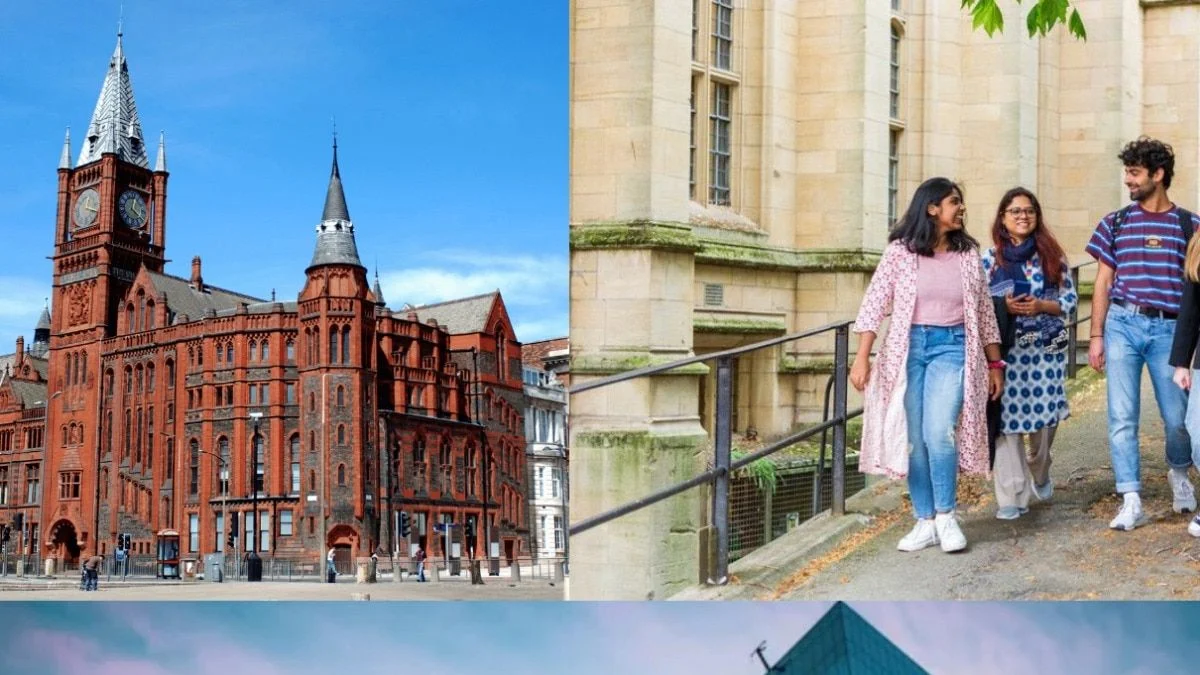
University of Liverpool – Bengaluru
Victoria University – Delhi NCR
University of Bristol – Mumbai
University of Aberdeen
Illinois Institute of Technology
These facilities emerge amidst unprecedented domestic demand for external education, with outbound student volume forecasted to touch 1.8 million in 2025, representing an aggregate capital flight of $70 billion annually across tuition and basic maintenance.
ADMISSIONS AND PROGRAMMES
Initial operational blueprints restrict individual institutional intake to approximately 200 to 250 candidates per branch, with structured plans to scale annual capacity to between 1,000 and 1,200 learners within five years.
Prospective student demand has manifested in more than 10,000 formal admissions requests logged for the current active enrollment cycle.
Domestic operations will enforce identical educational frameworks, examination models, and grading benchmarks utilized by parent entities, ensuring final credentials match those issued at main global sites.
The foundational directory of academic programs concentrates predominantly on Artificial Intelligence, Computer Science, and associated core scientific fields.
Entrance criteria dictate minimum thresholds of 75% in senior secondary certification and between 55% and 70% in undergraduate marks, varying by specific discipline choice.
Candidates demonstrating scores between 70% and 85% in secondary English examinations gain exemptions from standard language proficiency testing.
INTERNATIONAL EXPOSURE
Enrolled individuals retain options to fulfill up to two academic terms at primary global hubs via reciprocal mobility structures.
Specific institutional designs incorporate discrete multi-year pathway modules, while students at select engineering sites secure remote access to high-performance computing assets like the UK-based AI supercomputer.
Corporate integration remains a foundational component of the operational model, integrating targeted field placements, formal internships, applied industry projects, and direct career placement infrastructure.
Instructional staff will comprise an integrated pool of domestic and global academics, with specific institutions deploying up to one-third of their faculty directly from international home bases.
Financing mechanisms have dedicated 1,000 crore toward financial aid frameworks over a five-year horizon, supplying partial to complete tuition offsets based on economic need and performance.
Dedicated institutional funds will distribute annual grants ranging from 2 lakh up to 10 lakh per eligible candidate.
The financial framework positions local attendance at 30% to 40% below the standard 80 lakh to 1.2 crore capital requirement of full overseas relocation.
Participants secure identical credentialing value alongside established institutional research networks, global alumni registries, and international corporate access paths.
Outbound student mobility from the region expanded significantly over a five-year period, climbing from 680,000 individuals in 2020 to approximately 1.8 million in 2025.
However, the outlook for 2026 signals decelerating growth driven by tightening immigration limits, revised visa frameworks, and softer corporate hiring metrics across primary destination countries.
The United States, Canada, and the United Kingdom maintain leading market shares for outbound placement, though total intake capacities face downward pressure from systemic policy adjustments implemented across major Western host nations.
Future Outlook
The deployment of international university branches within India represents a major structural re-alignment of transnational education. By shifting from an outbound mobility framework to an in-bound consumption model, the domestic market is positioned to capture massive capital allocations previously exported to Western economies. As sovereign immigration regulations tighten globally throughout 2026, these localized international hubs provide a strategic hedge, transforming India from a primary student source market into a critical regional destination for global higher education.
FAQs
Which foreign universities are currently operating campuses in India?
As of 2026, three international institutions are actively running functional branch campuses within India: Deakin University at GIFT City, the University of Wollongong at GIFT City, and the University of Southampton in Gurugram.
What are the typical admission eligibility requirements for these campuses?
Prospective students generally require a minimum score of 75% in their Class 12 board examinations for undergraduate entry, and between 55% and 70% in graduation marks for postgraduate tracks, alongside specific English language criteria.
Do students at these Indian campuses need to take the IELTS exam?
Applicants who have achieved scores between 70% and 85% in English during their senior secondary board examinations are entirely exempt from taking the IELTS language proficiency test.
What fields of study are being prioritized in the initial phase?
The foundational academic programs at these international campuses focus primarily on STEM disciplines, including Computer Science and Artificial Intelligence.