Brooklyn Woman Convicted of Islamic State Weapons Training in Syria
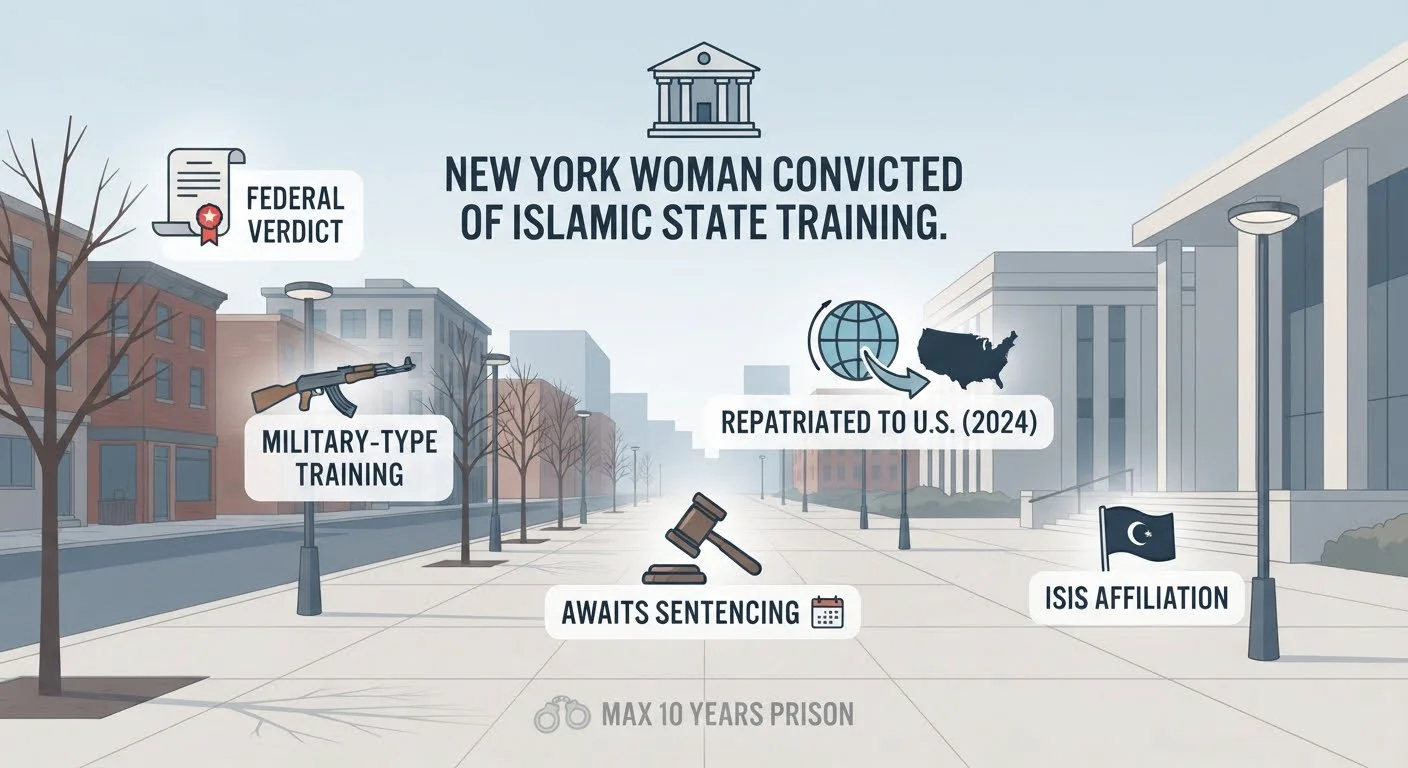
A federal jury in Brooklyn convicted 27-year-old Halima Salman on 27 October 2026 of receiving weapons training from the Islamic State group in Syria, according to the Associated Press.
Salman, a Brooklyn-born US citizen, testified that her father had taken her into Syria as a teenager and arranged her marriage to an Islamic State fighter. Prosecutors argued that she willingly participated in the organisation’s activities.
The conviction carries a potential prison sentence of up to 10 years, with sentencing scheduled for 2 February 2027.
Key Takeaways
- Verdict: Jurors convicted Salman after several days of deliberations.
- Trial evidence: Prosecutors relied on photographs, digital messages and footage involving an assault rifle.
- Defence: Salman maintained that her father brought her into Syria without her knowledge and that her marriage was coercive.
- Legal consequences: Her lawyers are challenging the verdict and seeking an acquittal.
How Salman Ended Up in Syria
Salman was 17 years old when her father took the family on what she believed was a visit to relatives in Turkey in 2017, according to the AP account also published by the Laredo Morning Times.
Instead, their van crossed into Syria, where masked gunmen surrounded the family. Salman testified that she was frightened, confused and unaware of her father’s intentions.
She described spending three months in accommodation operated by Islamic State before reuniting with her relatives. The family subsequently moved twice after airstrikes struck their homes.
Salman testified that she blamed her father for much of what happened to her. He later died from injuries sustained in a 2018 airstrike.
Her defence argued that the circumstances left her vulnerable to an arranged marriage and placed her under the control of a husband whose instructions she feared disobeying.
Prosecutors Challenge Her Account
Federal prosecutors argued that Salman exercised greater independence than she acknowledged and had knowingly aligned herself with Islamic State.
Assistant US Attorney Amanda Shami maintained during closing arguments that the prosecution’s evidence demonstrated military training, rather than merely possession of a weapon.
Jurors watched footage filmed by Salman’s husband showing her holding an assault rifle. Prosecutors argued that the recording demonstrated her familiarity with the weapon, while Salman testified that she had only obeyed her husband’s request to carry it.
The government also introduced a photograph showing Salman with the militant group’s flag. During cross-examination, prosecutors obtained her acknowledgement that she had sent her husband a religious song concerning Osama bin Laden.
Two affectionate text messages were used to challenge her description of an abusive marriage. Prosecutors maintained that these communications undermined her account of being entirely powerless.
Brooklyn-based US Attorney Joseph Nocella Jr. said the conviction held Salman “accountable for joining forces with a terrorist organization.”
Defence Describes Coercion and Fear
Salman maintained that she had resisted marrying at 18 years old and repeatedly sought a divorce. Her testimony portrayed the relationship as one in which threats and intimidation restricted her choices.
“You try to leave, it is death,” she testified, explaining why she believed escape was dangerous.
She described performing domestic work for her husband and mother-in-law. According to her testimony, repeated bombing during the final year of the marriage sometimes forced them to live outdoors.
Salman said she eventually escaped alongside other refugees in a truck. During that journey, she told her husband they would separate and testified that she never encountered him again.
For the defence, these experiences were central to the argument that apparent participation in Islamic State activities did not establish voluntary involvement in weapons training.
Jury Struggled Before Returning Verdict
Jurors began deliberating on 22 October 2026 and repeatedly informed the court on Monday that they were struggling to reach a unanimous decision.
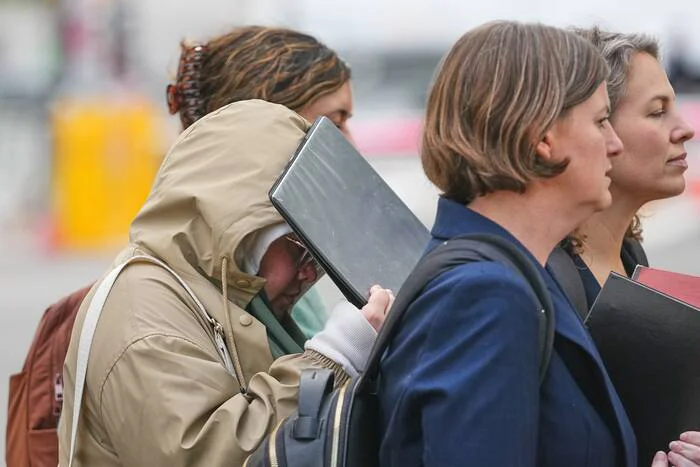
The panel eventually returned its guilty verdict on Tuesday. Salman, her mother and members of her legal team wept when the decision was announced.
According to AP, Salman and her mother subsequently embraced across the barrier separating the courtroom audience from the area reserved for trial participants. Jurors declined to comment as they left the courthouse.
The case followed Salman’s detention in Baghouz, Syria, in 2019, by forces opposed to Islamic State. US authorities arrested her when she returned to New York in 2024.
Her lawyers declined to comment after the verdict but are asking the judge to set it aside, arguing that the evidence was legally insufficient to sustain a conviction.
Such requests are permitted under federal law but are rarely granted. The court’s decision on that application will determine whether the jury’s verdict remains in place before sentencing.