Air India Pilot and Controller Suspended Over Border Incursion
An Air India pilot and an air traffic controller face suspension after a commercial flight briefly crossed into Pakistani airspace near Amritsar. Regulators issued the penalties following a failure by both personnel to officially report the international border infringement during a temporary airport closure.
Key Highlights
- India’s aviation regulator suspended an Air India pilot and an air traffic controller on June 22, 2026.
- Air India flight AI479 entered Pakistani airspace by three miles due to an unscheduled holding pattern.
- The mid-air diversion followed a bird strike that closed the runway at Amritsar airport for mandatory inspections.
- Both operational parties failed to document the incident, triggering strict disciplinary action amid frozen bilateral aviation ties.
Air India plane “marginally infringed” on Pakistani airspace
The Directorate General of Civil Aviation has penalised an Air India captain and a regional air traffic controller following an operational lapse late on Monday, June 22, 2026. The enforcement action addresses a serious procedural omission during a routine domestic flight.
The incident involved Air India flight AI479, a scheduled 257-mile regional connection from Delhi to Amritsar. The carrier operated the service utilizing an Airbus A321 aircraft bearing registration VT-PPT. The flight departed Delhi at 9:18 PM local time for the short transit.
The aircraft encountered unexpected delays upon arriving near Amritsar. Local airport authorities ordered a halt to landings to execute a critical runway safety inspection. The emergency sweep became necessary after a preceding aircraft suffered a severe bird strike during arrival.
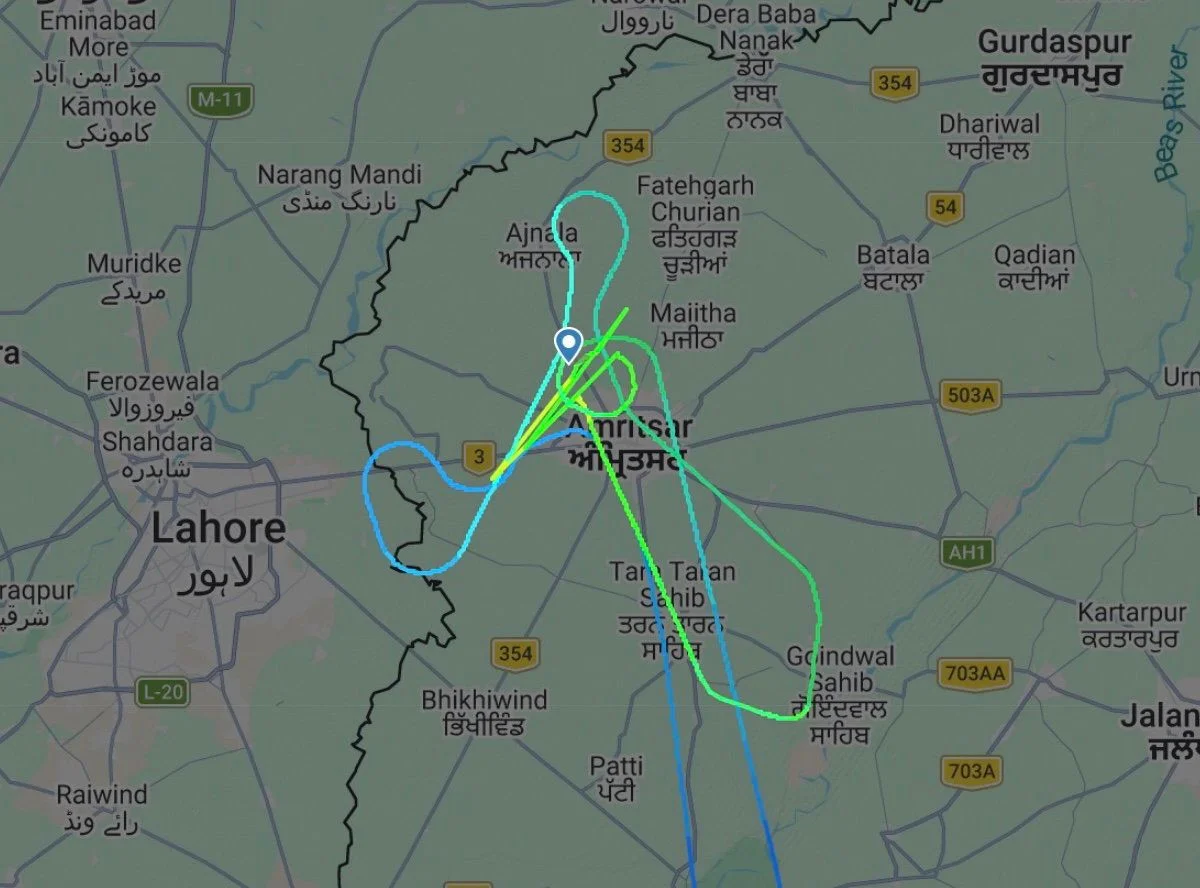
Air traffic control placed the Airbus A321 into a holding pattern at approximately 10:08 PM while tracking radar vectors. The aircraft crossed the international boundary during these maneuvers. Officials note the path deviation involved active coordination with Pakistani flight controllers.
The local Indian controller directed the commercial flight to maintain its heading toward the international border. The jet subsequently breached the frontier, penetrating three miles inside Pakistani territory. Air India later confirmed the passenger plane “marginally infringed” on the neighboring sovereign airspace during the hold.
The flight path deviation occurred during overnight hours when standard automated surveillance systems at Amritsar remained unavailable. The commercial jet managed to exit the foreign airspace by 10:20 PM. The flight crew then initiated a return to Delhi due to dwindling fuel reserves.
The plane touched down back at Delhi at 11:27 PM local time. The entire aborted flight lasted 2 hours and 9 minutes from its initial departure. The carrier has launched an internal investigation alongside the regulatory probe.
The biggest issue here was the lack of incident reporting
The cross-border entry occurred during a period of sustained diplomatic friction between the two nations. Pakistan has strictly closed its territorial airspace to all Indian commercial carriers for more than a year. The restriction makes unauthorized entries highly sensitive.
This specific route deviation was completed via direct communications with regional air traffic control teams based in Lahore. The entry did not occur as an hostile or unapproved breach. Pakistani authorities granted explicit operational clearance for the maneuver.
Regulators emphasize that the primary infraction stems from a complete lack of incident reporting by the crew and controllers. Both licensed professionals failed to submit mandatory safety logs to the aviation authority after concluding the flight.
Aviation safety protocols demand immediate notification when a passenger aircraft enters closed international territory. The regulatory reprimand focuses heavily on this transparency failure. The omission prevented immediate government oversight of an international border crossing.
The necessity of entering foreign airspace during a localized holding pattern remains under regulatory review. Investigators are analyzing whether alternative holding sectors were available within Indian territory. The inquiry will determine if systemic communication gaps exist regarding current border restrictions.
The double suspension highlights rigid regulatory enforcement regarding cross-border aviation protocols. The crew faces significant scrutiny over safety compliance errors. The case raises ongoing questions regarding coordination during border-zone aviation emergencies.
Future Outlook
The strict regulatory penalties signaled a tightening of border enforcement policies for Indian commercial aviation. Experts anticipate the incident will prompt the Directorate General of Civil Aviation to issue revised protocols for flights operating near sensitive international frontiers. Airlines may face mandatory simulator training focused on border avoidance during terminal holding patterns. The case is expected to accelerate the deployment of round-the-clock surveillance radar at secondary frontier hubs like Amritsar to prevent future tracking gaps.
FAQs
Why were the Air India pilot and air traffic controller suspended?
The aviation regulator suspended both individuals because they failed to file a mandatory incident report after the commercial aircraft crossed into Pakistani airspace.
How far did the Air India flight enter Pakistan territory?
The Airbus A321 penetrated approximately three miles into Pakistani airspace while performing a holding pattern near the border.
What caused the aircraft to divert into foreign airspace?
The plane had to hold because the runway at Amritsar airport was closed for an emergency safety inspection following a bird strike on an earlier aircraft.
Did the plane have permission to enter Pakistan airspace?
Yes, the flight path deviation was actively coordinated with and approved by Pakistani air traffic controllers operating from Lahore.