Monsoon Delay Clouds India Consumer Demand Growth Outlook
Falling crude oil values have prompted economists to reduce India’s retail inflation projections, yet unpredictable monsoon trajectories are compelling consumer goods enterprises to scale back growth outlooks.
Key Highlights
- Crude oil price declines have minimized headline inflation risks for the fiscal year, but agricultural uncertainties remain high.
- A 43% rainfall deficit during the initial phase of the monsoon threatens kharif crop sowing schedules across the country.
- Rural markets generate nearly 60% of India’s total consumption expansion, making the corporate sector highly dependent on farm income.
- Fast-moving consumer goods (FMCG) corporations are leaning on diversified portfolios to mitigate localized economic downturns.
Multi-regional consumer firms anticipate that a broad product mix will cushion financial vulnerabilities caused by an impending deceleration in rural buying power. Industry consensus indicates that non-essential retail spending across rural territories faces an immediate downturn, though eventual precipitation trends will dictate the final severity of this economic contraction.
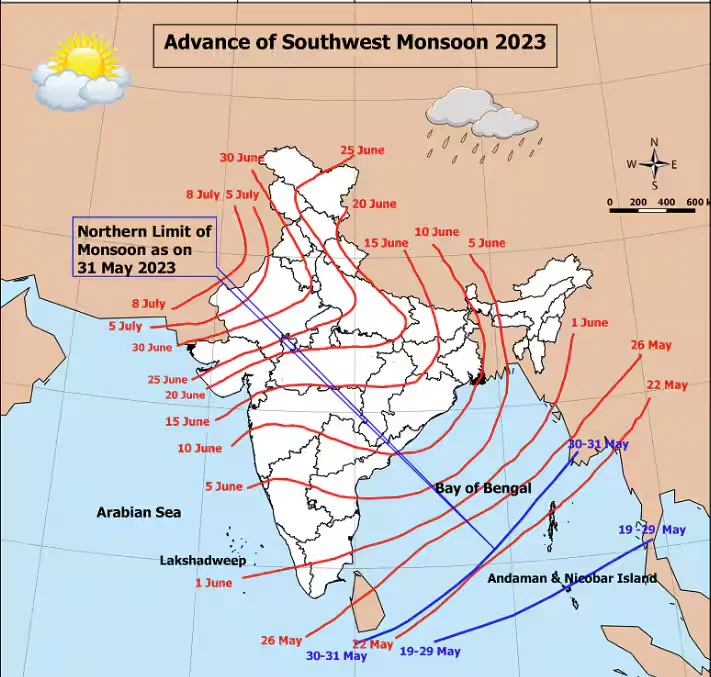
To contextualize the situation, rural geographies generated approximately 60% of the country’s aggregate consumption expansion during 2022-2023, according to Crisil chief economist Dharmakirti Joshi, who cited recent household consumption tracking metrics. Current seasonal rains encountered a postponed arrival, leaving cumulative precipitation levels roughly 43% below historical benchmarks and endangering early kharif crop cultivation.
In Mumbai, the seasonal rains arrived in late June, marking the second-most-delayed onset on historical record, which prompted local municipalities to enforce mandatory water supply restrictions on commercial firms. Parle Products chief marketing officer Mayank Shah noted that rural buyers will likely maintain a highly disciplined stance on non-essential purchases until precipitation distribution stabilizes and crop cultivation clarity emerges.
Renewed geopolitical volatility across West Asia over the weekend threatens macro-economic sentiment, clouding the horizon for sustained regional stability. Rasna Group chairman Piruz Khambatta, whose firm experienced elevated summer inventory sales due to delayed monsoon cooling, warned that agricultural output stress will inevitably suppress rural fast-moving consumer goods demand.
While corporate caution remains prevalent until atmospheric patterns find equilibrium, historical data proves that rural consumption patterns show strong recovery trends once monsoon volumes normalize later in the season, stated Crompton Greaves Consumer Electricals group CFO Kaleeswaran Arunachalam.
Analytical firm Icra cautioned that emerging El Nino weather patterns could severely disrupt rural purchasing momentum, potentially choking revenues for corporate segments that previously recorded robust top-line advancements in Q4FY26. Confectionery business head at DS Group, Jyotiroop Barua, added that regional expansion percentages will vary wildly based on localized weather variations.
Future Outlook
The interplay between retreating energy costs and agricultural disruptions will dictate India’s domestic demand trajectory through 2026. If the current 43% rainfall deficit persists, the FMCG sector may face compressed profit margins despite enjoying lower logistics costs from cheaper fuel. Corporate strategies will increasingly rely on urban market resilience and premium product portfolios to offset rural volatility until winter crop cycles restore agrarian liquidity.
FAQs
How does the monsoon delay affect Indian consumer goods companies?
Delayed rainfall directly limits agricultural yields and depresses farming incomes. Because rural areas drive a massive portion of domestic volume growth, reduced farm earnings force rural families to cut back on non-essential FMCG purchases, hurting corporate revenues.
Why are inflation forecasts for India improving despite bad weather?
International crude oil prices have fallen substantially. Lower energy costs reduce manufacturing, transportation, and logistics expenses across the supply chain, which offsets some of the upward pressure that food shortages place on headline inflation numbers.
What percentage of India’s consumption growth comes from rural areas?
According to historical data from Crisil, rural India contributed approximately 60% to the overall consumption expansion of the country during the 2022-2023 period, highlighting its importance to the national economy.