India-Bound Vessels Cross Hormuz After Iran-US Accord
Eleven India-bound merchant vessels have successfully navigated the strategic Strait of Hormuz following a peace memorandum between Iran and the United States, providing a critical boost to New Delhi’s maritime trade and securing vital agricultural supply chains.
Key Highlights
- Eleven vessels bound for Indian ports safely transited the strategic Strait of Hormuz.
- Ten Indian-flagged commercial ships currently remain positioned inside the Persian Gulf.
- Two additional Indian vessels entered the gulf zone from western maritime corridors.
- Four incoming ships carry critical fertilizer shipments to reinforce India’s 196.08 lakh tonne stock.
MEA also shared that two additional Indian ships have also crossed into the Persian Gulf from the western side.
New Delhi has confirmed that 11 commercial vessels heading toward domestic ports have successfully traversed the Strait of Hormuz following a bilateral Memorandum of Understanding (MoU) designed to halt hostilities between Tehran and Washington.
The maritime update was delivered officially by Ministry of External Affairs spokesperson Randhir Jaiswal during a routine press conference. The government representative further revealed that two more domestic vessels entered the Persian Gulf via western shipping corridors.
“We have 10 Indian flagged vessels still in the Persian Gulf region. In addition, we have two Indian ships which have crossed from this side into the Persian Gulf. Since the signing of the MoU, 11 Indian bound vessels have crossed the Strait of Hormuz,” Jaiswal stated.
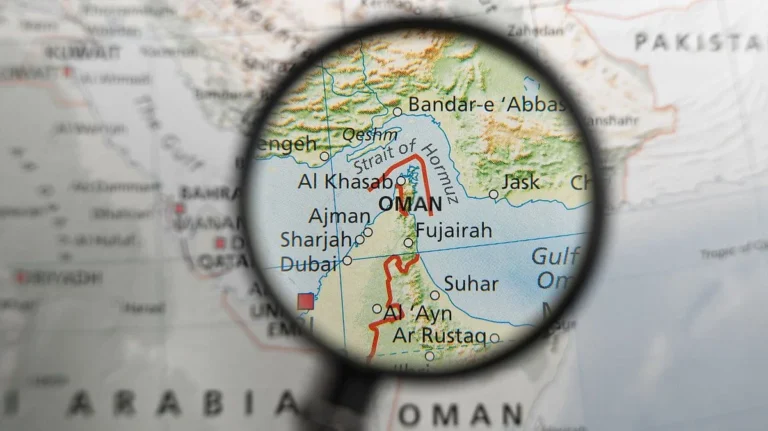
The critical chokepoint connects the Persian Gulf with the Gulf of Oman, serving as a primary conduit for energy and commodity exports from major Middle Eastern producers, including Saudi Arabia, Iraq, Kuwait, and the United Arab Emirates.
Among the transiting fleet, four specialized bulk carriers are navigating through recent geopolitical turbulence to stabilize domestic agricultural supplies. Official data indicates these vessels are traveling to designated domestic ports located in Krishnapatnam, Kakinada, Paradeep, and Mundra.
Government statements confirmed that these vital agricultural raw materials will undergo immediate offloading upon arrival. This operational urgency aims to fortify national fertilizer inventories and sustain ongoing domestic crop cultivation requirements.
Strong Inventory Position
India’s aggregate fertilizer reserves reached 196.08 lakh tonnes as of June 22, 2026. This volume reflects a notable increase compared to the 168.67 lakh tonnes recorded during the corresponding period in 2025.
The national inventory framework includes:
- Urea: 81.44 lakh tonnes (up from 69.21 lakh tonnes last year)
- DAP: 20.92 lakh tonnes (up from 16.00 lakh tonnes last year)
- NPKs: 55.91 lakh tonnes (up from 46.13 lakh tonnes last year)
- MOP: 12.68 lakh tonnes (up from 10.68 lakh tonnes last year)
- SSP: 25.13 lakh tonnes (down from 26.65 lakh tonnes last year)
Rising Fertiliser Demand and Sales
Reflecting robust rural economic performance, cumulative fertilizer sales reached 153.4 lakh tonnes between March 1 and June 21, 2026. This represents a growth of 13.2 lakh tonnes over the 140.2 lakh tonnes sold in the previous year’s window.
Commercial distribution data shows market consumption comprised 79.1 lakh tonnes of urea, 34.8 lakh tonnes of NPK complexes, and 19.8 lakh tonnes of DAP, which includes triple superphosphate variations.
Domestic Production and Imports Strengthened
To protect localized farming systems from volatile international supply fluctuations, domestic manufacturing expanded to 133.12 lakh tonnes. This factory output was augmented by 43.69 lakh tonnes of foreign imports during the same time frame.
Global Procurement Strategy
New Delhi recently finalized contracts for 17.70 lakh tonnes of urea through its latest international commercial tender. This pushes total secured imports of urea and phosphatic-potassic variants past 90 lakh tonnes for the 2026 Kharif crop cycle.
The international purchasing framework was executed through diplomatic coordination involving 28 Indian embassies overseas. This multi-regional strategy successfully diversified import pathways and minimized supply concentrations.
Urea shipments were sourced from a global network including Oman, Malaysia, Vietnam, Georgia, Nigeria, Russia, Finland, Egypt, Algeria, Turkey, and the Netherlands. Meanwhile, DAP and NPK supply lines were established via trade corridors stretching across Russia, Morocco, Egypt, the United States, Jordan, South Korea, Tunisia, and Saudi Arabia.
Future Outlook
The stabilization of the Strait of Hormuz via the diplomatic accord between Washington and Tehran is expected to normalize maritime freight rates and reduce insurance risk premiums for Indian shipping lines. As regular transit resumes, the Ministry of Chemicals and Fertilizers plans to accelerate import timelines to ensure rural distribution networks remain fully stocked ahead of peak monsoon farming demands.
FAQs
How many Indian-bound ships have transited the Strait of Hormuz recently?
A total of 11 India-bound vessels have successfully crossed the Strait of Hormuz since the signing of the peace memorandum between Iran and the United States.
What is India’s total fertilizer stock position in June 2026?
As of June 22, 2026, India’s aggregate fertilizer reserve stands at 196.08 lakh tonnes, which is significantly higher than the 168.67 lakh tonnes recorded during the same timeframe in 2025.
Which Indian ports are receiving the latest fertilizer shipments?
The arriving cargo vessels are heading toward four designated destination ports across the country: Krishnapatnam, Kakinada, Paradeep, and Mundra.
From which countries is India importing its urea supplies?
India has secured urea imports from multiple global suppliers, including Oman, Malaysia, Vietnam, Georgia, Nigeria, Russia, Finland, Egypt, Algeria, Turkey, and the Netherlands.