Chennai Port Seafood Exports Hit $620 Million in FY26
Marine exports via Chennai Port reached $620 million during FY26, commanding a 7% share of the national seafood export volume. While the gateway handled 1,10,967 tonnes to rank fifth among major Indian ports, industrial leaders emphasize that Tamil Nadu must aggressively scale operations to capitalize on its massive marine wealth.
Key Highlights
- Chennai Port shipped $620 million in seafood during FY26, securing the fifth spot among major domestic ports.
- Industry experts urge Tamil Nadu to replicate the dairy sector’s cooperative success to exploit its 1,076-km coastline.
- Advanced precision aquaculture systems developed by ICAR-CIBA have boosted local shrimp yields to 55 tonnes per hectare.
- Policymakers eye a $5 billion export target by expanding active aquaculture zones from 9,268 to 30,000 hectares.
Chennai Port successfully facilitated the transit of $620 million in marine products during the FY26 fiscal period. Fresh data published by the Marine Products Export Development Authority reveals that the facility managed 1,10,967 tonnes of cargo. This performance represents more than 7% of the aggregate seafood shipments originating from India.
The volume positions the hub as the fifth largest asset among the nation’s principal maritime gateways. Even so, trade executives maintain that regional output remains disproportionately low given the geography. The state possesses expansive coastal assets that remain underutilized despite holding some of the most lucrative marine reserves across Asia.
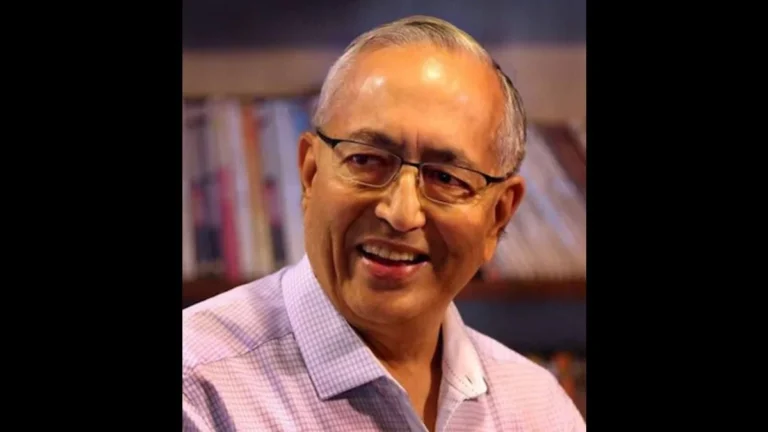
CII Southern Region Chairman Ravichandran Purushothaman stated that the province has failed to extract maximum value from its aquatic resources. He noted that managing $620 million in outbound trade through a single port is commendable but insufficient. A territory defined by a 1,076-km coastline is capable of achieving far superior commercial returns.
Purushothaman observed that past agricultural movements established iconic domestic brands like Amul through unified production frameworks. The contemporary maritime sector now enjoys an identical window to forge a parallel narrative for sea products. Such an initiative could systematically project local marine processing operations directly into highly competitive international markets.
The industrial representative recommended implementing targeted policy directives to subsidize solar-assisted cold storage technologies across coastal belts. Purushothaman also advised the regional government to establish a specialized autonomous council dedicated explicitly to sea product trade promotion. This entity requires direct corporate participation alongside quantifiable operational milestones.
Furthermore, he emphasized creating specialized capability certification initiatives synchronized with global food safety systems. Aligning local practices with Hazard Analysis Critical Control Point protocols and European Union sanitation baselines will bolster market access. The administration must view the maritime sector as a primary economic engine and supply the necessary infrastructure.
Purushothaman, who also oversees Danfoss India as its corporate president, confirmed that his enterprise actively collaborates with localized agricultural consortia. The Chennai-based energy solutions firm works with producer groups to reinforce deep-freeze storage frameworks. These systemic upgrades target logistics gaps to protect perishable cargo before international shipment.
The executive noted that the territory benefits from reliable solar radiation, extensive coastlines, and robust trade potential. Merging optimized refrigeration frameworks with strategic corporate Alliances could quickly transform the state into a dominant processing center. This technological pivot is essential for capturing higher market share in global supply chains.
The region originally acted as a primary incubator for commercial brackish water cultivation during its foundational emergence in the 1980s. Over subsequent decades, Andhra Pradesh systematically outpaced its neighbors to become the premier aquaculture exporter in India. This shift altered the domestic balance of trade significantly.
To reverse this trajectory, local authorities recently instituted a target to elevate seafood trade revenue to $5 billion. This objective demands a near tenfold expansion when contrasted against the modest $457 million recorded in FY25. Outbound commerce has suffered noticeable instability across recent fiscal intervals.
Trade revenue reached $484 million during FY24, demonstrating a clear contraction when compared to the $577 million achieved in FY23. That figure itself sat slightly above the $561 million logged during FY22. The state actively trades diverse categories, including dehydrated, chilled, live, and deeply frozen variations.
The export mix relies heavily on shrimp, finfish, cuttlefish, and squid varieties. Among these, frozen shrimp remains the undisputed primary driver of revenue both regionally and nationally. Statistical breakdowns confirm that this specific category represented over 40% of total outbound volume during FY26.
To optimize the cultivation of Pacific white shrimp and draw fresh investment to the sector, research institutions have introduced advanced systems. The ICAR-Central Institute of Brackishwater Aquaculture engineered a high-density, automated precision cultivation model. This architecture operates seamlessly at an experimental station located in Muttukadu along the East Coast Road.
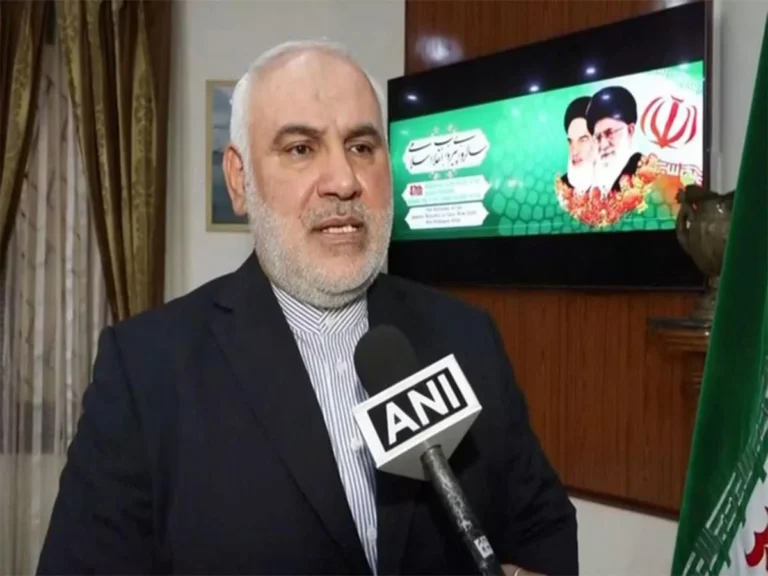
The specialized installation runs via close cooperation with the National Fisheries Development Board. According to ICAR-CIBA Director Kuldeep K. Lal, this specific methodology generates substantially elevated biomass yields within compressed spaces. It drastically shortens conventional operational timelines while maintaining strict ecological parameters.
Standard traditional models generally produce between six and eight tonnes of biomass per acre of water surface. Lal clarified that recent operational trials proved the new precision system can secure 55 tonnes per hectare during a single production cycle. This represents a ninefold efficiency spike over legacy practices.
A central element of this production methodology involves the absolute elimination of synthetic chemical treatments. The system operates strictly by balancing balanced nutritional input, verified breeding stock, controlled water quality, and continuous aeration. Crustaceans thrive when provided clean habitats and organic food sources.
Biomass collected from this specialized installation satisfies every rigorous international phytosanitary benchmark mandated by elite foreign buyers. To expand access, ICAR-CIBA finalized an agreement with the Tamil Nadu Adi Dravidar Housing and Development Corporation. This alliance intends to fund and construct modern aquaculture infrastructure for marginalized groups.
The research body has additionally formulated a proprietary larval nutritional mixture to lower operational overheads. This domestic feed alternative reduces reliance on international suppliers for critical early-stage hatchery inputs. A dedicated production facility is currently under construction alongside private sector manufacturing partners to scale distribution.
Lal indicated that researchers completed an extensive zoning map designed to classify viable coastal land. This spatial planning initiative revealed that 9,268 hectares are actively utilized for commercial cultivation across the province. The empirical data suggests this footprint could logically expand to 30,000 hectares via incremental phases.
To minimize systemic vulnerabilities tied to importing foreign breeding lines, the institute engineered a specialized domestic biosecurity node. This facility focuses on the genetic improvement of native Indian white shrimp variants. The program receives direct financial backing from the Pradhan Mantri Matsya Sampada Yojana.
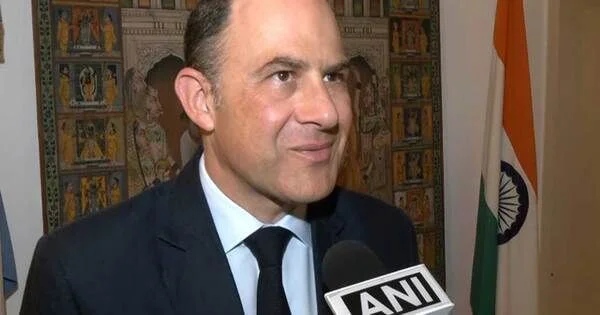
United Economic Forum President Ahmed Buhari highlighted that the marine economy presents immense fiscal opportunities for regional expansion. Enhanced seafood logistics could accelerate the state’s broader ambition to build a $1 trillion economy by 2030. The same momentum supports scaling toward a $1.5 trillion valuation by 2035.
Buhari noted that continuous research and development represents an immediate prerequisite for sustained market relevance. He insisted that government bodies managing environmental compliance, industrial zoning, finance, and maritime tracking must form a unified administrative front. Creating a frictionless regulatory environment remains vital for attracting long-term capital.
Aquaconnect Founder and CEO Rajamanohar Somasundaram stated that local processors must pivot toward downstream, consumer-ready items. Transitioning commodities into ready-to-cook or heat-and-serve variants can amplify baseline wholesale value by more than three times. This strategy retains a higher percentage of profit margins domestically.
A commanding percentage of current Indian marine shipments is dispatched directly to buyers within the United States market. Somasundaram noted that newly ratified free trade agreements with Australia and the UAE offer immediate diversification avenues. Emerging pacts with the United Kingdom and the European Union unlock lucrative premium channels for localized processors.
Future Outlook
The transition from traditional, low-density coastal farming to high-density precision aquaculture underpins Tamil Nadu’s long-term maritime strategy. By executing phased zoning expansions up to 30,000 hectares and adopting chemical-free intensive cultivation technologies, the state is positioning its seafood sector to move away from raw commodity trading. The integration of localized hatcheries, domestic feed production units, and favorable international trade agreements will dictate whether the region can successfully stabilize its volatile export revenues and hit its ambitious $5 billion growth target in the coming decade.
FAQs
What was the total value of seafood exported through Chennai Port in FY26?
The port successfully managed marine product shipments valued at approximately $620 million during the FY26 fiscal period, which constituted more than 7% of India’s overall seafood export volume.
Which specific marine product dominates exports from Tamil Nadu?
Frozen shrimp represents the largest single category of marine exports from both the state and India as a whole, accounting for more than 40% of total seafood export volume by quantity in FY26.
How does the new precision farming technology compare to traditional aquaculture?
The super-intensive precision technology developed by ICAR-CIBA can deliver yields of 55 tonnes per hectare per crop, which is nine times higher than traditional methods that average six to eight tonnes per acre.
What is the long-term seafood export revenue target set by Tamil Nadu?
The state government has established an ambitious target to scale its total seafood export earnings to $5 billion, a major increase compared to the $457 million recorded during FY25.