Northeast India Tourism Summit Set to Spark Strategic Growth
A major economic turning point approaches for Northeast India as regional leaders gather to address long-standing development challenges. This pivotal convention aims to create a unified strategy, unlocking the immense potential of the area’s rich biodiversity and cultural heritage while establishing sustainable models for future growth.
Key Highlights
- Landmark two-day tourism summit commencing in New Delhi on June 22-23, 2026.
- Focuses on infrastructure development and cohesive regional branding across eight states.
- Unites top government officials, hospitality executives, and conservation specialists.
- Aims to draft a strategic Vision Document for community-based, low-impact travel.
A Turning Point for Northeast India’s Tourism Future
Northeast India currently faces a decisive moment regarding its economic trajectory. The territory possesses exceptional ecological assets, containing the planet’s highest-rainfall zone, the rare one-horned rhinoceros, thousands of unique orchid varieties, and 15 distinct national parks and wildlife sanctuaries. However, commercial hospitality expansion has remained disconnected due to logistical deficits.
The current landscape is scheduled for a significant shift on June 22-23, 2026.
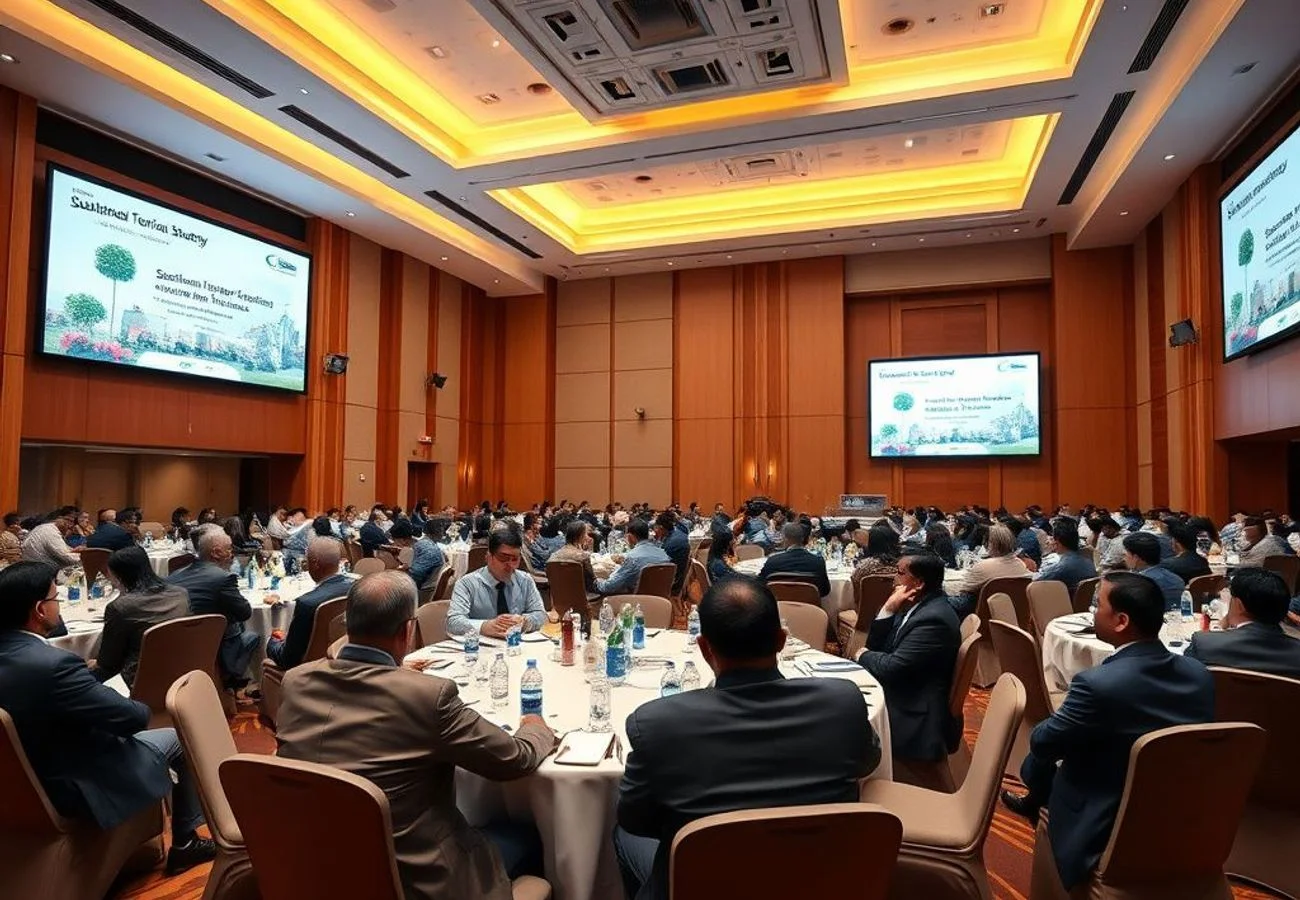
Media outlet ET TravelWorld is organizing an unprecedented two-day conference at the Hyatt Regency, Bhikaji Cama Place, New Delhi. This assembly gathers public tourism directorates, hospitality conglomerates, environmentalists, and financial syndicates. It represents the most substantive policy and commercial deliberation regarding the territory in recent history. The inaugural day features physical attendance, whereas the subsequent session transitions to a digital platform to encompass stakeholders across all eight regional states.
Why This Summit Matters Right Now
Macroeconomic statistics emphasize the scale of this opportunity. Travel and tourism account for 14-15% of India’s GDP, positioning the nation among the top five global aviation and hospitality markets. Despite possessing vast biological and ethnic diversity, Northeast India secures merely a minor share of this national economic driver.
Logistical discussions on online platforms like Reddit mirror these structural challenges:
“Northeast India is criminally underrated as a destination. The infrastructure just isn’t there to support mass tourism yet.” — r/travel
The primary obstacle relates to operational execution rather than a lack of scenic appeal. Territorial connectivity, physical infrastructure capitalization, indigenous civic alignment, and centralized marketing campaigns have consistently trailed consumer interest. The upcoming convention is specifically designed to resolve these systemic bottlenecks.
Who’s Coming and What They’ll Discuss
The confirmed assembly roster features prominent figures within the South Asian hospitality and public policy sectors:
Government-Level Representation
Arvind Singh, Secretary, Ministry of Tourism, Government of India (Guest of Honour)
Nakap Nalo, Hon’ble Tourism Minister of Arunachal Pradesh
Rupinder Brar, Additional Director General, Ministry of Tourism
Vantawl Lalengmawia, Joint Secretary Tourism, Government of Mizoram
Abu Tayeng, Director of Tourism, Arunachal Pradesh
Hospitality & Investment Leaders
Vikramjit Singh, President, Lemon Tree Hotels
Nikhil Sharma, Regional Director—Eurasia, Wyndham Hotels and Resorts
Akanksha Lamba, Senior Vice President, The Postcard Hotel
Syed Altaf Junaid, MD, SKYVIEW by Empyrean
Mandip Singh Soin, MD, Ibex Expeditions
Cultural & Conservation Voices
Bhaskar Hazarika, renowned Writer & Filmmaker
Kinzong Bhutia, Co-founder, Khangchendzonga Conservative Committee
Rebecca Changkija Sema, Filmmaker and Social Worker, Nagaland
Piran Elavia, Founder, Kipepeo (sustainable hospitality)
The Core Discussion Topics
The institutional agenda targets functional outcomes through five specialized areas:
High-Volume, Low-Impact Tourism. Panelists will analyze methods to scale aggregate visitor arrivals without degrading the fragile wilderness areas driving demand. This ecological equilibrium represents the principal challenge for regional planning executives.
Investment & Business Opportunities. Discussions will identify capital allocation structures for premium eco-resorts, decentralized homestay networks, and local heritage supply chains. Sessions map where institutional funds are moving and how local operators can secure financing.
Infrastructure & Connectivity. Commercial aviation corridors, upgraded highway networks, and telecommunications infrastructure remain fundamental prerequisites for long-term expansion. The panel assesses current state capacities and required public sector financial intervention.
Eco-Tourism & Community-Based Models. Presenters will evaluate frameworks ensuring commercial revenue flows directly to rural populations instead of external entities. Local lodging entrepreneurs, native wilderness guides, and environmental organizations will present operational case studies.
A New Storytelling Strategy for Northeast India. The historical marketing approach has remained fractured, with Assam, Meghalaya, Nagaland, Manipur, Mizoram, Tripura, Arunachal Pradesh, and Sikkim operating independently. The delegation intends to forge a centralized, collaborative regional brand identity.
Event Format & Expected Impact
Day One (In-Person, New Delhi)
The physical session commences with delegate registration at 9:30 AM.
The schedule features more than 10 strategic sessions, including collaborative roundtables, interactive fireside dialogues, and corporate trend analyses.
The initial executive address is titled: “Long Road to Northeast: Challenges and Opportunities.”
Subsequent panels focus on luxury lodging demands, transport frameworks, adventure travel safety mandates, and regional route optimization.
The first day concludes with a traditional regional performance.
Day Two (Virtual)
The digital program opens with an analytical presentation mapping regional economic trajectories.
Specialized modules focus on environmental conservation frameworks and modern culinary positioning for indigenous food styles.
A media-focused dialogue features director Bhaskar Hazarika examining modern narrative strategies.
The final seminar is titled: “At Home in the Northeast: Homestays are the Future.”
Expected Attendees: The event organizers project over 2,000 corporate delegates and 50 sector experts, alongside virtual commercial showcases and dedicated executive networking modules.
The proceedings will culminate in the ratification of a formal Vision Document. This strategic publication serves as an operational roadmap for government departments, capital allocators, and hospitality brands.
Who Should Register and Why
Resort and hotel owners require attendance to evaluate shifting institutional capital flows and adapt to changing regional regulatory standards.
Entrepreneurs and homestay operators can utilize the sessions to integrate their local assets into the broader regional supply chains while identifying public microfinance options.
Government officials and policymakers will acquire direct performance metrics from active operators, directly influencing future infrastructure and environmental policy formation.
Investors will obtain direct exposure to high-yield hospitality projects and corporate joint ventures across the eight participating states.
Travel agents and tour operators will secure direct procurement agreements and discover emerging multi-state route concepts within a centralized venue.
Tourism boards and state agencies can leverage the platform to coordinate multi-state marketing campaigns and rationalize cross-border infrastructure spending.
How to Participate
Registration is now open. The physical convention occurs at the Hyatt Regency, Bhikaji Cama Place, New Delhi, on June 22, 2026. The virtual session broadcasts on June 23, enabling regional operators to join without committing capital to interstate transit.
Corporate integration and branding opportunities are managed by:
Amit Khurana: amit.khurana@timesinternet.in | +91 981 068 8618
Sonali Saxena: sonali.saxena@timesinternet.in | +91 844 770 0657
Editorial and panel contributions are coordinated via:
Manas Dwivedi: manas.dwivedi@timesinternet.in | +91 978 500 7994
Executive escalations are directed to:
Md. Shahbaz Khan (Head of Special Initiatives & Business Strategy): shahbaz.khan@timesinternet.in
The Bigger Picture
This convention takes place at a time when ecological sustainability is an operational necessity rather than a secondary consideration. Northeast India holds a unique structural advantage, possessing the opportunity to construct modern hospitality infrastructure before unmanaged mass travel strains regional resources.
A successful convention will alter the regional economic approach, shifting the paradigm from fragmented state-level competition toward integrated territorial positioning. It transitions focus from extractive tourism patterns toward community-integrated models while transforming conceptual debates into funded infrastructure development programs.
The upcoming sessions in New Delhi are positioned to fundamentally alter the hospitality outlook for one of the most ecologically diverse regions on earth.
The regional market is mobilizing, and global hospitality networks are organizing to meet the demand.
Future Outlook
The long-term economic strategy for Northeast India hinges on transitioning toward high-value, low-density travel models by 2030. Economists project that integrating the eight regional states under a single digital framework could increase the area’s share of national tourism revenue significantly over the next five years. Public-private partnerships scheduled for formalization during the summit are expected to prioritize zero-waste infrastructure and community-owned homestay networks, creating a sustainable blueprint for emerging destinations worldwide.
FAQs
When and where is the Northeast India tourism summit taking place?
The two-day event takes place on June 22-23, 2026. Day one is an in-person session held at the Hyatt Regency, Bhikaji Cama Place, New Delhi, while day two is entirely virtual.
What is the primary objective of the Vision Document mentioned in the text?
The Vision Document serves as an industry blueprint and strategic roadmap. It will be used collectively by government agencies, private investors, and hospitality operators to implement cohesive, sustainable tourism development across the region.
Which states are included in the unified storytelling and branding strategy?
The strategy covers all eight northeastern states, which include Assam, Meghalaya, Nagaland, Manipur, Mizoram, Tripura, Arunachal Pradesh, and Sikkim.
Why is sustainable eco-tourism a major focus for this particular region?
The Northeast is highly biodiverse, housing over 2,000 rare orchid species and 15 national parks. Sustainable eco-tourism models ensure the region can scale its hospitality industry without destroying these fragile ecosystems or exploiting local communities.