Andhra Pradesh to Build India’s Tallest Observation Wheel in Amaravati
Andhra Pradesh is set to construct India’s tallest observation wheel on the banks of the Krishna River in the capital city. The proposed 139-meter structure will surpass the London Eye, serving as a landmark attraction to drive economic growth and enhance destination branding.
Key Highlights
- The 139-meter ‘Amaravati Eye’ will become India’s tallest observation wheel, outpacing the London Eye.
- The project will use a public-private partnership model on a 5-acre riverfront plot with a 30-year concession.
- Featuring 28 climate-controlled capsules, the wheel will support up to 25 passengers per cabin for 27-minute rides.
- Total first-year ticket revenues are projected to hit ₹30.23 crore, delivering a pre-tax investment return of up to 17.61%.
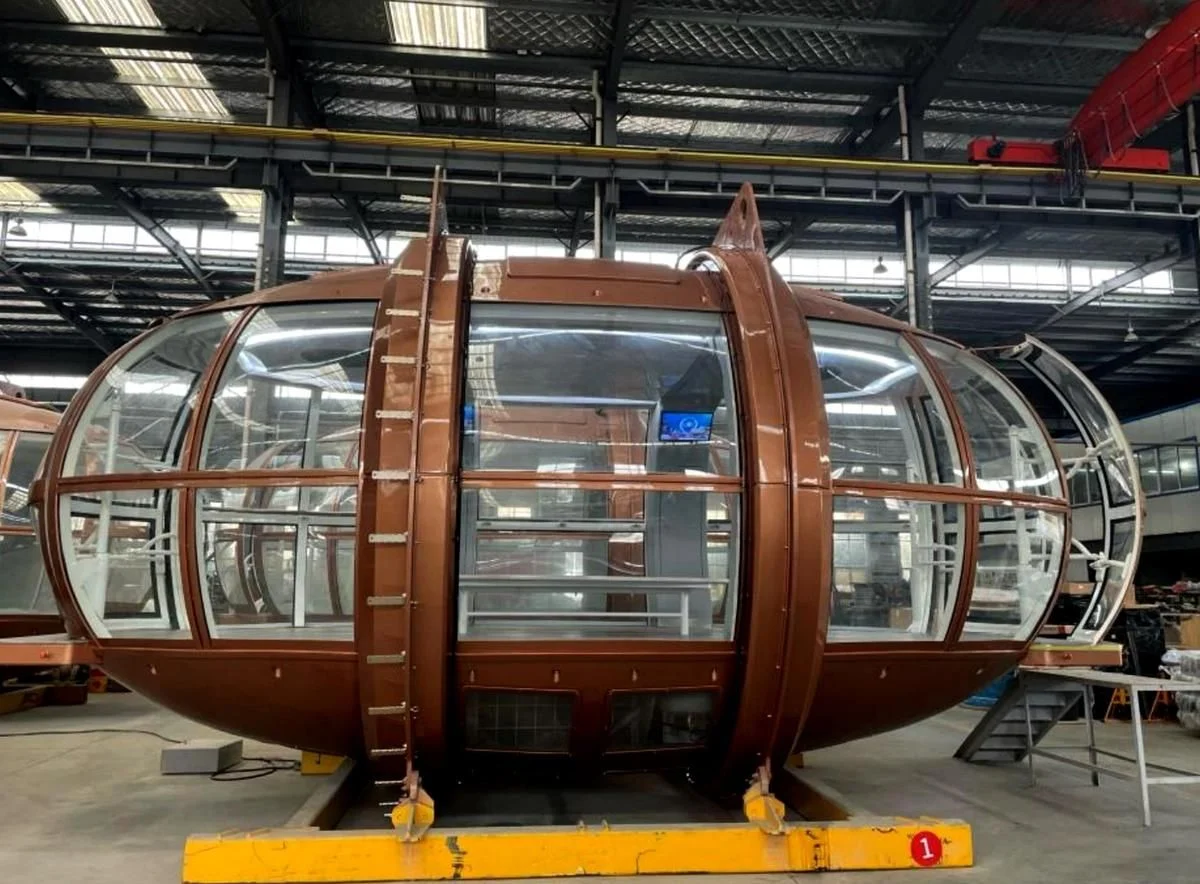
A capsule blueprint has emerged for the Amaravati Eye, a massive observation wheel slated for construction near the Krishna River in Andhra Pradesh’s capital.
The capital city will host what is projected as the tallest observation wheel in the nation, eclipsing the famous London Eye. Planned at a height of 139 meters, the project intends to establish a major tourism hub, elevating the city’s profile while stimulating local commercial activity.
The giant observation wheel is planned for a prominent riverfront location along the Krishna River in Andhra Pradesh.
A techno-economic feasibility report prepared for the Amaravati Growth and Infrastructure Corporation Limited (AGICL) outlines the engineering roadmap. Available on the state’s e-procurement portal, the plan dictates development across a 5-acre site via a Design-Build-Finance-Operate-Transfer (DBFOT) public-private partnership spanning 30 years. An extra 1-acre parcel could be provided for commercial activities to maximize investment viability.
The designated site sits directly on the banks of the Krishna River within the capital zone.
The mechanism will feature a 128-meter diameter wheel outfitted with 28 air-conditioned, mechanically stabilized passenger capsules. Each cabin will normally hold 20 visitors, carrying a maximum load of 25. A full rotation cycle, encompassing passenger loading and unloading, will require approximately 27 minutes. Built for an operational life of 30 years or 300,000 cycles, the attraction will run up to 14 hours daily with a 95% annual reliability benchmark.
Plans incorporate a 2,000-square-meter elevated terminal building to manage ticketing, operations, retail shops, food outlets, and a wedding venue. A public waterfront plaza will offer additional dining and event infrastructure. The main frame will anchor to four concrete pile caps tied to 48 reinforced subterranean piles, each 1.2 meters wide and driven 30 meters deep. Structural safety will comply with international regulations including EN 13814, Eurocode 3, ASTM 2291, and ISO 13849.
The initiative aims to draw broad regional visitation.
The primary steel framework, including the main hub, structural spokes, wheel rim, and A-frame support system, carries an estimated price tag of ₹66 crore. Remaining capital will fund mechanical drives, passenger pods, computerized electrical controls, and foundational civil engineering works. Construction timelines target completion within 12 months of the initial groundbreaking.
Financial projections estimate opening-year ticketing sales at ₹30.23 crore, pushing total first-year revenues to ₹32.34 crore. The base project calculates a pre-tax internal rate of return (IRR) of 16.41% across the 30-year agreement, though integrating secondary commercial real estate pushes the IRR to 17.61%. State administrators project the landmark will attract millions of annual tourists, create jobs, and bolster local hospitality markets.
The infrastructure program highlights long-term regional development.
Investment structures prioritize sustainable public infrastructure growth.
Independent financial reporting validates the revenue projections for the development zone.
Detailed documentation is accessible via regional infrastructure portals.
Account management systems handle developer onboarding.
Initial registration windows remain open for qualified global engineering consortia.
The procurement round marks the first phase of commercial bidding.
The public submission portal tracks ongoing industrial proposals.
Future Outlook
The Amaravati Eye represents a fundamental shift in Andhra Pradesh’s tourism strategy, moving toward high-capital entertainment infrastructure. If construction finishes within the projected 12-month window, the attraction will anchor a broader riverfront revitalization program. State planners intend to use this project to draw parallel hospitality investments, including premium hotels and convention centers, transforming the Krishna riverfront into a primary economic corridor for the capital.
FAQs
What is the height of the proposed Amaravati Eye?
The observation wheel is designed to reach a total height of 139 meters, making it taller than the iconic London Eye and the tallest structure of its kind in India.
What is the investment model and timeline for the project?
The project will be executed using a Design-Build-Finance-Operate-Transfer (DBFOT) public-private partnership model with a 30-year concession period. Construction is scheduled to finish within 12 months of its starting date.
How many passengers can the Amaravati Eye accommodate?
The wheel will feature 28 air-conditioned capsules. Each individual capsule can comfortably hold 20 passengers, with a maximum capacity of 25 individuals per cabin during peak operating windows.
What are the expected financial returns for the development?
The standalone infrastructure project is projected to deliver a pre-tax internal rate of return (IRR) of 16.41%. With secondary commercial real estate development included, the estimated IRR climbs to 17.61%.