Apple and Microsoft Hike Hardware Prices Amid AI Storage Crunch
Global tech titan Apple has implemented steep price increases across major product lines in India, driven by surging international memory and storage costs. The adjustments affect MacBooks, iPads, Apple TV, and HomePods, though iPhones remain unaffected by the current inflationary wave.
Key Highlights
- Apple raised consumer hardware prices in India by 14% to 88% due to severe supply chain constraints.
- Microsoft joined the upward pricing trend, increasing global Xbox console retail rates by $100 to $150.
- AI data center expansion has monopolized component manufacturing, causing unprecedented spikes in RAM and NAND flash costs.
- The pricing announcement triggered a severe Wall Street sell-off, erasing 6% from Apple’s stock value in a single day.
Apple has increased the prices of many of its products such as MacBooks, iPads, Apple TV and HomePod devices between 14% to 88%.
Joining the bandwagon, Microsoft has also raised the prices of its Xbox console prices between $100 to $150 amid soaring hardware costs. The price of the Xbox Series S 512 GB console has been raised to $500 from $400 previously, while the flagship Xbox Series X 1 TB Disc now costs $800 as against $650 earlier.
Owing to massive demand from data center companies, manufacturers are prioritising high-margin AI chips, which has resulted in inflation in the consumer electronics space.
Amid soaring global memory and storage costs, big tech giant Apple has hiked the prices of its many key products in India. However, iPhones have so far been spared from the price increases, maintaining stability for the company’s biggest moneymaker and best seller.
The hikes impacted several of its products such as MacBooks, iPads, Apple TV and HomePod devices. Apple’s online store briefly went down yesterday and came back online with the updated price changes, which included raising the MacBook Air with 512 gigabytes of storage to $1,299 from $1,099.
“The consumer electronics industry is facing an unprecedented challenge… The rapid expansion of AI data centers has created an extraordinary surge in demand for memory and storage. We have never seen a component price increase this much, this quickly,” Apple said in a statement to CNBC.
The iPhone maker also reportedly said that it has “reached a point where we need to begin raising prices on a number of products,” adding that it was working to find solutions after shielding customers from these increases for as long as possible.
As a result, Apple has increased the prices of many of its products between 14% to 88%. While the entry-level MacBook now costs ₹79,900 as against ₹69,900 previously, the flagship MacBook Pro 14-inch now comes with a price tag of ₹2.39 Lakh as against ₹1.69 Lakhs, while the 1 terabyte variant climbed to $1,999 from $1,699.
On similar lines, the price of the base iPad model was hiked by ₹15,000 to ₹34,900, while iPad Mini and the 13-inch iPad Pro (M5) now cost ₹49,900 (up ₹20K) and ₹1.29 Lakhs (₹70K hike), respectively, alongside the iPad Air with 128 gigabytes jumping from $599 to $749.
On the home entertainment front, the original equipment manufacturer (OEM) has increased the prices of HomePod Mini by ₹5,000 to ₹15,900, while the cost of HomePod has jumped by ₹12,000 to ₹44,900. The prices of the 64 GB and 128 GB variants of Apple TV 4K now stand at ₹25,900, up from ₹14,900, and ₹31,900, up from ₹16,900, respectively.
The announcement of the price hikes led to Apple stock shedding more than 6%, as of 1:52 AM IST, marking its worst day since early 2025 and wiping out hundreds of billions of dollars in market capitalisation. Corporate peer Dell also dropped more than 8% as analysts noted rivals may face even harsher adjustments.
Notably, this comes barely a week after Apple CEO Tim Cook told a publication that price increases were “unavoidable”, driven by a surge in the cost of memory and storage chips, signaling to Wall Street that pricing power limits are being tested.
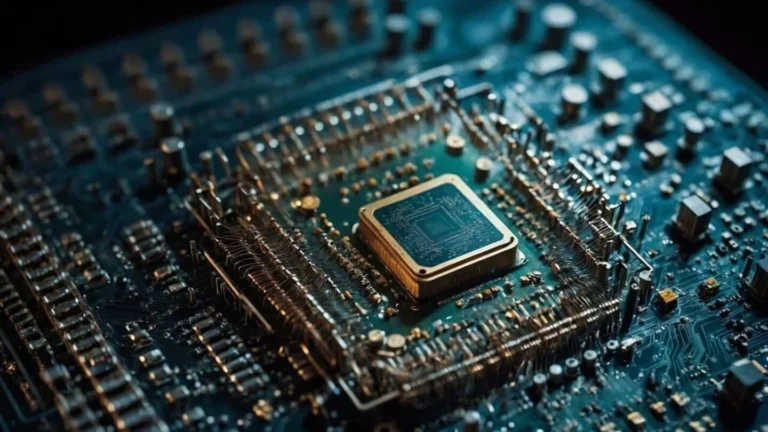
Largely to blame for the price increases has been the massive demand for RAM and NAND flash by companies building data centers. As a result, memory manufacturers are prioritising supplying high-margin AI data center chips, which has resulted in consumer electronics makers facing tight supply and severe cost inflation.
Apple has shot up the prices of its devices, iPads and Macbooks, on Thursday. Chief Executive Tim Cook had already warned that the higher prices are inevitable. The reason is the heavy memory chip demand, a victim of the AI boom and massive data centers.
The price hike is expected to have a direct financial bearing on Apple India, which has been scaling up its retail presence in the country. Earlier this year, the company recently opened its sixth retail store in the country, launching a new outlet in Mumbai’s Borivali.
Last month, CEO Cook said that it was wonderful to see how Apple had grown in India in recent years, terming the country a “huge opportunity” for the tech giant. As per the company, India witnessed double-digit growth in Mac revenue in Q2 FY26, while iPad sales also saw strong traction in the country during the quarter.
Micron locks in high prices for years
The root of the problem lies with memory makers like Micron, which have a reason to keep prices high for years to come.
On Wednesday, Micron said it had found a way to hold prices up for another five years by signing 16 “strategic customer agreements,” or SCAs, that lock in a floor price the company says brings “a very robust gross margin for Micron, well above our peak quarterly margins in any past cycle.”
Micron Chief Executive Sanjay Mehrotra laid out the deals in prepared remarks on the company’s third-quarter earnings call.
He said most of the 16 agreements run from 2026 to 2030. Each one ties a buyer to a set amount of product paid for within a price band that has both a floor and a ceiling. The floor locks in those high margins, while the ceiling shields buyers if memory prices climb even higher.
Mehrotra said customers were willing to commit despite the rich margins because they expect shortages to last.
“Our customers are recognizing that supply shortages in memory and storage will take considerable time to improve,” he said. “Even as we expect industry supply to improve gradually in 2028, we currently do not have line of sight as to when memory supply will be able to catch up with increasing demand.”
Why new factories won’t fix it soon
He said building new chip plants offers little quick relief, because more complex memory takes longer to produce, and even when new plants open, there still will not be enough room to make both the high-bandwidth memory needed for AI and the other types of NAND and DRAM.
“Supply is structurally constrained in its growth and ability to meet industry demand, despite our comprehensive efforts to increase supply,” he said.
The SCAs do not lock up all of Micron’s stock. Mehrotra said the deals will make up 40% of the company’s revenue, leaving most of its supply free to sell at prices it can bargain over.
He offered one piece of good news, saying Micron’s DRAM output in 2026 should “grow in the low- to mid-20s percentage range, slightly above our prior outlook.” He also noted that SCA customers pay up front, which helps Micron fund the expansion of its plants.
Prices for dynamic random access memory rose as much as 98% in the first quarter of 2026 and could climb another 58% to 63% this quarter, according to TrendForce, a surge some have called “RAMageddon.” Market experts, including research directors at IDC, warn that despite tactical announcements ahead of seasonal hardware cycles, the core iPhone line may inevitably face its own price hike next.
Future Outlook
The consumer tech landscape faces long-term structural inflation through at least 2030 due to Micron’s newly secure strategic customer agreements. With production lines heavily weighted toward premium high-bandwidth memory for AI infrastructure, traditional consumer storage supplies will remain constrained. Industry analysts expect competing hardware manufacturers to echo Apple and Microsoft by raising consumer electronics prices globally as raw component costs continue their upward trajectory.
FAQs
Why did Apple raise the prices of MacBooks and iPads in India?
Apple raised prices due to unprecedented cost inflation in the global memory and storage supply chain. The explosive expansion of AI data centers has created massive hardware demand, forcing component manufacturers to prioritize high-margin enterprise AI chips over consumer electronics components.
By how much did Apple and Microsoft increase their hardware prices?
Apple increased its product prices in India between 14% and 88%, impacting devices like MacBooks, iPads, Apple TV, and HomePods. Concurrently, Microsoft raised its global Xbox console pricing by $100 to $150 due to identical component supply pressures.
Are iPhone prices affected by these component cost increases?
iPhones have currently been excluded from this round of price increases. However, supply chain experts and market research analysts suggest that an iPhone price hike may be unavoidable in the near future as structural memory shortages persist.
Why won’t building new chip factories immediately solve the hardware shortage?
New semiconductor plants require significant time to construct, and contemporary advanced memory is highly complex and time-consuming to manufacture. Furthermore, upcoming production capacity is already heavily allocated to high-bandwidth memory for artificial intelligence, leaving insufficient capacity for standard DRAM and NAND flash.