Representative Jayapal Demands Urgent Immigration System Reform Amid ICE Abuses
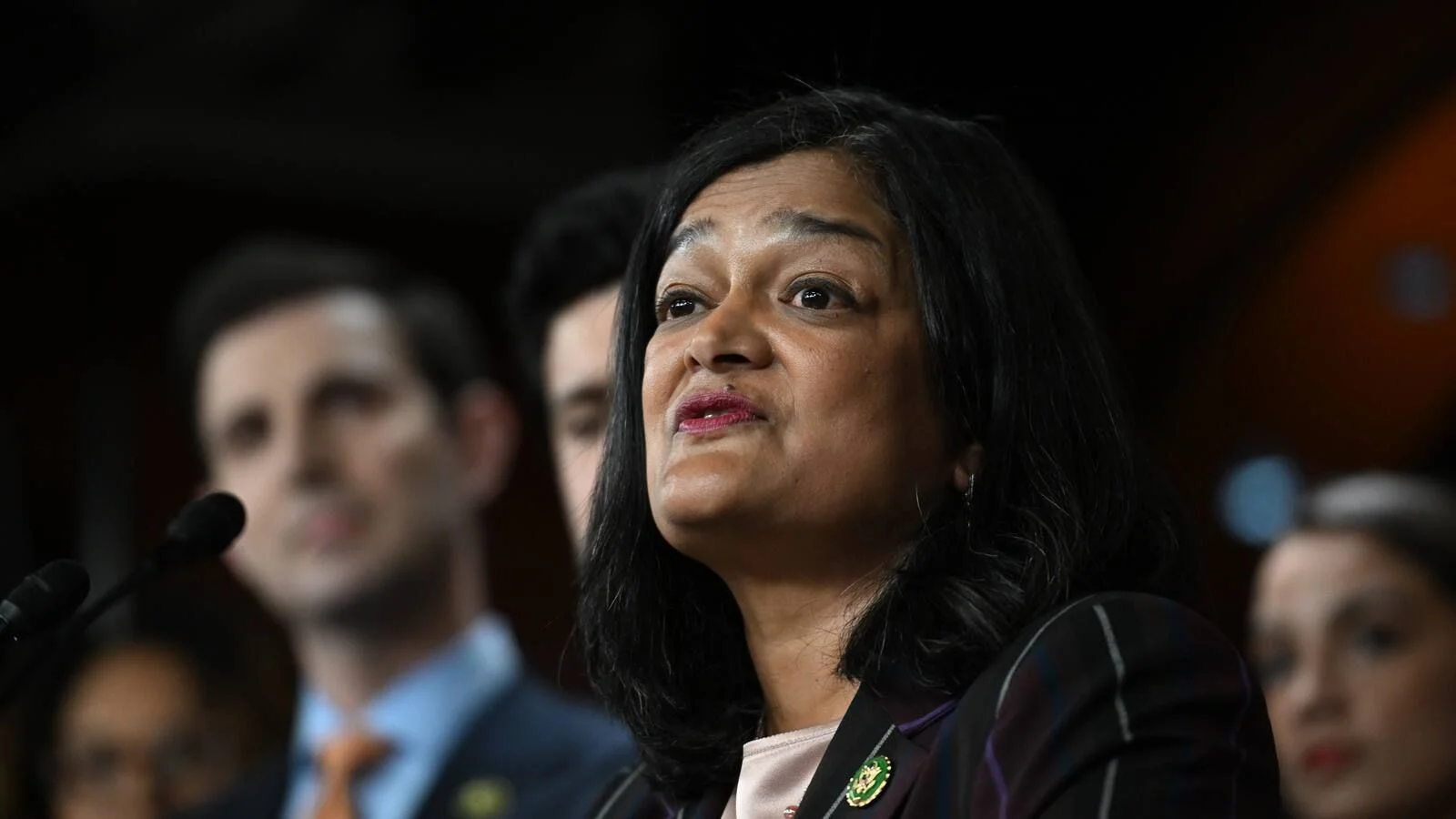
US Representative Pramila Jayapal has launched a fierce critique of the current American immigration framework, labeling it broken and inhumane. Drawing from her personal journey as an immigrant, the congresswoman calls for comprehensive legislative overhauls to combat federal enforcement abuses and restore accessible pathways to legal citizenship.
Key Highlights
- Representative Pramila Jayapal waited 17 years and navigated multiple visas to secure her citizenship.
- The congresswoman has led congressional hearings titled “Kidnapped and Disappeared” to expose immigration enforcement abuses.
- Congress has failed to pass meaningful, comprehensive immigration reform legislation for more than 30 years.
- Public backing has reached record levels for dismantling profit-driven detention facilities and establishing paths to citizenship.
The Nation, established by abolitionists in 1865, has historically documented political and cultural developments as an independent, progressive publication.
My personal journey toward obtaining United States citizenship was protracted and complex, mirroring the experiences of numerous immigrants. Born in Chennai, India, my upbringing spanned India, Indonesia, and Singapore under parents who prioritized American higher education. Consequently, at age 16, I migrated alone to the United States using my family’s remaining savings for college.
Securing citizenship required 17 years, multiple academic degrees, and an extensive succession of temporary visas. My final step involved marrying a United States citizen, which granted me a green card. This occurred simultaneously with receiving a two-year fellowship to work in India.
Our family strategy involved establishing a pregnancy near the conclusion of the fellowship to return to America for birth. This plan was disrupted when my daughter was born prematurely in India at 26.5 weeks, weighing 1 pound, 14 ounces. Doctors projected a 40% survival rate, and I stayed by her side.
Prioritizing her survival risked my permanent residency status. Through institutional advocacy, the United States embassy restored my green card under the condition that my accumulated residency years toward citizenship were erased. I accepted the terms to remain with my daughter until she could safely fly to America.
Submit a guest post to Ripple
Prospective contributors can submit article ideas to Ripple to receive structural guidance and feedback. Accepted opinion pieces and analyses may be published directly on the platform.
The medical crisis intensified my resolve to secure citizenship and eliminate the threat of family separation. Following the mandatory three-year waiting period, I successfully cleared the naturalization examinations and received final approval.
Even 26 years later, the memory of completing that process remains vivid. Inside the Seattle Immigration and Naturalization Service building, I joined hundreds of global applicants, including refugees fleeing persecution, individuals reuniting with families, and international workers.
We renounced our original citizenships, waved American flags, and swore allegiance to the nation. The moment brought a mixture of pride regarding my new status and grief over relinquishing my Indian citizenship, realizing I would no longer reside on the same continent as my parents.
This transition generated a deep obligation to engage in democratic systems and preserve opportunities for future immigrants. I transitioned into public service as an activist organizing for immigration reform, higher minimum wage policies, and expanded labor protections.
My path progressed to the Washington State Senate, where I served as the sole woman of color. Later, I became the first South Asian American woman elected to the United States House of Representatives. Currently, I serve as the first naturalized citizen ranking member of the House Judiciary Subcommittee on Immigration.
As the nation approaches its 250th anniversary, systemic barriers have placed the American dream beyond reach for most applicants. The federal administration has deployed government mechanisms to intimidate immigrant populations and citizens alike through armed, masked enforcement teams.
These operations have led to the incarceration of thousands within profit-driven centers, infringements on constitutional speech, and family separations. Concurrently, traditional legal pathways toward regularized status have been dismantled, replaced by xenophobic policies designed to protect concentrated billionaire wealth.
American identity remains fundamentally linked to immigration, shaped by a historical tension between exclusion and multicultural opportunity. Compounding these dynamics is the failure of Congress to execute comprehensive updates to immigration law for more than 30 years.
The closest legislative resolution occurred in 2013 when the Senate approved a bipartisan reform package. However, House Republicans blocked the bill from receiving a floor vote to preserve immigration as a cyclical campaign issue.
The contemporary enforcement framework restricts national progress while fostering societal division. While immigration operates under civil statutes, executive actions have attempted to criminalize the process entirely, including efforts to eliminate birthright citizenship guarantees.
Despite institutional hostility, domestic public opinion consistently views immigration as a positive national asset. Government overreach has driven public support to record levels for restructuring enforcement agencies and ending corporate detention contracts.
Through the “Kidnapped and Disappeared” congressional hearing series, I have documented institutional abuses while elevating grassroots organizers. Testimonies from diverse witnesses emphasize widespread resistance to enforcement violence, which has generated successful legal challenges and political shifts.
The immediate legislative objective remains passing statutory reforms to fix the broken framework. In 1787, Benjamin Franklin described the new government as a republic if citizens could maintain it, framing America as a continuous promise.
Preserving that systemic promise depends on collective civic action. My ongoing legislative work is sustained by the endurance of migrants, undocumented grandmothers, and young Dreamers who insist that the nation fulfill its foundational obligations.
Future Outlook
The legislative battle over American immigration policy is expected to intensify heading into the next congressional cycle. With public sentiment shifting toward systemic transparency, lawmakers face mounting pressure to address the 30-year legislative gridlock. Policymakers are increasingly focusing on scaling back profit-driven detention contracts and establishing clear, updated pathways to permanent residency to stabilize the domestic workforce.
FAQs
Who is Representative Pramila Jayapal?
Pramila Jayapal is an American politician serving as the U.S. Representative for Washington’s 7th congressional district. She is the first South Asian American woman to serve in the House of Representatives and is the first naturalized citizen to hold the position of ranking member on the House Judiciary Subcommittee on Immigration.
When did Congress last pass a major bipartisan immigration reform bill?
The United States Senate last passed a comprehensive, bipartisan immigration reform bill in 2013. However, the legislation was blocked from a floor vote in the House of Representatives and did not become law.
What is the focus of the “Kidnapped and Disappeared” congressional hearings?
The congressional hearings titled “Kidnapped and Disappeared” are led by Representative Jayapal to investigate and expose human rights abuses within Immigration and Customs Enforcement (ICE). The hearings provide a platform for frontline organizers and impacted individuals to testify about federal enforcement actions.