FIDE Presidential Election 2026 Race Heat Up
The global chess federation enters a critical phase as the deadline for leadership nominations approaches rapidly.
Key Highlights
- Incumbent Arkady Dvorkovich seeks re-election with strong institutional backing despite ongoing international scrutiny.
- German billionaire Wadim Rosenstein emerges as a prominent potential outsider challenger.
- English organizer Malcolm Pein positions himself as the reform candidate leading anti-Russian campaigns.
- The final vote takes place during the upcoming Chess Olympiad in Samarkand this September 2026.
Only a few days remain before the official entry window shuts for the 2026 FIDE presidential election.
Contenders must finalize their official running tickets by June 26, 2026, prior to the campaign kickoff. Currently, the sitting leader Arkady Dvorkovich remains the sole declared candidate.
However, discussions are intensifying around two specific figures who could challenge the leadership position when federation delegates assemble in Samarkand.
This upcoming vote determines the executive leadership of the global chess governing body for the next four years. The position blends sports governance, international diplomacy, and the administrative oversight of approximately 200 national chess associations.
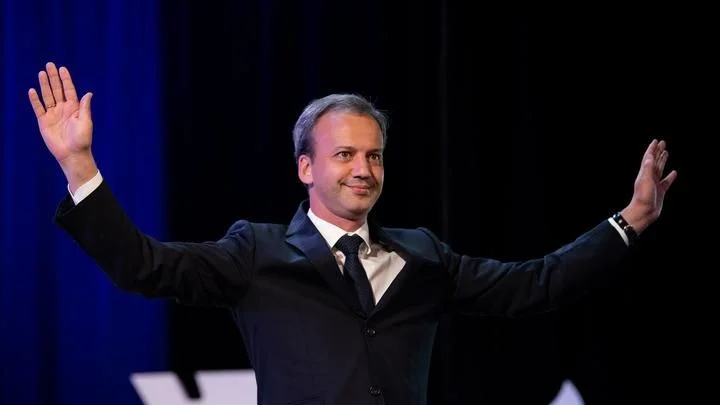
Arkady Dvorkovich
The current president maintains his status as the frontrunner.
Dvorkovich secured the presidency in 2018 and maintained control during the highly polarized 2022 election cycle. Despite geopolitical tensions following the military escalation in Ukraine, he won re-election by defeating Ukrainian Grandmaster Andrii Baryshpolets 157 votes to 16.
Supporters credit his administration with expanding commercial revenue, enhancing premier tournaments, and capitalising on the post-pandemic digital chess surge. The sport has attained significantly higher corporate visibility globally.
Dvorkovich originally assumed leadership following a period of deep instability under Kirsan Ilyumzhinov, who faced severe financial sanctions from the United States government.
He entered the 2018 race late after Ilyumzhinov withdrew. Backed by the Chess Federation of Russia, Dvorkovich defeated long-time executive deputy Georgios Makropoulos, who currently leads the Greek Chess Federation.
The incoming president stabilized operations quickly, appointing Indian Grandmaster Viswanathan Anand as his deputy ahead of the 2018 World Championship match.
Simultaneously, his administration faces persistent criticism regarding the historical, multi-decade link between FIDE leadership and Moscow. Multiple Western federations continue to view this administrative connection as an undesirable external influence.
Scrutiny intensified due to Dvorkovich’s former political rank as Russian deputy prime minister and the controversial abolition of presidential term limits in 2023.
Nevertheless, political analysts expect the 54-year-old executive to command broad structural support across global voting blocks. He leverages eight years of international diplomatic travel and direct state backing.
Wadim Rosenstein
German industrialist Wadim Rosenstein has triggered substantial electoral speculation as a well-funded challenger. While he has not launched an official bid, his administrative movements suggest preparation for a campaign.
The billionaire gained prominence by establishing WR Chess, investing heavily in private elite tournaments and team leagues.
Rosenstein recently secured a formal role within German chess administration after being elected as the official FIDE delegate for the German Chess Federation.
The businessman recently participated alongside former World Champion Magnus Carlsen at the FIDE World Team Rapid and Blitz Championship in Hong Kong.
Speculation mounted earlier this year when Rosenstein offered private capital to relocate the high-profile Candidates Tournament on short notice. FIDE leadership ultimately declined that venue proposal.
His formal candidacy hinges on whether dissenting Western federations unify behind a single consensus opponent to challenge the incumbent.
As a newer political figure, Rosenstein has faced less administrative investigation. He maintains family ties to Russia and Ukraine and states he dissolved all previous corporate connections to Moscow.
However, he faced public criticism in May 2022 after being photographed playing chess in Moscow with Grandmaster Sergey Karjakin.
IM Malcolm Pein
International Master Malcolm Pein represents a highly experienced institutional alternative in British chess circles.
The executive manages Chess Magazine, operates the Chess in Schools and Communities charity, and directs the annual London Chess Classic.
In April 2026, Pein announced his readiness to contest the presidency under specific conditions, subsequently drafting a campaign platform.
Pein centers his strategy on structural governance reform, financial transparency, and reducing state influence within FIDE. He previously ran on the Makropoulos ticket in 2018.
Serving as the United Kingdom FIDE delegate, Pein consistently opposes Russian administrative influence, leading a loose coalition of Western nations.
His camp focuses on consolidating votes across France, Ireland, the United States, and the Nordic region. However, his ability to secure majorities across Africa, Asia, and South America remains unproven.
But It Could All Change—Fast
FIDE executive elections rely entirely on individual national delegate votes rather than player consensus.
Winning a campaign demands months of complex continental diplomacy, strategic alliances, and direct inter-governmental negotiations.
The candidate field will lock as the Samarkand General Assembly nears. The upcoming nomination deadline will dictate whether the race becomes a binary contest or a three-way corporate battle.
Political analysts expect a volatile campaign period characterized by intense public lobbying and personal scrutiny between rival camps.
Future Outlook
The outcome of the September 2026 election in Uzbekistan will shape commercial chess sponsorship for the next decade. As corporate backing shifts toward tech platforms and streaming rights, the incoming administration must balance traditional tournament structures with digital entertainment models. Navigating international sanctions while maintaining a unified global federation will remain the primary diplomatic challenge for whoever secures the presidency.
FAQs
When is the deadline for FIDE presidential nominations?
Candidates must officially submit their complete running tickets by June 26, 2026, before the active campaigning window opens.
Where and when will the 2026 FIDE presidential election take place?
The election vote will be conducted by member delegates during the FIDE General Assembly at the Chess Olympiad in Samarkand this September 2026.
Who is the current president of FIDE?
Arkady Dvorkovich is the incumbent president, having led the international chess governing body since his initial election victory in 2018.
How are FIDE presidential elections decided?
Unlike traditional sports tournaments, the president is chosen via a democratic vote where each registered national chess federation delegate casts one equal ballot.