India Women Face T20 World Cup Batting Order Dilemma
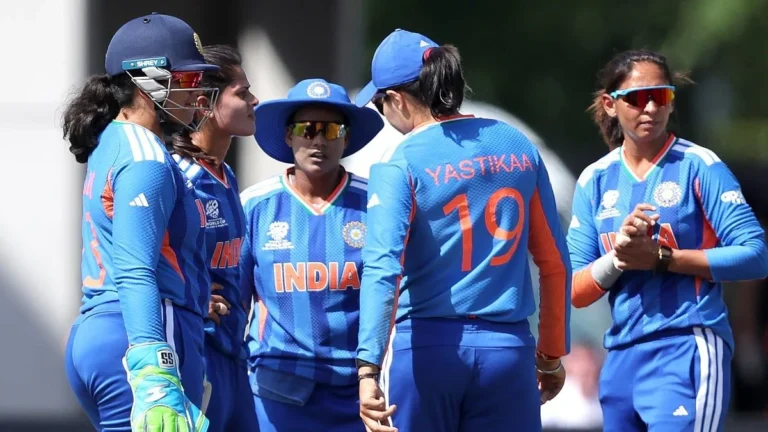
The Indian women’s cricket team faces a critical tactical dilemma regarding their number three batting position ahead of a decisive T20 World Cup fixture against South Africa, as management attempts to stabilize a misfiring middle order and finalize roles before the tournament reaches its knockout stages.
Key Highlights
- Middle-order instability has forced management to alternate between Bharti Fulmali and Yastika Bhatia.
- Head coach Amol Muzumdar has demanded greater intent and purpose from top-order batters during net sessions.
- Bowling coach Aavishkar Salvi defended the “horses for courses” strategy despite recent top-order failures.
- Altering the top order risks forcing established stars into unfamiliar batting positions.
Fresh from a strong performance against Pakistan, Richa Ghosh endured a challenging practice session on Tuesday, a day prior to India’s encounter with the Netherlands. Disturbed by the variable pace of Nandni Sharma’s bouncers, Shafali Verma’s unpredictable deliveries, and a local net bowler mimicking Debashish Mohanty’s action, Ghosh replaced her bat after repeatedly losing her edge.
During that brief intermission, Bharti Fulmali took her turn in the nets while Ghosh rehearsed her wrist movements. Fulmali immediately lofted a delivery from Shafali toward the leg side, generating a shot that lacked the power to clear the inner ring.
Head coach Amol Muzumdar openly expressed dissatisfaction with the stroke. In his evaluation, the effort constituted a useless shot, and he instructed the batter to either strike the ball with maximum power or find gaps along the ground to ensure meaningful runs.
Fulmali, who completed a remarkable return to the international squad at 31 years old, occupies a vital role in India’s campaign for an inaugural T20 championship. She must deliver the boundary-hitting power seen in domestic cricket and the Women’s Premier League, while simultaneously defending her place against competing teammates.
During the international window preceding the World Cup, India’s experimentation with Yastika Bhatia produced inconsistent outcomes following her recovery from injury. Bhatia attacked during the initial powerplay but faltered immediately afterward, watching her scoring rate plummet from 202 to 85 once field restrictions lifted.
While her strike rate of 128.68 across 168 runs in four matches remained respectable for an athlete returning from a nine-month injury absence, the performance failed to resolve India’s structural batting issues.
The ongoing tactical dilemma remained unresolved throughout the official World Cup warm-up fixtures. Fulmali failed to seize her opportunity during the tournament opener against Pakistan, falling to a stumping on her third delivery, which prompted management to select Bhatia for the subsequent match against the Netherlands.
Bhatia suffered an identical fate in that fixture, thrown off balance and dismissed on her fourth delivery while attempting a similar attacking stroke.
Fulmali has registered useful performances against South Africa and the ECB Development XI since making her return, yet those contributions have not permanently secured her spot. Bhatia claimed the initial net sessions against new bowlers, though utilizing her at number three would force major adjustments.
Altering the top order means either Harmanpreet Kaur or Jemimah Rodrigues must slide out of their preferred slots.
This specific selection vacancy creates wider complications because India’s middle order, excluding Ghosh, has failed to score consistently, leaving the lineup with limited depth beyond the number 7 position.
Bowling coach Aavishkar Salvi downplayed these selection concerns, insisting the squad maintains absolute faith in preparation strategies developed across recent training camps and practice matches.
Salvi stated on Friday that the coaching staff approaches every fixture with an analytical perspective regarding the pitch conditions and opposition strategies. He emphasized that selection operates strictly on a situational basis rather than individual reputation.
The coach confirmed that role definitions are finalized and players focus entirely on game situations rather than fixed batting numbers. He expressed confidence that the squad can transition between aggressive hitting and consolidation because they rehearsed those specific match simulations throughout their preparatory camps.
Management believes the current roster possesses complete clarity regarding on-field responsibilities. Salvi concluded that while high-risk strategies occasionally result in failure, the team remains aligned with its overarching tactical objectives heading into tougher matches.
As tournament pressures intensify, establishing a settled batting order will dictate India’s championship aspirations. The management faces a clear choice between two distinct options to resolve their top-order instability.
Future Outlook
The upcoming group stage match against South Africa will likely determine India’s tactical blueprint for the remainder of the tournament. Should the selected number three batter fail to solidify the top order, the coaching staff may be forced to alter the positions of core veteran players, a risky adjustment with semifinal spots on the line.
FAQs
Why is India’s number three batting position currently contested?
The team management is searching for a balance between aggressive power-hitting and top-order stability, leading to an ongoing selection battle between Bharti Fulmali and Yastika Bhatia.
What did bowling coach Aavishkar Salvi say about the team selection?
Salvi stated that India follows a “horses for courses” strategy, selecting the playing eleven based entirely on pitch conditions and opposition tactics rather than sticking to a rigid lineup.
How have Bharti Fulmali and Yastika Bhatia performed in the World Cup?
Both players struggled to establish themselves in the early stages of the tournament, with each batter falling cheaply to stumping dismissals while attempting big hits in consecutive matches.