Why Curacao Qualified for the 2026 World Cup and India Failed
Curacao has secured a spot in the 2026 World Cup, contrasting sharply with India’s elimination during the AFC qualifying rounds. The achievement by the Caribbean island exposes deep systemic issues within Indian football, where administration and an overwhelming focus on cricket hinder grassroots growth despite immense local enthusiasm.
Key Highlights
- Curacao became the smallest nation to qualify for the 2026 World Cup with 7 wins and 3 draws.
- India, despite its population of 1.4 billion, failed to advance past the AFC qualifiers after losing to Qatar in June 2024.
- Experts point to bureaucratic hurdles, lack of grassroots contracts, and extreme cricket dominance as primary obstacles for India.
- Curacao benefits from its association with the Netherlands, deploying dual-nationality players trained by elite Dutch coaches.
Curacao is a compact island territory situated in the Caribbean region.
Characterized as a Dutch Caribbean territory, Curaçao is recognized for its cove beaches and expansive coral reef networks teeming with marine organisms. The administrative center, Willemstad, features pastel-toned colonial buildings, the floating Queen Emma Bridge, and the 17th-century Mikvé Israel-Emanuel Synagogue with its distinct sand floors. It serves as an entry point to western coastal areas like Blue Bay, a renowned diving destination.
The total population of Curacao reaches approximately 156,000 individuals. To put this in perspective, it requires 218 duplications of Curacao to equal the population of Delhi, 135 for Mumbai, and 56 for Ahmedabad. It would take 9,000 instances of Curacao to equal the population of India.
Despite possessing a minimal population base, Curacao successfully earned a place in the 2026 World Cup. Conversely, India, with a populace of 1.4 billion, has never achieved qualification for the tournament.
Curacao maintained an undefeated record through its World Cup qualifying campaign, securing 7 victories and 3 draws. India faced elimination in the AFC qualifying stage, finishing lower than Qatar and Kuwait. A decisive loss to Qatar in June 2024 concluded the competitive aspirations of the Indian squad. India struggled to progress past Asian metrics when attempting tournament qualification.
This competitive outcome does not indicate an absolute absence of skilled players or athletic drive within India.
An analytical review indicates that most stakeholders, including active athletes, identify two primary structural factors.
The initial factor involves internal bureaucracy alongside extensive administrative and governance blockades.
The secondary factor is widely recognized, involving the disproportionate dominance in corporate sponsorship, media exposure, and structural priority granted to the sport of cricket.
The successful qualification of Curacao for the 2026 World Cup indicates that population metrics do not dictate international sporting outcomes. Croatia, maintaining a population under 4 million, previously secured positions in World Cup finals and semifinals. Uruguay, with fewer than 3.5 million citizens, has claimed 2 World Cup titles. Iceland, with a population under 400,000, has similarly qualified for major global tournaments.
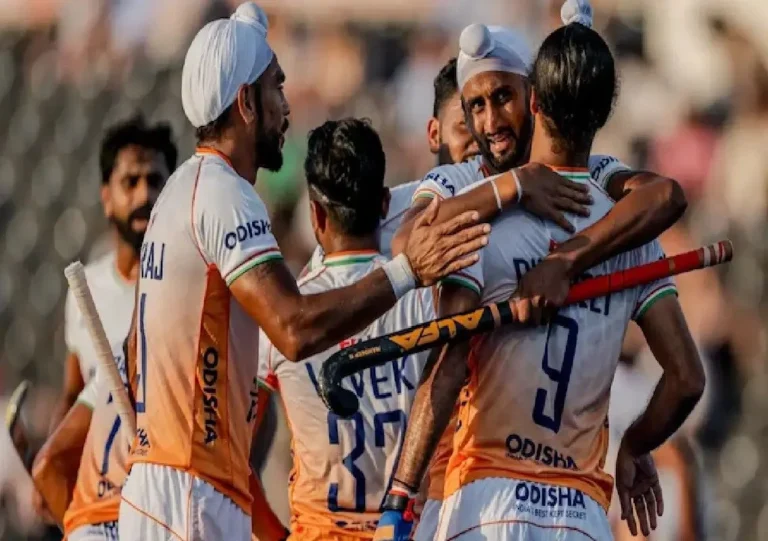
Curacao currently stands as the lowest-population nation competing in the World Cup matches. Statistically, it requires 9,000 individual Curacaos to match the aggregate Indian population, emphasizing India’s massive scale. However, outside of cricket, India has struggled to achieve peak international results in other disciplines, including field hockey. While the country aims for future Olympic success with cricket’s planned inclusion in 2028, the core objective remains building and funding diverse sporting paths. Because Curacao functions as a self-governing constituent country of the Netherlands, the nation receives extensive administrative assistance from Dutch systems regarding football advancement. Situated in the Southern Caribbean Sea, the island rests 65 kilometers away from Venezuela, requiring roughly 1 hour of travel time.
Above: Indian Football Team
India, representing the global peak in population, has historical football experience against Curacao. During the 2019 King’s Cup hosted in Thailand, Curacao achieved a 3-1 victory over the Indian roster. Curacao’s victory demonstrated that the primary dilemmas facing Indian football exist beyond the field boundaries.
This reality does not imply a lack of public passion for football within India. The discipline maintains substantial popularity in regions like Kerala, Kolkata, and Goa, while local football clubs expand within smaller municipalities from Lucknow to Ahmedabad. Former national team captain Baichung Bhutia noted that talent exists across the country, but India lacks an adequate competitive environment. Bhutia stated that the country lacks a structured grassroots initiative paired with long-term planning, leaving football popular globally but leaving India without a presence.
This trend is not uniform across the Asian football sector. Although China mirrors India by missing out on World Cup qualifications, nations including Iran, Japan, Jordan, South Korea, Uzbekistan, Saudi Arabia, Qatar, and Iraq have entered the global tournament. Both Uzbekistan and Jordan secured entries for the 2026 World Cup, marking their initial appearances. Uzbekistan holds the global No. 50 ranking and Jordan holds No. 63, whereas India dropped to No. 138 out of 211 global football associations. Pakistan maintains a ranking of No. 198.
In contrast to Curacao, India operates under complex bureaucratic networks and state interventions, which limits foreign passport holders of Indian heritage from entering the national squad. While cricket maintains pervasive social recognition, few citizens can identify 3 active Indian football athletes. The All India Football Federation launched the Indian Super League in 2014, yet its long-term viability remains uncertain. Government bodies have not matched cricket’s financial backing, and the federation continues to face difficulties securing corporate backing. Former captain Sunil Chhetri suggested India establish incremental targets, focusing heavily on structured training and Asian tournament performance. To advance, the national federation requires policies allowing Overseas Citizens of India cardholders to join national selections. This specific tracking system aided Curacao’s qualification, as multiple players reside in the Netherlands and receive instruction from professional Dutch trainers.
During the ongoing FIFA World Cup, 4 athletes of Indian descent are competing for alternative nations: Tahsh Mohammed for Qatar, Nishan Velupillay for Australia, Sarpreet Singh for New Zealand, and Samuel Moutoussamy representing Congo. Ahmedabad secured hosting rights for the Commonwealth Games, and Gujarat targets a potential Olympic hosting bid for 2032. Large financial resources are allocated toward physical venues. However, the direct benefits to local athletes remain unclear compared to investments in youth coaching, competitive leagues, and direct player development systems. Furthermore, until 2026, no formal sports educator hiring drives occurred in Gujarat for 15 years before a recent state announcement. The system utilizes temporary sports assistants on 11-month contracts with minimal compensation. These assistants receive lower compensation parameters than standard daily laborers without career benefits. India could achieve stronger athletic outcomes by funding educators, coaches, and youth prospects rather than focusing spending on large event venues where domestic athletes lack competitive advantages.
India possesses the population base and intrinsic talent to operate as an international sports power, but the primary barrier remains constructing and maintaining the foundational sports environment.
Curacao faces difficult odds in securing tournament wins and has experienced a loss against Germany, but tournament victory remains a secondary point. The core issue centers on how a micro-nation like Curacao secures World Cup qualification while India remains excluded.
Also Read: Amit Shah Says Ahmedabad To Become “Sports Capital” Of India
FAQs
Why did Curacao qualify for the World Cup while India failed?
Curacao advanced due to an undefeated qualifying run of seven wins and three draws, utilizing dual-nationality players trained by Dutch coaches. India was eliminated in the AFC stage behind Qatar and Kuwait due to bureaucratic restrictions on overseas players and a lack of grassroots infrastructure.
What is India’s current FIFA ranking compared to other Asian nations?
India has fallen to the No. 138 position out of 211 registered football nations. In comparison, newly qualified Asian teams like Uzbekistan and Jordan hold the No. 50 and No. 63 spots globally, while Pakistan is ranked at No. 198.
Can Overseas Citizens of India play for the Indian national football team?
No. Current government regulations and bureaucratic policies prevent foreign passport holders or Overseas Citizens of India cardholders from representing the national team, a policy that contrasts with Curacao’s strategy of utilizing overseas talent.
Which players of Indian origin are playing for other countries in the World Cup?
Four distinct players of Indian descent are representing other nations in the tournament: Tahsh Mohammed for Qatar, Nishan Velupillay for Australia, Sarpreet Singh for New Zealand, and Samuel Moutoussamy for Congo.