Kolkata Warehouse Collapse: Death Toll Rises to Nine Amid Structural Safety Audit
The catastrophic collapse of an under-construction warehouse in the Taratala area of Kolkata has resulted in 9 fatalities and left more than 20 laborers injured. The industrial disaster has triggered intense scrutiny regarding building authorizations, port land documentation, and occupational safety measures at the site.
Key Highlights
- The collapse at Transport Depot Road killed 9 individuals and hospitalized 20 others.
- The West Bengal government announced Rs 10 lakh in compensation, alongside Rs 2 lakh from the Centre.
- Authorities arrested 5 individuals following initial investigations into the structural failure.
- All under-construction commercial projects approved under the prior local regime are suspended until July 31, 2026.
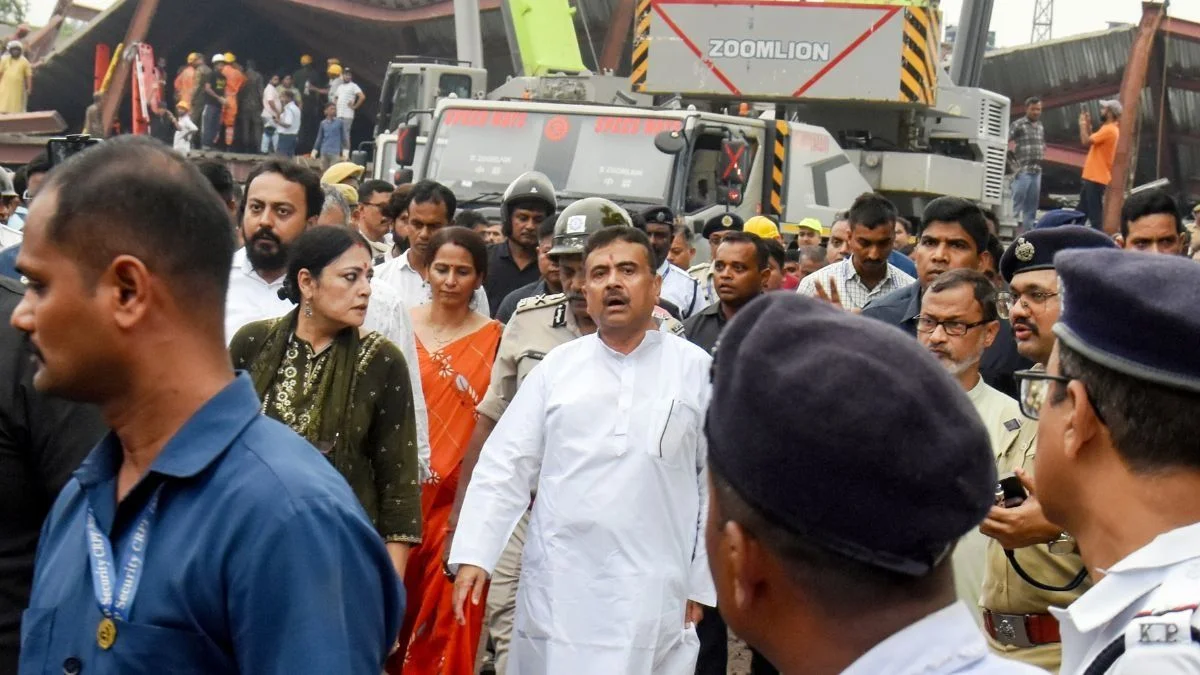
The infrastructure disaster occurred at approximately 12:07 pm on June 24, 2026, along Transport Depot Road within the Kolkata port jurisdiction. The incident initiated an extensive emergency response involving the Indian Army, national and state disaster forces, fire departments, and local police.
Emergency personnel operated through the night as multiple laborers remained trapped underneath distorted steel girders and heavy concrete fragments. Local community members reported that between 50 and 60 workers were inside the facility when the structure failed.
The commercial facility was under development on property belonging to the Syama Prasad Mookerjee Port. Kolkata Municipal Corporation (KMC) records show the plot was leased for 30 years in August 2024 to Behra Brothers, a tea warehousing firm.
The construction project was managed directly by the corporate entity’s proprietor, Shambhunath Behra. The disaster response intensified as emergency teams utilized hydraulic machinery and industrial torches to cut through mangled metal and clear access paths for survival extraction.
Following an official mobilization request from the state administration, the Eastern Command of the Indian Army deployed 4 military columns to reinforce the rescue zone.
“Every emergency agency is operating in tandem. Our teams successfully extracted 21 individuals, though 3 succumbed to their injuries,” stated leader Suvendu Adhikari during an on-site evaluation.
The fatality count escalated rapidly over the subsequent hours. Healthcare administrators confirmed that 20 impacted laborers were receiving emergency medical interventions at the SSKM Hospital, with 2 individuals remaining in critical condition.
The disaster has cast doubt on the structural integrity of the project and the administrative oversight that authorized the development. After surveying the wreckage, Adhikari noted that early evidence indicates the collapse was not triggered by weather-induced ground shifts.
“I am not an engineer. However, based on visual assessments and technical dialogues with structural experts, this layout failure does not stem from rain-driven soil displacement. Such shifts would not warp steel frameworks this way; the connections failed,” he noted.
The administrative leader added that initial reviews by municipal engineers point directly toward fundamental architectural flaws. “The structural blueprint utilized for this warehouse facility was inherently defective,” Adhikari stated.
The findings have placed the municipal approval registry under intense examination. The KMC formally approved the building logistics on January 17, 2026, while the regional port administration offered no objections to the development.
Nevertheless, official communications from the Calcutta Dock Labour Board Workmen’s Union (CDLBWU), an affiliate of the Centre of Trade Unions (CITU), reveal that safety warnings were filed weeks prior.
In a formal dispatch dated May 11, 2026, sent to the management of the Syama Prasad Mookerjee Port and the Union Ministry of Ports, Shipping, and Waterways, the labor union demanded transparency regarding Plot No. D-247/3.
The CDLBWU asserted that the estate office informed them on April 10, 2026, that internal registries held no records of a No Objection Certificate (NOC) or building authorization for the specific site.
Following the submission of verification paperwork by the union on April 18, 2026, the estate department acknowledged on April 24, 2026, that an NOC had been granted to M/s Behera Brothers. The union noted the bureau withheld the blueprint copies.
The labor organization demanded an immediate investigation into the licensing data, requesting the immediate delivery of authenticated layout plans, safety certifications, and ministerial permits connected to the Behera Brothers operation for public review.
The union communication also highlighted the operational presence of an individual named Asgar Hussain. The document alleged Hussain had a history of unauthorized property usage on port land and had run unlicensed transit operations.
The CDLBWU formally requested an immediate halt to all construction processes on the plot until the legal validity and safety framework of the warehouse project could be verified by independent inspectors.
The political fallout grew on June 24, 2026, when opposition leader Mohammed Salim stated that trade representatives had explicitly notified regulators regarding structural hazards. He alleged that safety warnings sent to the current administration were systematically ignored.
According to Salim, labor representatives filed a formal alert with the Kolkata Port Authority on June 11, 2026, citing severe structural danger and worker safety protocol deficiencies under the supervision of the active site contractor.
Nearby residents reported that the elevated metal roof of the warehouse had been visibly shifting since the early hours of June 24, 2026. Observers noted that laborers had climbed the framework to inspect the swaying moments before the failure.
The overhead structure collapsed entirely within seconds. Investigative sources noted that several laborers, including female workers, were housed within the industrial facility overnight, which significantly raised the total casualty count.
In a sweeping regulatory move, Adhikari announced an immediate operational freeze on all active commercial construction sites within the KMC jurisdiction that received authorizations under the previous government setup.
“I have instructed municipal directors and urban development departments to freeze operations at these developments, particularly those built over reclaimed water systems. Every project faces an immediate safety review,” he declared.
The construction ban will remain active until July 31, 2026. A specialized investigative coalition featuring public works, civil defense, fire safety, and municipal engineering experts will audit all active blueprints.
Law enforcement agencies have filed formal criminal charges and initiated site forensics. The incident has transitioned from an industrial accident into a multi-agency criminal inquiry into corporate negligence, regulatory failures, and public land management.
Future Outlook
The Taratala disaster is expected to reshape infrastructure oversight in urban West Bengal. The mandatory structural audit running through July 31, 2026, will likely enforce stricter engineering metrics for steel-frame commercial warehouses. Regulatory bodies are projected to implement automated compliance filing to eliminate discrepancies between port land registries and municipal building permissions, closing the loopholes exposed by trade unions.
FAQs
What caused the warehouse collapse in Taratala?
Initial engineering assessments indicate that the structural failure was caused by architectural blueprint deficiencies and connection failures within the steel framework, rather than soil displacement or weather-related issues.
What compensation has been announced for the victims?
The West Bengal state administration announced an allocation of Rs 10 lakh for the families of the deceased, while the Central government announced an additional relief sum of Rs 2 lakh.
How long will the commercial construction freeze remain in place?
The suspension of work on commercial projects approved under the previous municipal regime is scheduled to remain in effect until July 31, 2026, pending a comprehensive safety audit.