US Criticized by India Ex-Minister Over Pacific Command Name Change
A former Indian external affairs minister has condemned Washington’s decision to revert its military command name to US Pacific Command. Characterizing the maritime theater as an unalterable geopolitical truth, he warned that altering institutional nomenclature fails to diminish India’s strategic dominance over critical global trade bottlenecks.
Key Highlights
- Former Indian Minister MJ Akbar termed the US military command renaming back to USPACOM as “unwise.”
- He emphasized that modern geopolitical conflicts are inherently driven by control over critical maritime trade routes.
- India’s strategic leverage over the Malacca Strait remains vital for Far East trade security.
- The Pentagon’s renaming initiative reverses a significant 2018 policy shift enacted during the first Trump administration.
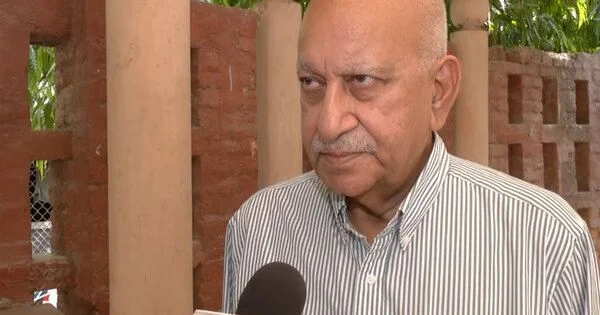
Former Union Minister of State for External Affairs MJ Akbar has said that Indo-Pacific is a historical reality which cannot be erased by a Pentagon pencil.
Responding to a question by ANI on US renaming Indo-Pacific Command to US Pacific Command, he stated that “America is being unwise.”
“The Indo-Pacific is a historical reality which cannot be erased by a Pentagon pencil. If whoever official in Pentagon, we don’t know how is it on the instructions of the war secretary or not. But irrespective of that, this is a government of America decision, which it has been taken. I think America is being unwise,” Akbar said.
The former Union Minister stated that while the war may seem to be on land, the war is also for war for water and water routes.
“What we are witnessing today across the world, while war may seem a land activity, we are witnessing a war for water and a war for water routes. Because you must remember that oil without water is impotent and manufactured goods without trade routes are deeply crippled. The strategic struggle is for either control or compatibility around trade rules. The wars with that we are witnessing from Ukraine to the east are also wars for the Mediterranean, for the Black Sea, for the Caspian, for the Red Sea, for the Arabian Sea. And these five seas are searching for a sixth sea. And that sixth sea is the Indian Ocean,” he said.
Akbar said that the US must understand that India has a strong hold on Malacca Strait- are the choke point of all the trade that goes to the Far East.
“America must understand that the Malacca Straits, which are the choke point of all the trade that goes to the Far East, particularly China and Japan and so on. That the Malacca Straits are virtually the Hormuz Straits of India and Indonesia. When the challenge for, if the challenge for the navigation on the straits, if it ever comes, then India will be playing a very critical role. Because in the last 10 years, India has strengthened its strategic position on those seas,” he said.
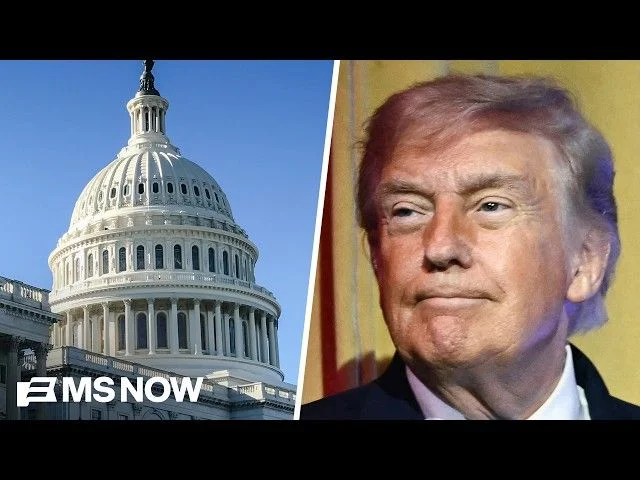
On June 16, the US Department of War sought to undo its 2018 change by renaming the USINDOPACOM – the country’s military command for the Indo-Pacific – back to its previous nomenclature, USPACOM (US Pacific Command). Importantly, it was US President Donald Trump’s first administration that introduced this change in 2018, signalling Washington’s gradual embrace of the new Indo-Pacific construct, which was increasingly gaining strategic currency at the time, Observer Research Foundation notes.
However, since the onset of the second Trump administration, a long shadow of uncertainty has loomed large over the nature and extent of Washington’s focus on the Indo-Pacific. The renaming of the United States Indo-Pacific Command has further fuelled uncertainty about US involvement in the region, ORF stated.
Historical Context
The shift in nomenclature highlights a fluctuating maritime doctrine within Washington. The Pentagon originally modified the name to US Indo-Pacific Command in 2018 under the first Trump administration to explicitly acknowledge India’s growing importance in countering regional challenges.
The reversal on June 16, 2026, back to US Pacific Command signals a potential recalibration of American overseas defense priorities. This structural pivot has triggered concerns among global defense analysts regarding America’s long-term security commitments to its partners across the Indian Ocean theater.
FAQs
Why did the United States rename the Indo-Pacific Command?
The US Department of War reverted the name of United States Indo-Pacific Command (USINDOPACOM) back to US Pacific Command (USPACOM) on June 16, 2026. The move reverses a policy enacted in 2018 and has raised questions about the secondary Trump administration’s long-term defense priorities in the region.
What was India’s official reaction to the Pentagon name change?
Former Union Minister of State for External Affairs MJ Akbar criticized the decision, calling Washington “unwise.” He stated that the Indo-Pacific is a historical reality that cannot be altered by administrative decisions at the Pentagon, emphasizing India’s enduring maritime presence.
Why is the Malacca Strait strategically vital according to MJ Akbar?
MJ Akbar compared the Malacca Strait to the Strait of Hormuz, noting it serves as the primary trade choke point for goods entering the Far East, including China and Japan. He highlighted that India has spent the last 10 years strengthening its military position to secure these vital waters.