US Iran Talks Focus on Strategic Disengagement Not Peace
A senior Indian diplomat reveals that current Washington-Tehran negotiations are strictly structured around military disengagement rather than comprehensive regional peace. The diplomatic assessment highlights critical deficits in Western military inventories and outlines a rapidly shifting geopolitical map that increasingly positions New Delhi as a decisive, independent Asian power.
Key Highlights
- Current diplomatic engagements between Washington and Tehran focus strictly on military disengagement rather than comprehensive regional peace.
- True Middle Eastern peace requires complex, generation-long negotiations involving Gaza, Israel, Lebanon, and Syria.
- American missile arsenals are heavily depleted, creating unprecedented strategic vulnerabilities for Washington.
- Tehran views New Delhi as an independent global power that must participate in long-term regional solutions.
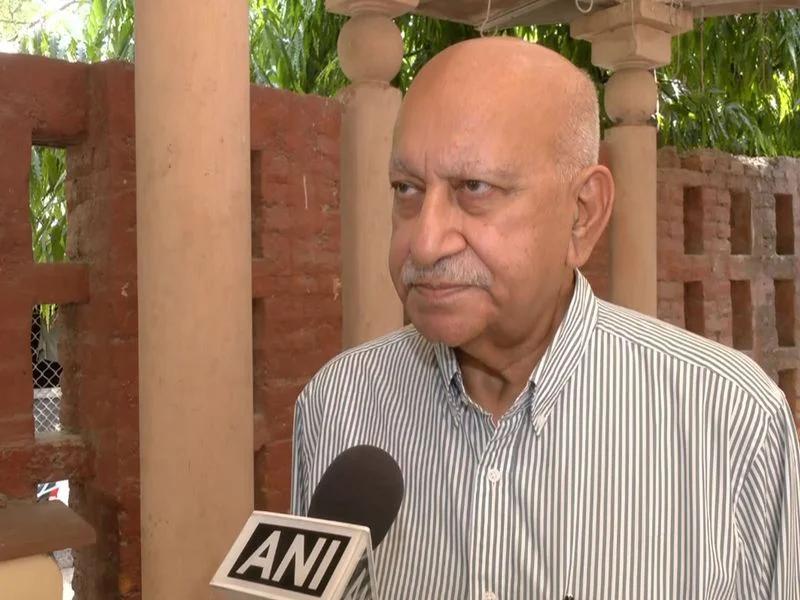
Former Minister of State for External Affairs MJ Akbar stated that classifying the ongoing conversations between the United States and Iran as peace talks is completely inaccurate. According to Akbar, genuine peace initiatives would require incorporating Syria, Gaza, Israel, and Lebanon under a single diplomatic umbrella rather than focusing exclusively on Tehran.
The former minister noted that comprehensive regional peace initiatives have consistently failed for the past 75 years. Because of this historical reality, Akbar emphasized that the deep-rooted geopolitical friction is highly unlikely to be resolved over the next 75 days.
True peace negotiations must confront the structural realities of the entire region. This includes addressing the future of Palestine, defining the territorial borders of Israel, and stabilizing Lebanon, Gaza, and Syria. Managing such a massive geopolitical enterprise will take a generation to accomplish.
Akbar explained that the current diplomatic sessions are actually targeted discussions regarding American military disengagement. The primary objective is navigating an exit strategy from the specific conflict that US President Donald Trump initiated against the Iranian state.
The negotiations center on how both nations can step back from direct military confrontation. Iran never desired this direct conflict, while President Trump was likely misled into believing the entire military campaign could be successfully completed within 48 hours.
Iran has successfully demonstrated that it would not be neutralized within 48 hours. Furthermore, a highly critical development has occurred in the background, as Washington has effectively acknowledged that its primary missile and munitions arsenals are heavily depleted.
This logistical depletion has placed the United States in a unique position of strategic vulnerability that it has rarely encountered in modern history. This massive mismatch between existing military inventory and operational reality occurred because Washington severely underestimated its adversary.
While President Trump is refusing to allocate American taxpayer funds to secure this military exit, Iran will inevitably require alternative forms of compensation. The ongoing diplomatic dialogues are specifically analyzing financial methodologies and the hard realities of cash compensation.
These financial settlements will ultimately contribute to the creation of a brand new strategic map for the entire region. Amid these shifting dynamics, Tehran has consistently maintained that New Delhi deserves a prominent seat at the high table of global engagement.
It remains the responsibility of the Indian government to chart its own level of regional involvement. Tehran explicitly recognizes that New Delhi has evolved into a decisive power across Asia, acting as a crucial part of any long-term structural solution.
The Iranian establishment views Pakistan as a friendly neighbor, but remains fully aware that Islamabad fundamentally functions as a client state for Washington. If New Delhi disagrees with Tehran, it is understood as an independent decision based purely on Indian national interests.
Conversely, when Islamabad opposes Iranian policies, Tehran views it as an action dictated directly by American instructions. This distinction highlights that Iran recognizes India as a completely independent power, while viewing Pakistan as a highly dependent regional actor.
President Trump has expressed prolonged dissatisfaction with NATO allies because European nations demand significant strategic influence without funding their own defense. Trump remains fatigued by European nations relying entirely on American financial backing while refusing to increase their domestic military budgets.
The pace of American withdrawal from NATO frameworks has accelerated following Europe’s explicit refusal to back the US military campaign against Iran. Washington will not completely abandon the alliance, but its European presence will depend heavily on the US-Russia relationship.
Trump has consistently criticized his transatlantic allies for failing to support the military campaign against Tehran since the inception of the conflict. The American president directly reiterated this profound dissatisfaction during a recent high-level meeting with NATO Secretary General Mark Rutte.
Historical Context and Future Outlook
The modern geopolitical landscape of the Middle East remains tied to the post-1948 security architecture, which has triggered multiple regional conflicts over the last 75 years. The shifting dynamic between Washington and Tehran marks a departure from traditional alignment strategies, particularly as American defense manufacturing faces unprecedented supply chain pressures. Moving forward, the depletion of Western missile inventories will likely accelerate multipolar diplomacy in Asia. This transition elevates independent nations like India into vital mediation roles, while fundamentally altering how regional powers interact with traditional Western-backed client states during international crises.
FAQs
Why does MJ Akbar claim the US-Iran talks are not genuine peace talks?
Akbar states that true peace talks must encompass the entire Middle East region, including complex generational issues across Gaza, Israel, Lebanon, and Syria. The current negotiations are narrowly focused on the terms of American military disengagement from a specific conflict.
What did the former minister reveal about the current status of the US military arsenal?
The analysis reveals that Washington has admitted its core missile inventories are heavily exhausted. This mismatch between military inventory and operational reality has exposed the United States to rare strategic vulnerabilities after underestimating Iranian capabilities.
How does Iran view the geopolitical roles of India and Pakistan differently?
Tehran views India as a completely independent, decisive Asian power that acts purely on its own national interests. In contrast, while Iran maintains neighborly relations with Pakistan, it views Islamabad as a dependent client state operating under diplomatic instructions from Washington.
Why is the United States adjusting its strategic commitment to NATO?
The acceleration of a measured American withdrawal from NATO follows Europe’s refusal to support the military campaign against Iran. The US administration is fatigued by European allies demanding significant security guarantees without paying the necessary financial costs to maintain their own defense forces.