US India Trade Deal Stalls Over Tariffs Compared to Pakistan
Domestic electoral dynamics have halted progress on the bilateral trade agreement between Washington and New Delhi. Indian officials refuse to finalize the deal until the United States eliminates a tariff disparity that currently grants Pakistan more favorable market access duties than India.
Key Highlights
- India currently faces a 12.5% US tariff, whereas Pakistan holds a lower 10% rate.
- New Delhi considers a clear regional tariff advantage essential for domestic electoral survival.
- Trade negotiators previously structured the pact around an 18% duty rate to secure market dominance.
- Broader economic collaboration continues to advance in critical minerals, space, and technology sectors.
The multi-billion-dollar trade negotiations between India and the United States have stalled due to underlying political risks rather than technical disagreements or supply chain logistics.
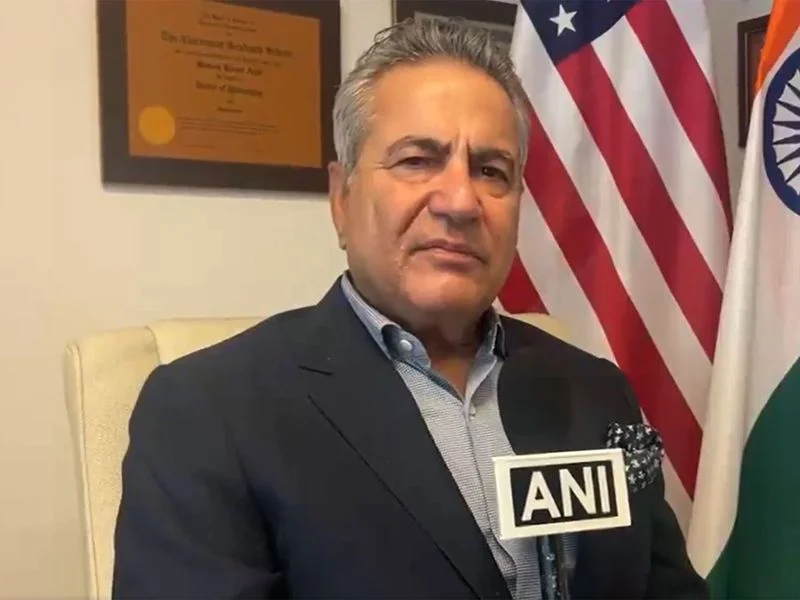
This candid evaluation comes from Mukesh Aghi, President and Chief Executive Officer of the US-India Strategic Partnership Forum (USISPF), ahead of the high-profile USISPF Leadership Summit 2026 in Washington.
Aghi explained that the impasse is entirely non-technical. India insists on receiving preferential tariffs that under-cut neighboring nations to maintain industrial competitiveness. The policy centers on securing lower duties than regional competitors.
The primary competitor in this dispute is Pakistan. Currently, Washington levies a 12.5% tariff on Indian goods, while Pakistane exporters face a 10% duty. No Indian politician will endorse this discrepancy because it carries severe electoral consequences.
Aghi indicated that the Donald Trump administration recognizes these political limitations. US and Indian officials must convene to resolve the issue and craft a mutually beneficial compromise.
These complications arise during a delicate diplomatic period. New Delhi previously rejected claims that American trade benefits were tied to the military ceasefire enacted between India and Pakistan earlier this year.
The Ministry of External Affairs confirmed that trade discussions were completely absent from those security talks. However, the tariff imbalance causes friction, as Washington maintained lower duties for Islamabad during bilateral military standoffs.
Aghi noted that the upcoming USISPF Summit prioritizes forward-looking economic integration over existing trade frictions. The conference highlights bilateral achievements in artificial intelligence, quantum computing, space exploration, and critical mineral extraction.
Regarding critical minerals, Aghi outlined a coordinated strategy to reduce Western dependence on supply chains controlled by Beijing. Events last year proved that relying on China for critical minerals exposes nations to supply chain vulnerabilities.
The new industrial framework assigns India the role of raw material sourcing and processing. Meanwhile, the United States will supply the necessary financial investment and advanced technology to secure the supply chain.
Despite sector-specific progress, a comprehensive trade breakthrough remains blocked. Indian negotiators cannot legally or politically sign an agreement until Washington normalizes the tariff structure to match or beat Pakistan’s rate.
Union Commerce and Industry Minister Piyush Goyal independently verified this political position during a separate international economic forum. Goyal noted that while structural terms are set with the Trump administration, India will only sign after guaranteeing a regional tariff advantage.
Speaking at the India Global Forum ‘UK-India Week 2026: Capital Frontiers’ in London, Goyal confirmed the economic pact is paused. India requires a recalibrated American framework ensuring lower export duties than other Asian economies.
Goyal explained that the core architecture of the trade pact was designed to provide Indian exporters with an institutional edge over regional manufacturing rivals.
The entire commercial strategy depended on an 18% competitive advantage over neighboring states. The original terms placed India below all regional peers and ASEAN members except Singapore, making the deal highly lucrative for New Delhi.
The initial trade blueprint emerged when Washington applied a 50% reciprocal duty on Indian products under the International Emergency Economic Powers Act (IEEPA). The US agreed to slash those duties to 18%, but recent American legislative shifts required a full renegotiation.
Future Outlook
The resolution of the US-India trade impasse will likely require a specialized legislative carve-out or an executive amendment from Washington to realign regional tariff structures. As global corporations accelerate their “China plus one” strategies, both Washington and New Delhi face intense pressure to resolve this deadlock before the 2027 fiscal cycle to secure supply chain dominance in Asia.
FAQs
Why is the India-US trade deal currently stalled?
The deal is on hold because India refuses to accept a tariff structure that places its exporters at a disadvantage compared to Pakistan. New Delhi is demanding lower import duties from Washington than those granted to its regional neighbors.
What are the current tariff rates between India, Pakistan, and the US?
The United States currently imposes a 12.5% tariff on Indian imports, while Pakistani goods are subject to a lower tariff rate of 10%. India wants this imbalance corrected before finalizing the bilateral trade pact.
What role does the International Emergency Economic Powers Act play in these talks?
The initial trade framework was designed when the US applied a 50% duty on Indian goods under the IEEPA. The original compromise aimed to lower India’s tariff rate down to 18% to provide a distinct competitive advantage over ASEAN competitors.