Supreme Court Upholds Mail-In Ballot Counting Post Election Day The Supreme Court rejected a challenge to mail-in ballot…
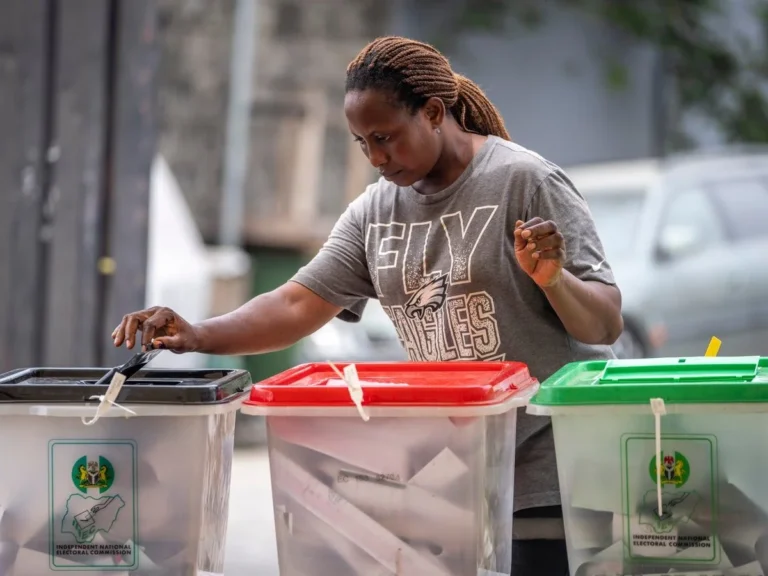
The Supreme Court protected American election procedures by rejecting a challenge aimed at invalidating mail-in ballots that are cast by Election Day but arrive afterward. Thirty states currently count these votes. The 5–4 decision allows election officials to continue tracking and tabulating these legitimate ballots.
Key Highlights
- The Supreme Court voted 5–4 to protect late-arriving mail-in ballots across 30 states.
- Justice Amy Coney Barrett authored the majority opinion, confirming state authority over election timing.
- Four conservative justices dissented, echoing unproven claims regarding voter fraud and box-stuffing.
- Legal analysts warn the sharp ideological division signals intense future courtroom battles over election outcomes.
The Supreme Court dismissed a marginal challenge targeting American voting systems on Monday. The high court turned away a legal bid designed to cancel mail-in ballots that are completed by Election Day but arrive at election offices shortly after deadlines.
Approximately 30 states maintain policies to process these specific ballots. Through a narrow 5–4 ruling, the panel of justices permitted those jurisdictions to maintain their current counting systems.
Justice Amy Coney Barrett authored the primary ruling for the court in the matter of Watson v. RNC. Her legal reasoning was uncomplicated, noting that federal lawmakers have never authorized legislation banning this regional voting practice.
Barrett affirmed that until federal legislators intervene, individual states retain full constitutional power to manage these processing timelines.
Dissents Flag Alternative Interpretations of Election Frameworks
Strikingly, four members of the bench opposed the majority ruling. Justices Samuel Alito, Clarence Thomas, Neil Gorsuch, and Brett Kavanaugh formed the dissenting minority.
Alito penned the minority opinion for this conservative faction. He asserted that federal lawmakers historically barred late-arriving votes when they originally fixed the specific calendar date for federal elections.
The dissenting jurist amplified persistent claims regarding election security. He stated that the majority view expands paths for misconduct and threatens to diminish public trust in voting systems.
Alito maintained that instances of ballot manipulation are easily identified. He argued the decision permits unlawful actions and removes structural impediments for bad actors trying to alter close political races.
Media Analysts Examine Internal Judicial Devolution
On a special subscriber broadcast of the Amicus podcast, legal commentators Dahlia Lithwick and Mark Joseph Stern analyzed the minority opinion. They debated the long-term impact of the decision on future election litigation.
Lithwick described the ruling as positive news but noted the precarious nature of the split decision. She highlighted that a straightforward case yielded an incredibly tight margin among the justices.
Stern expressed deep concern over the narrow vote count. He noted particular surprise that Kavanaugh aligned with Alito’s assertions regarding widespread mail-in ballot discrepancies.
The analyst hoped Kavanaugh would reject the sweeping legal challenge. Stern noted that the case functioned as an extreme attempt by political actors to nullify valid votes cast by citizens.
Deepening Ideological Divides Threaten Systemic Stability
Commentators noted the high court previously handled recent presidential election challenges without adopting fringe legal arguments. Most extreme lawsuits filed during previous cycles were systematically turned away by the bench.
Yet observers argue Alito’s latest text signals a shift by treating post-election tallies with deep skepticism. Analysts contend four sitting justices now entertain theories linking mail-in voting to systemic fraud.
Stern argued these dissenting opinions treat valid votes as potentially illegitimate tallies that distort final counts. He criticized Alito’s hypothetical scenarios involving voters attempting to recall submitted ballots.
The analyst warned that the minority bloc appears isolated from mainstream factual reporting. He suggested certain justices rely heavily on partisan media narratives regarding state-level election management.
Legal Precedents Empower Local Partisan Challenges
Legal experts worry about the implications if the minority bloc secures a fifth vote in future terms. A single vote shift could dramatically alter federal oversight of state voting procedures.
The dissenting text provides an official roadmap for future lower-court challenges. Local political organizations can now reference a Supreme Court opinion to validate arguments regarding ballot box vulnerabilities.
Experts anticipate this judicial blueprint will trigger aggressive litigation during the 2026 midterm cycles. Any close race relying on late-arriving mail tallies will face immediate constitutional challenges.
Historical Context
The debate over late-arriving mail-in ballots intensified significantly during the 2020 presidential election cycle. Due to global health concerns, a historic number of citizens utilized mail-in voting systems, prompting states to extend arrival windows.
Congress established a uniform national Election Day in 1845 to standardize federal voting timelines. For over a century, individual states have interpreted this statute as allowing the collection and counting of ballots cast on or before that specific date, even if local postal services deliver them days later.
FAQs
What did the Supreme Court decide in Watson v. RNC?
The Supreme Court ruled 5–4 to allow states to continue counting mail-in ballots that are postmarked by Election Day but arrive at election offices after the deadline.
How many states are affected by this ruling?
Approximately 30 states currently have laws allowing late-arriving mail ballots to be counted, and all of those state laws remain fully valid under this decision.
Who wrote the majority opinion for the court?
Justice Amy Coney Barrett wrote the majority opinion, asserting that states hold the constitutional authority to set ballot arrival windows unless Congress passes a law explicitly forbidding it.
Which justices dissented from the majority opinion?
Justices Samuel Alito, Clarence Thomas, Neil Gorsuch, and Brett Kavanaugh dissented, arguing that Election Day serves as a strict cutoff date for ballot arrival.